




Let me start with a number that should make every Ghanaian feel something close to relief. Five point nine percent. That is how fast our economy is projected to grow in 2026, according to a new assessment by Afreximbank. That is not a small number. That is the fastest pace in several years. And it comes on the back of an estimated 5.8 percent growth in 2025. For context, just three years ago, in 2023, our economy grew by only 3.1 percent. We were still reeling from the fallout of Russia's invasion of Ukraine, tighter global financial conditions, and our own self-inflicted debt crisis. Inflation was over 40 percent. The cedi was in freefall. Investors had fled. Today, the picture is different. Gold exports are booming. Infrastructure spending is rising. Oil production is rebounding. And inflation is expected to ease sharply to 7.3 percent in 2026, down from an estimated 14.6 percent in 2025 and the catastrophic 54 percent peak in 2023. That is progress per Accra Street Journal Analysis. But is it enough?
Let me break down the numbers, because they tell a story of both opportunity and vulnerability.
The growth drivers are real. Gold exports are booming, supported by elevated prices above 4,500 dollars per ounce and increased production from new and expanded mines. New mines, including Ahafo North, alongside expansions at Bibiani, Chirano, and Namdini, are lifting export earnings. That is not speculation. That is metal coming out of the ground and being sold at historically high prices. Infrastructure spending under President Mahama's Big Push program, which allocates about 30 billion cedis to roads, bridges, ports, and logistics projects, is providing fiscal stimulus. That means construction jobs, contracts for local suppliers, and demand for building materials. Oil production is also rebounding, with renewed drilling at the Jubilee field supporting crude output. These are not imaginary drivers. They are tangible, measurable, and happening now.
The external accounts have improved significantly. The trade surplus widened to an estimated 9.3 billion dollars in 2025, driven primarily by gold and cocoa exports. That surplus is projected to remain substantial through 2027. Total reserves excluding gold are forecast to rise from 13.8 billion dollars in 2025 to 14.6 billion dollars in 2026, providing nearly five months of import cover. That is above the IMF-recommended benchmark of three months. In plain English, if all our imports stopped coming in tomorrow, we could pay for them for nearly five months. That is a buffer. That is security.
The cedi is projected to strengthen to about 11 cedis per dollar in 2026 from an estimated 12.6 cedis in 2025. The drivers are stronger foreign exchange inflows from gold exports and reserve accumulation by the central bank. The cedi has already strengthened in recent months. At the start of the year, the interbank rate was around 12.50 cedis to the dollar. Today, it is about 11.63 cedis. That is a genuine improvement. If the forecast holds, 11 cedis to the dollar would be the strongest level in over a year. That means imported goods would become cheaper. Fuel, rice, used clothing, spare parts, all of it would cost less in cedi terms.
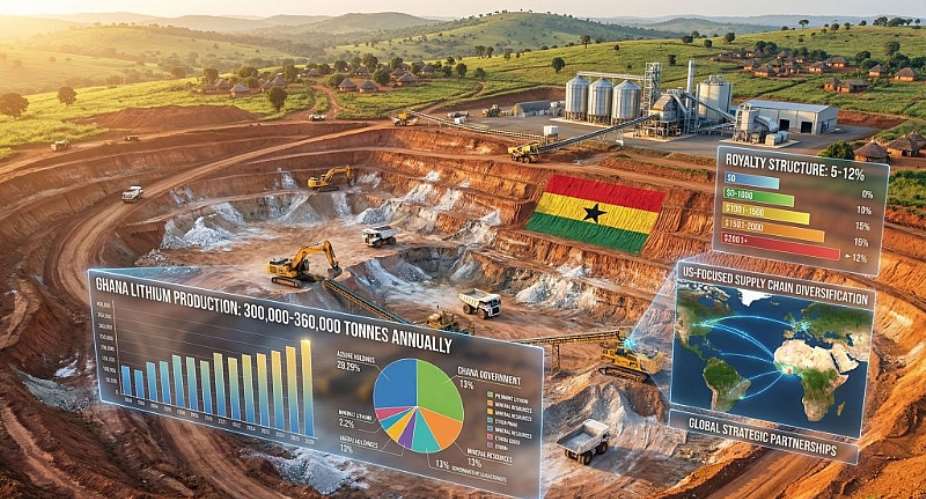
Government finances are expected to remain relatively stable despite plans to increase spending. Afreximbank forecasts the fiscal deficit will widen modestly to 2.6 percent of GDP in 2026 from an estimated 0.6 percent in 2025. That is not a large increase. And revenue gains from a new sliding-scale gold royalty regime are expected to partly offset the cost of higher spending. The royalty rate now ranges from 5 percent when gold prices are below 1,500 dollars per ounce to 12 percent when prices exceed 3,200 dollars per ounce. With gold above 4,500 dollars, the royalty rate is at its maximum. That is additional revenue flowing into government coffers.
Debt restructuring progress is significant. External debt is projected to decline to 33.3 billion dollars in 2026 from a peak of 46.6 billion dollars in 2021. External debt as a share of GDP is forecast to fall to 21.3 percent in 2026 from 45.1 percent in 2024. That is a dramatic reduction. The domestic debt exchange and Eurobond restructuring have worked. The debt burden is lighter.
Now, let me give you the warning that Afreximbank also gave, because it would be irresponsible to ignore it.
Despite the positive forecast, the bank cautioned that Ghana remains at high risk of debt distress. That is not my opinion. That is the assessment of the lender. The country's debt outlook remains vulnerable to swings in commodity prices, export performance, and fiscal discipline, while access to international capital markets remains constrained. The progress made on debt reduction could be reversed if commodity prices fall or if the government's fiscal discipline weakens.
This is the vulnerability. Gold, cocoa, and oil account for the majority of our export earnings. A sharp decline in gold prices from 4,500 to 3,500 dollars or lower would reduce export earnings, widen the trade deficit, and pressure the cedi. A poor cocoa harvest due to disease or weather would have similar effects. The government's strategy of using gold revenues to fund infrastructure is prudent, but it also increases dependence on gold. If the gold price crashes, the infrastructure spending would have to be cut or funded by borrowing, which would reverse the debt progress.
The Big Push infrastructure program is a trade-off. Increased public investment can boost growth in the short term, but it also increases the fiscal deficit and public debt. The government is betting that the growth benefits, higher GDP, higher tax revenues, will outweigh the debt costs. Afreximbank's forecast of a modest deficit widening to 2.6 percent of GDP suggests that the bank views the trade-off as manageable. But manageable is not the same as risk-free.
The inflation forecast of 7.3 percent is below the Bank of Ghana's target band. The central bank targets 8 percent, plus or minus 2 percentage points. So 7.3 percent is within the lower end. If inflation falls below the target, the central bank could cut interest rates further, stimulating growth. However, the risk of higher fuel costs resulting from disruptions to global oil supplies, the Hormuz crisis, could reverse part of that progress later in the year. Oil prices have already surged above 105 dollars per barrel. If they go higher, our fuel import bill will rise, and inflation will follow.
The cedi forecast of 11 cedis per dollar is optimistic. The drivers, gold export earnings and reserve accumulation, are plausible. But the cedi's recent history suggests caution. We have seen forecasts like this before, only to be disappointed by a sudden shock. A political crisis. A commodity price crash. A global recession. Any of these could send the cedi back to 13 or 14 cedis per dollar.
For the average Ghanaian, what does this all mean? It means that the worst of the crisis is behind us. Inflation is down. The cedi is stable. Growth is returning. But it does not mean that your personal financial struggles are over. Prices may not come down to what they were before the crisis. Jobs may still be hard to find. Borrowing costs may remain high. The macroeconomic numbers are improving, but the microeconomic reality for many households is still difficult. That is the gap between statistics and lived experience. And it is a gap that policymakers must acknowledge.
For businesses, the improving environment creates opportunities. Lower inflation reduces uncertainty. A stronger cedi reduces the cost of imported inputs. The Big Push program creates demand for construction materials, engineering services, and logistics. Gold mining expansion creates opportunities for local contractors and suppliers. The businesses that position themselves to serve these sectors will benefit.
For investors, the forecast points to a country that is stabilising. The risk of another default has receded. The policy framework, IMF programme, debt restructuring, fiscal consolidation, is credible. Ghana is not a safe haven, but it is a more attractive destination than it was two years ago. The key is to watch the commodity prices. If gold stays high, the recovery will continue. If gold crashes, the recovery will stall.
For policymakers, the message is clear. Use the windfall wisely. The gold boom will not last forever. Use the additional revenues to reduce debt, build reserves, and invest in productivity-enhancing infrastructure. Avoid the mistakes of past commodity booms, where windfalls were spent on consumption rather than investment. The government must also diversify the economy. Gold, cocoa, and oil cannot be the only drivers forever. Manufacturing, technology, and services must grow.
The Afreximbank forecast is good news. Ghana's economy is recovering. The growth numbers are real. The inflation reduction is real. The cedi stability is real. But the vulnerabilities are also real. Debt distress risk remains high. Commodity dependence remains a vulnerability. External shocks remain a threat. The government must use the current favourable conditions to build buffers, reduce debt, and diversify the economy. The recovery is real, but it is not guaranteed. And the difference between a lasting recovery and a temporary bounce depends on the choices we make today. Choose wisely. The numbers are moving in the right direction. Now we need the policies to match.

 Mahama Begins Four‑Day State Visit to Belarus to Deepen Ghana–Belarus Cooperatio...
 Adubinsu Tanker Explosion: Fire Service Slams Residents for Attacking Firefighte...
 80 Suspects Grabbed as Police Storm Upper East in Massive Anti‑Crime Sweep
 Abuakwa South MP Pushes for National Disaster Fund to Support Flood Victims
 “Don’t Be Fooled!” — Foh-Amoaning Tells African MPs LGBTQ+ Rights Not Backed by ...
 BoG Mops Up GHS 11.28bn in Fresh Liquidity Sweep as 14‑Day Bill Auction Records ...
 Foreign Digital Content Eroding African Values — Sam George Warns Parents
 Anthropic calls for global AI slowdown, says systems may outpace human control
 Bono Region: Police investigate murder of retired veterinary officer
 VIDEO: Fuel tanker driver burnt to death in fiery crash at Adubinso, seven shops...


