




A Claim That Stopped Africa in Its Tracks
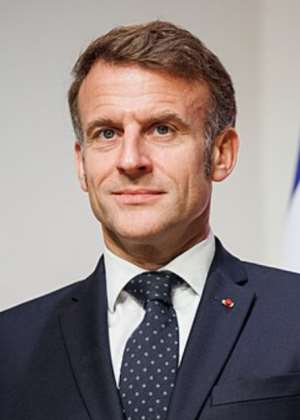
It was a Sunday afternoon in Nairobi, and the cameras were rolling. Standing alongside Kenyan President William Ruto at a press conference on the eve of the Africa Forward Summit, French President Emmanuel Macron looked into the lenses of the world's media and made a declaration that would ignite a continent.
"We are the true Pan-Africanists," Macron said. "We believe that Africa is a continent, and that this continent has an enormous amount to build."
The words went viral within hours. For millions of Africans who know their history who know what France spent three centuries doing on the African continent the claim was not simply debatable. It was breathtaking in its audacity. And what followed both in the streets of Nairobi and on social media platforms across Africa and its diaspora was one of the most pointed, passionate, and historically grounded conversations about France's relationship with Africa that the continent has had in a generation.
But is the question simply one of historical guilt? Or is there something more complicated and uncomfortable happening a France that genuinely wants to change, trapped inside the skeleton of a system it has never fully dismantled?
The Summit and the Setting: A Strategic Pivot East
On May 11 and 12, 2026, Kenya hosted the France-Africa Summit, officially titled the "Africa Forward Summit: Africa-France Partnerships for Innovation and Growth." French President Emmanuel Macron and President William Ruto co-chaired proceedings.
The choice of Nairobi was not incidental. Kenya will host the 2026 France-Africa Summit, the first to be held in an English-speaking African country. Activists, political observers, and analysts view the summit as part of France's broader attempt to reconfigure its influence and strategic interests in Africa at a time when the Sahel is increasingly slipping from its traditional sphere of control.
The French offer was substantial. On the second day of the summit, Macron announced a $27 billion investment into various sectors in Africa, including energy, artificial intelligence and agriculture. The summit was set to close with a declaration expected to be signed by all 30 heads of state.
On the margins of the summit, Kenya and France ratified a defense cooperation agreement granting French troops operating in Kenya diplomatic-style legal protections. Reports indicated that approximately 800 French soldiers had already arrived in Kenya before the agreement was formally ratified by Kenya's parliament.
It was the kind of detail that Pan-African critics immediately seized upon troops before parliamentary approval, boots on the ground before the ink was dry.
What Is Pan-Africanism, and Why Does the Claim Matter?
Pan-Africanism is not a diplomatic brand. It is a revolutionary ideology forged in resistance to the transatlantic slave trade, to colonialism, and to the neocolonial arrangements that followed formal independence. Its intellectual architects include W.E.B. Du Bois, Kwame Nkrumah, Cheikh Anta Diop, Patrice Lumumba, and Thomas Sankara figures who, in many cases, suffered at the hands of the very Western powers that today claim partnership with Africa.
"Pan Africanism is not a brand, Mr. Macron, neither is it a diplomatic posture," Farida Nabourema, a Togolese human rights activist, wrote in an open letter on Monday. "It is a political philosophy that said no to everything France spent three centuries saying yes to: slavery, colonialism and neocolonialism."
The definition is sharp and historically precise. France was a major actor in all three of the systems that Pan-Africanism was created to resist. The claim that France is now "the true Pan-Africanist" therefore requires either a remarkable redefinition of the term or an extraordinary act of historical reckoning that France has not yet fully performed.
The Weight of Françafrique: What France Built
To understand why Macron's words provoked such fury, one must understand what Françafrique was and why many analysts argue it never truly ended.
In international relations, Françafrique refers to France's sphere of influence over former French and French-speaking Belgian colonies in sub-Saharan Africa. It was later pejoratively renamed Françafrique by François-Xavier Verschave in 1998 to criticise the alleged corrupt and clandestine activities of various Franco-African political, economic and military networks, also defined as France's neocolonialism.
Following the accession to independence of its African colonies beginning in 1959, France continued to maintain a sphere of influence over the new countries, which was critical to then President Charles de Gaulle's vision of France as a global power.
The mechanics of this system were not subtle. Decisions on France's African policies were taken by a small inner circle at the Élysée Palace the African cell which made decisions on African countries without engaging in broader discussions with the French Parliament and civil society actors. Instead, the African cell worked closely with powerful business networks and the French secret service.
The most damning structural legacy is the CFA franc the currency still used by fourteen African nations, pegged to the euro, with foreign exchange reserves historically held in the French Treasury. On May 16, 2025, a demonstration dubbed "5,000 young people march for Cheikh Anta Diop" brought thousands of protesters to the streets of Dakar, Senegal, led by pan-Africanist movements making demands including the abandonment of the CFA franc as "a neocolonial currency and a demand for financial reparations from France for centuries of exploitation of Africa."
The Francophone countries in West Africa rank among the 40 least developed countries in the world, while neighboring Anglophone countries do not. This reality has strengthened arguments advanced by African intellectuals and activists who describe Françafrique as a neo-colonial system that preserved French economic and strategic interests while constraining sovereignty and limiting structural transformation in African states.
Macron's Reforms: Real Change or Rebranding?
To be fair to Macron, he has done more to formally distance himself from Françafrique than any of his predecessors. Macron abolished the Françafrique summits that once offered an annual talking shop for a cosy nexus of French and African political elites, instead mandating a new Afrique-France meeting in 2021 that included a report and dialogue convened by the seminal postcolonial theorist Achille Mbembe.
A report adopted by the French Defense and Armed Forces Commission in January 2025 noted the failure of the attempt to renew relations between France and African countries, initiated by Emmanuel Macron in 2017 during his first term, and a deterioration of France's image in Africa.
The retreats are real. France has withdrawn troops from Mali, Burkina Faso, Niger, and Chad. After years of criticism from leaders and opposition parties in many West African countries over what they described as a demeaning and heavy-handed approach, France has withdrawn most of its troops from the region. It completed the withdrawal of troops from Senegal in July 2025.
But critics argue the retreat from West Africa is not a change of values it is a change of geography. Beverly Ochieng, a senior analyst at geopolitical risk consultancy Control Risks, said Macron is trying to distance France from its diplomatic and military setbacks in West Africa by turning to the east of the continent, signaling that its strategic priorities now follow where it finds goodwill.
The Summit That Became a Symbol
Even at the summit designed to showcase France's new Africa approach, the old instincts surfaced. Macron stormed the stage to rebuke audience members for what he called a "total lack of respect," accusing them of disrupting speakers during a presentation by artists and young entrepreneurs. Videos of his heated intervention quickly spread across social media, drawing a mix of mockery, praise and criticism.
The reaction was immediate and unsparing. "It's stronger than him: as soon as he sets foot on the African continent, he can't help but behave like a colonizer," said Danièle Obono, a lawmaker for France Unbowed, in a post on X. The combination claiming Pan-Africanist identity at a press conference, then commanding silence at an African audience the following day became a metaphor that critics said captured the fundamental contradiction of France's Africa policy: the language of partnership, the body language of authority.
The Counter-Summit: Africa's Answer
While the official summit was underway inside the Kenyatta International Convention Centre, another gathering was taking place outside its walls. A coalition of progressive organizations across Africa and its diaspora convened the Pan-Africanism Summit Against Imperialism, scheduled to run on the same dates May 11 and 12, 2026 also in Nairobi. The counter-summit was organized by groups including the Communist Party Marxist-Kenya and the All-African People's Revolutionary Party. Organizers described the official summit as "a rebranded offensive of imperialist decolonization disguised behind the mask of environmental diplomacy and financial reform."
Booker Omole, secretary-general of the Communist Party Marxist-Kenya, told Peoples Dispatch that the summit was "a war council of imperialism convened under the mask of diplomacy." He said: "France has never been a partner to Africa. France has been a plunderer. It has looted our wealth, dictated our currencies, stationed troops on our soil, and installed regimes that serve foreign interests while our people endure poverty and indignity."
The coalition called for the dismantling of neo-colonial monetary structures and the cancellation of African debt, drawing historical connections to systems such as the CFA Franc, long viewed by critics as mechanisms of continued French economic control in parts of Francophone Africa.
What Macron Really Meant: The Russian Subtext
Context matters here. Macron's Pan-Africanist declaration did not emerge in a political vacuum. It was delivered in a world where Russia through the Wagner Group and its successor forces has dramatically expanded its presence across the Sahel, presenting itself to African publics as a genuine anti-colonial ally against Western imperialism.
Alioune Tine, founder of the Afrikajom Center think tank, said Macron's remark might also be a subtle jab at Russia, which has replaced France as the main security partner in some West African countries. "When Macron describes himself as the 'true' pan-Africanist, it is also a subtle response to the pro-Russian pan-Africanist voices online, which French officials tend to view as inauthentic or politically manipulated," Tine said.
In June 2025, Macron himself had framed it this way: "The solution Russia is proposing directly, or through Wagner, is neocolonialism. It secures your position as leader. And then it takes your mines, it takes your information system, and it puts the country under lockdown. This is not development aid."
The irony of a French president accusing Russia of neocolonialism was not lost on African commentators. France's own record with African mines, military installations, and political manipulation is well-documented.
The Public Verdict: More Complicated Than It Seems
Not all African voices condemned Macron. According to an Ipsos survey conducted on behalf of the French Foreign Ministry in nine African countries ahead of the summit, 74% of respondents said they have a positive image of France. Support was highest in English-speaking countries and among respondents under 35.
This polling figure is itself a dividing line. Critics note that the survey was commissioned by the French Foreign Ministry and conducted in countries where French troops and CFA franc grievances are less immediate. Supporters argue it reflects a genuine reservoir of goodwill toward France among younger Africans who are less shaped by post-independence bitterness.
Tine acknowledged that relations between Western powers and African states are inherently paternalistic and France is no exception, but said Macron has shifted policy away from the colonial legacy through a more informal diplomatic style aimed at rebuilding trust.
Is France Truly Pan-African? The Honest Answer
The honest answer is no not in any philosophically defensible sense of the term. Pan-Africanism is a movement built by and for African people, rooted in the specific experience of displacement, enslavement, colonization, and the struggle for self-determination. France was the architect and enforcer of many of the systems that Pan-Africanism was created to dismantle.
What France can legitimately claim is that it is trying to evolve however imperfectly, however self-interestedly, however inconsistently. The $27 billion investment package is real money. The withdrawal from former military bases is a real concession. The engagement with figures like Achille Mbembe represents a genuine, if belated, acknowledgement that African intellectual voices deserve a seat at the table France once owned entirely.
But claiming the mantle of Pan-Africanism is something else entirely. It is the kind of claim that can only be conferred by Africans, over time, through trust earned rather than declared. To claim it at a press conference, before troops are already on Kenyan soil, before the CFA franc has been dismantled, before reparations have been discussed, is to mistake a policy pivot for a moral transformation.
She said Macron's remarks were raising questions about whether France's renewed engagement with Africa represented a genuine equal partnership or merely convenient rhetoric.
That is the question Africa is asking. And France, for all its diplomatic energy in Nairobi, has not yet answered it honestly enough.
Conclusion: The Work That Remains
France and Africa share a history so entangled that separation is impossible and genuine partnership is, at least in theory, achievable. The question is whether France can make that partnership real not as a strategic retreat from the Sahel, not as a hedge against Russian influence, not as a $27 billion investment announcement at a well-photographed summit but as a sustained, structural commitment to African sovereignty that includes uncomfortable conversations about currency, reparations, military presence, and accountability for past conduct.
Until that conversation happens in full, the claim to Pan-Africanism will ring hollow. Pan-Africanism is not a brand. It is not a diplomatic posture. And it is certainly not a title that Emmanuel Macron can award himself at a press conference in Nairobi.
Africa will decide, in time, whether France has truly changed. The verdict is not yet in.
This article draws on reporting from ABC News, Africanews, the Washington Post, Peoples Dispatch, Caliber.az, and the Institute for Security Studies, and Oxford Academic's English Historical Review. All analysis represents the views of African and international scholars and civil society voices as documented in verified public records.
Mustapha Bature Sallama.
Medical/ Science Communicator,
Private Investigator, Criminal investigation and Intelligence Analysis.
International Conflict Management and Peace Building.USIP
[email protected]
+233-555-275-880


 France’s interior minister admits police lost control during violent protests
 Russia pounds Kyiv as Rubio urges Ukraine's Zelensky to 'focus' on ending the wa...
 Kenyan cult leader faces verdict over 191 starvation deaths
 Trump defends Russia sanctions relief, accuses Zelensky of rejecting peace
 Macron promises tough punishments for rioters during nationwide day of action
 Trump endorses embattled Israeli PM Netanyahu ahead of October 27 election
 We are going to provide emergency airstrip in regions without airports — Mahama
 Nana Konadu maiden memorial mass set for October 23
 “Soldiers Will Stay There”—Mahama Declares Permanent Military Presence in Forest...
 ‘No Borrowing Involved’ — Mahama Rolls Out US$10bn New Economy Policy


