




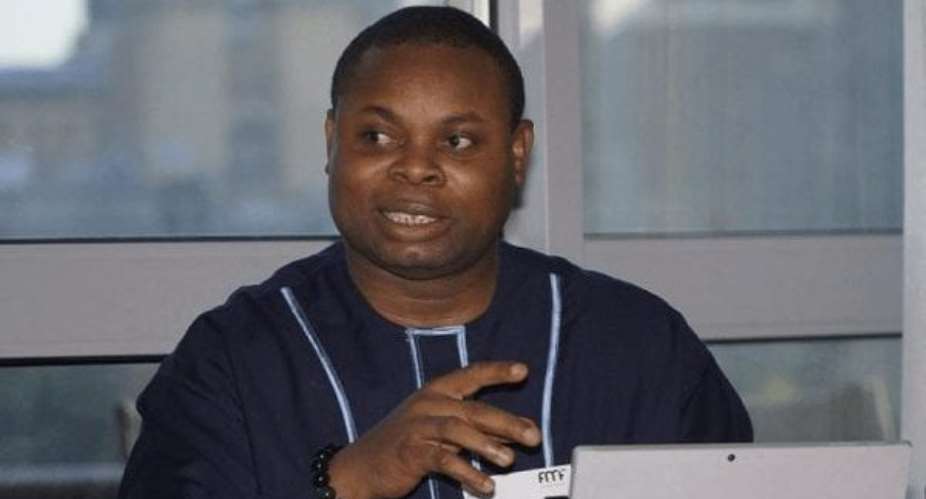
The recent controversy surrounding the audit report on the government payroll has provided a stark reminder of the immense power of public data. When the Ghana Audit Service mistakenly attributed over 427 million cedis in unearned salaries to Mr. Frank Oliver Kpodo, it did more than just damage the reputation of a single individual. It handed a potent argument to those who have long viewed the immediate public release of audit findings with skepticism. This transpositional error where a figure meant for thousands of staff at the Ministry of Education was placed next to one name was a failure of internal verification. Yet, it would be a secondary and more permanent failure if this mistake were used as a pretext to roll back the transparency gains made over the last decade.
For a significant portion of Ghana’s history, audit reports were treated as confidential documents until they had wound their way through the corridors of Parliament. This period of quiet deliberation often meant that by the time the public became aware of financial irregularities, the trail was cold and the culprits had moved on. The culture of secrecy was fundamentally challenged during the tenure of Daniel Domelevo. By choosing to make reports accessible to the public once they were submitted to the Speaker, Domelevo democratized the fight against corruption. He recognized that the Public Accounts Committee is not the only arbiter of accountability and that the citizenry has a right to see how its taxes are managed in real time.
This tradition of openness was surprisingly sustained by Johnson Akuamoah Asiedu during his tenure as the Auditor General. Despite early concerns that the momentum for transparency might fade under his leadership, the Audit Service continued to publish its findings with a frequency that allowed Civil Society Organizations, especially IMANI Africa's Fiscal Recklessness Index, and the media to maintain a constant vigil over the public purse. This continuity established a new normal where transparency was no longer tied to the personality of a single official but was becoming an institutional standard. The Fourth Estate and other investigative bodies flourished in this environment, using these public records to hold the powerful to account.
With the nomination of Pamela Graham as the incoming Auditor General, the institution stands at a crossroads. The Kpodo blunder provides a convenient narrative for those who prefer the old ways of doing business. A new government with a parliamentary majority may feel tempted to pressure the incoming Auditor General to return to the practice of submitting reports for parliamentary deliberation before they reach the public domain. The argument will likely be framed as a measure to protect citizens from the trauma of inaccurate reporting. While protecting individuals from systemic errors is a noble goal, using it to justify a return to administrative secrecy would be a regressive step for Ghanaian democracy.
The solution to a data entry error is not a wall of silence but a more rigorous system of quality control. Pamela Graham has an opportunity to enhance public trust by introducing multi-layered verification processes that ensure such transpositional mistakes never leave the building. Strengthening the internal quality assurance department and employing automated cross-referencing tools would do more to protect the reputation of public servants than any delay in publication. Accuracy and transparency are not mutually exclusive values. In fact, the high visibility of these reports should serve as the primary incentive for the Audit Service to be beyond reproach in its data management.
Transparency is a difficult path because it exposes both the faults of the audited and the flaws of the auditor. However, the alternative is a return to an era where the public only learned of financial mismanagement years after the fact, if at all. The Kpodo case should be seen as a call for institutional growth rather than a reason for institutional retreat. As Pamela Graham prepares to take the helm, the expectation of the discerning public is that she will refine the process without closing the door. The chapter of transparency opened by her predecessors has become a cornerstone of public accountability, and it must remain open for the sake of the national interest.


 Surrogacy: Supreme Court judge warns of citizenship and inheritance challenges f...
 Ghana has a surrogacy law, but… - Supreme Court Justice
 Ghana faces challenge to persuade Brics it deserves a seat at the table
 Stop the Sermon Before the Engine Starts: Why Ghana Regulates Preaching on Movin...
 Don’t let speed of information become your judgement — Chief Justice tells new l...
 ‘Big Push’: Government assures contractors of prompt payments
 GES to develop plan to recover teaching time lost during teachers’ strike – Clem...
 'All human emotions': French astronaut Sophie Adenot's first words since returni...
 French astronaut recounts 'astonishing' emotions after return to Earth
 India's 'cockroach' movement chief detained ahead of major protest


