




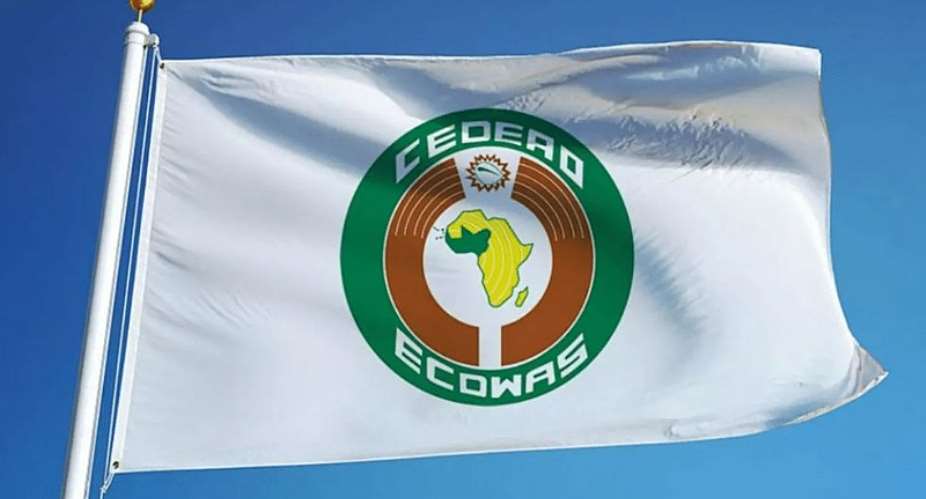
When the Economic Community of West African States (ECOWAS) was founded on 28 May 1975, it carried the hopes of a region eager to transcend the artificial borders and economic fragmentation inherited from colonial rule. It promised a future anchored in solidarity, free movement, democratic governance, and shared prosperity. For a time, that promise seemed within reach.
Today, nearly five decades on, ECOWAS stands at a crossroads, its relevance questioned, its legitimacy contested, and its future uncertain.
Few regional organizations in Africa can point to achievements as tangible as ECOWAS’s. Its protocol on the free movement of people transformed West Africa into one of the most accessible regions on the continent, enabling millions to live, work, and trade across borders. Its peacekeeping interventions in Liberia and Sierra Leone demonstrated a willingness to act where others hesitated. For years, ECOWAS was held up as a model of regional integration.
But past achievements are no longer enough to sustain present credibility.
A wave of military coups across the Sahel, most notably in Mali, Burkina Faso, and Niger has laid bare the bloc’s diminishing authority. ECOWAS has responded with sanctions, suspensions, and diplomatic pressure. Yet these measures have failed to reverse unconstitutional changes of government. Instead, they have often hardened public sentiment against the organization, with many citizens perceiving it as distant, punitive, and aligned with political elites rather than ordinary people.
This perception problem runs deeper than the coups themselves. ECOWAS’s credibility has been eroded by what many see as selective enforcement of its principles. While military juntas are swiftly condemned, civilian leaders who manipulate constitutions undermine electoral integrity, or extend their tenure beyond accepted limits often face muted responses. Such inconsistencies weaken the moral authority of the bloc and fuel accusations that it operates less as a guardian of democratic norms and more as a club of incumbents.
Compounding these political challenges is a deteriorating security landscape. Violent extremism continues to spread across the Sahel, exposing the limits of regional coordination. Despite numerous declarations and initiatives, ECOWAS has struggled to mount an effective, unified response to a threat that transcends national borders.
Economically, the picture is equally troubling. Intra-regional trade remains stubbornly low, and West African economies continue to depend heavily on external partners. The vision of a self-sustaining economic community, central to ECOWAS’s founding mission, remains largely unfulfilled.
The recent decision by Mali, Burkina Faso, and Niger to withdraw from ECOWAS may prove to be the most serious test in the organization’s history. While the legal process of exit may take time, the political message is immediate and stark: the bloc is losing its cohesion. If left unaddressed, this fracture risks setting a precedent that could unravel decades of integration efforts.
Yet declaring ECOWAS irrelevant would be premature, and unwise.
Regional cooperation remains indispensable in a part of the world where economies, security challenges, and social dynamics are deeply interconnected. The real question is not whether ECOWAS still matters, but whether it can adapt.
Rebuilding legitimacy will require more than rhetoric. It demands consistency in upholding democratic norms, regardless of whether violations come from soldiers or elected leaders. It requires a shift from reactive sanctions to proactive engagement that addresses the root causes of instability, including governance deficits and economic exclusion. And it calls for renewed focus on delivering tangible economic benefits that citizens can see and feel.
Above all, ECOWAS must reconnect with the people of West Africa. Regional integration cannot be sustained by governments alone; it must be anchored in public trust and shared purpose.
Fifty years after its founding, ECOWAS faces a defining moment. It can either reform and reassert its role as a pillar of regional stability and progress or continue its current trajectory and risk fading into irrelevance.
The choice it makes will shape the future of West Africa.
Shaibu A. Gariba
https://www.linkedin.com/in/shaibu-gariba/
Email: [email protected]
April 23, 2026.


 Preaching in moving vehicles banned, not stationed vehicles — Mahama clarifies
 Man picking mushroom accidentally shot dead at Nyagbo Kume Forest, hunter in pol...
 Strike suspended, but negotiations for teachers’ benefits not over — GNAT
 CSA rejects FBI claims, insists Ghana led cybercrime operation
 Govt suspends enforcement of ban on preaching in moving vehicles
 Trump strikes diesel deal with Putin, reversing years of pressure on Russia over...
 Powerful 7.6 magnitude quake shakes Panama, triggering tsunami warning
 GH¢800,000 worth of goods lost in Kia Rhino truck fire at Amanfrom
 I never said Ghana has more nurses than it needs — Akandoh
 I have tried reaching Boakye Agyarko after NPP chairmanship race, but to no avai...


