




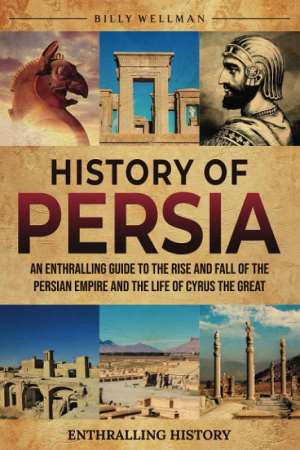
Across more than five millennia of recorded civilization, the land we now call Iran has endured invasion, conquest, cultural upheaval, and political transformation. Yet it has never truly disappeared. Empires have risen on its soil and collapsed upon it, but something deeper has persisted: a resilient identity rooted in language, culture, faith, and historical memory. Iran’s story is not simply one of survival. It is the story of a civilization that absorbs, adapts, and ultimately transforms those who attempt to dominate it.
Why the Name “Iran”?
The name Iran is derived from the ancient term “Aryānām” meaning “Land of the Aryans,” referring to Indo-Iranian peoples who settled the region thousands of years ago. This is a linguistic and cultural term, not a racial one in the modern sense. For centuries, however, the country was known internationally as Persia, a name rooted in Fars (Persis), the heartland of one of its earliest empires. In 1935, the state formally requested that the world adopt the name Iran, reflecting a broader civilizational identity that extends far beyond a single province.
A Civilization before Empire
Long before the rise of imperial Persia, the Iranian plateau hosted early civilizations such as Elam (c. 2700 BCE). These societies developed systems of governance, trade, and architecture that laid the groundwork for later imperial power. This deep civilizational foundation is critical to understanding Iran’s resilience: it was not built overnight, and it could not easily be erased.
The Rise of the Persian Empires
Iran did not merely endure history. It shaped it. The Achaemenid Empire [c. 550–330 BCE], founded by Cyrus the Great, became one of the largest empires in human history. Stretching from the Indus Valley to the Mediterranean, it pioneered administrative systems, road networks, and policies of cultural tolerance. Cyrus himself is often remembered for allowing exiled peoples, including the Jews, to return to their homelands. The Parthian Empire [247 BCE–224 CE] followed, successfully resisting Roman expansion and preserving Iranian sovereignty. Then came the Sassanian Empire [224–651 CE], a powerful rival to Rome and Byzantium. It fostered a rich cultural and intellectual life, with Zoroastrianism as the state religion and a sophisticated administrative system.
A Timeline of Conquerors and Survivors
Iran’s history is marked by repeated invasions. Yet each conquest tells the same story: domination without erasure.
- Alexander the Great [330 BCE]: Overthrew the Achaemenid Empire but adopted Persian customs and governance. His empire fragmented soon after his death, while Persian culture endured.
- Seleucid Greeks [312–63 BCE]: Introduced Hellenistic influences but failed to fully control the region.
- Arab Muslim Conquest [7th century CE]: Defeated the Sassanian Empire and introduced Islam, marking one of the most transformative periods in Iranian history.
- Turkic Dynasties [10th-12th Centuries]: Including the Seljuks, who ruled politically but embraced Persian culture administratively and intellectually.
- Mongol Invasion under Genghis Khan [13th Century]: Brought widespread destruction, yet within generations Mongol rulers adopted Persian language and traditions.
- Timurid Conquests under Timur [14th Century]: Another period of devastation followed by cultural revival.
- Safavid, Afsharid, and Qajar dynasties [1501-1925]: Indigenous rule reasserted Iran’s sovereignty and defined its modern identity.
Each conqueror changed Iran, but none eliminated it.
The Arab Conquest and the Birth of Islamic Iran
The Arab conquest in the 7th century marked a profound turning point. The fall of the Sassanian Empire brought Iran into the expanding Islamic world. Yet this was not cultural replacement. It was transformation. The Persian language survived, adopting the Arabic script but maintaining its structure and identity. Persian scholars became central to Islamic civilization, contributing to philosophy, medicine, science, and literature. Iran did not simply become Islamic, it helped shape Islam. Perhaps I have to add that the following pillars of Islam were Persians: Ali ibn Abi Talib, Imam Muslim, Imam Abu Daud, Imam Abu Majah, Al Ghazali, Al Baihaqi, Imam at’Thabari, Imam ar’Razi, and Abu Yazid (note, Imam Bukhari, Imam Thirmidzi, and Ibn Sina were Uzbeks and not Persians as some claim).
Ali, Karbala, and the Spirit of Resistance
A defining feature of Iranian identity today is its deep connection to Shia Islam. Ali ibn Abi Talib, cousin and son-in-law of Prophet Muhammad, is revered as the first Imam in Shia belief. His life represents justice, leadership, and moral integrity. Even more central is his son, Husayn ibn Ali, whose martyrdom at the Battle of Karbala stands as one of the most powerful symbols in Islamic history. Each year, during Ashura, millions of Iranians commemorate this tragedy. But Ashura is not merely mourning. It is a reaffirmation of resistance against injustice and tyranny. This ethos --- standing firm against overwhelming odds --- echoes across Iran’s entire history. It is one reason why the idea of “defeat” has rarely meant cultural extinction in Iran.
The Safavid Turning Point
In the 16th century, the Safavid dynasty made Twelver Shia Islam the official state religion. This decision distinguished Iran from its largely Sunni neighbors and solidified a unique national identity that persists today. Religion, in Iran, became not just belief, but identity, politics, and historical memory combined.
Demographics: A Modern Nation of Millions
Today, Iran is home to approximately 88-90 million people, making it one of the most populous nations in the Middle East. The country has undergone dramatic demographic changes over the past century. From fewer than 20 million people in 1950, Iran experienced rapid population growth in the late 20th century before stabilizing due to declining fertility rates. A significant portion of the population remains under 35, though the country is gradually aging. Urbanization has reshaped society, with over 70% of Iranians living in cities such as Tehran, Isfahan, Mashhad, and Shiraz.
Gender Composition: Balance and Complexity
Iran’s population is almost evenly split:
Male: approximately 50.5 - 51%, and Female: approximately 49 - 49.5%. Women play a prominent role in education and intellectual life. Female literacy exceeds 80-85%, and in many universities, women outnumber men, particularly in science and engineering fields. Yet this progress exists alongside structural limitations in employment, legal rights, and political representation. Iran’s gender dynamics reflect a broader pattern --- advancement intertwined with constraint.
Religious Landscape: Unity with Diversity
Religion remains central to Iranian society, but it is not monolithic. Around 90 - 95% of Iranians follow Twelver Shia Islam, forming the backbone of national identity. Sunni Muslims account for approximately 5 – 10%, particularly among Kurdish, Baluchi, and Turkmen communities. Iran also hosts some of the world’s oldest religious traditions. Zoroastrianism, founded by Zoroaster, once dominated the region and continues to influence Iranian culture. Christian communities, especially Armenians and Assyrians, maintain ancient traditions. Jewish communities trace their presence back to the era of Cyrus the Great. In fact, Iran has the highest number of Jews outside Israel. This diversity reflects a long history of coexistence, even within a predominantly Shia state.
Ethnicity and Language: Unity in Diversity
Iran is a multi-ethnic society:
- Persians: 60 – 65%
- Azeris: 15 – 20%
- Kurds: 7 – 10%
- Others (Lurs, Baloch, Turkmen, Arabs)
Despite this diversity, Persian (Farsi) serves as a unifying language, binding the nation together across ethnic lines. This linguistic continuity has been one of Iran’s strongest defenses against fragmentation.
Education and Human Development
Iran has made significant strides in education and social development:
- Literacy rates exceed 85 – 90%
- Youth literacy is above 95%
- Universities produce large numbers of engineers, scientists, and medical professionals
- Life expectancy stands at about 75 - 77 years, reflecting improvements in healthcare and living standards.
- Even under external pressure, Iran has cultivated a strong domestic knowledge base, particularly in science and technology.
Economic Realities and Pressures
Iran’s economy is both resource-rich and constrained.
The country possesses vast oil and gas reserves, forming the backbone of its economy. However, international sanctions have limited trade, investment, and financial integration. Inflation, currency fluctuations, and youth unemployment remain key challenges. Yet Iran continues to adapt through local industries, regional trade, and a highly educated workforce. This economic resilience mirrors the broader historical pattern --- pressure from outside, adaptation within.
The Cultural Core: Why Iran Endures
What explains Iran’s extraordinary continuity?
- First, language. Persian has survived conquests that erased other languages across the Middle East.
- Second, cultural absorption. Invaders often became Persianized rather than the other way around.
- Third, historical memory. From ancient empires to Karbala, Iran’s past is actively remembered and integrated into present identity.
- Fourth, intellectual tradition. Figures like Ferdowsi preserved pre-Islamic heritage in works such as the Shahnameh, ensuring that Iran’s ancient past remained alive even after Islamic transformation.
My Thoughts: A Civilization That Refuses to Disappear
From Cyrus the Great to the modern Islamic Republic, Iran’s story is not simply one of rulers and regimes. It is the story of a civilization that cannot be erased. Empires invaded with armies, religions, and ideologies. Yet over time, many found themselves transformed by the very land they sought to conquer. The Arabs brought Islam, but Iran reshaped it through Shia identity. The Mongols brought destruction, but later patronized Persian culture. Dynasties rose and fell, but the Persian language, memory, and worldview endured. Iran survives because it adapts. It endures because it remembers. And after 5,000 years of history, one lesson stands clear: civilizations rooted in culture, language, and shared memory are far more powerful --- and far more permanent --- than empires built on conquest alone.
FUSEINI ABDULAI BRAIMAH
+233208282575 / +233550558008
[email protected]


 'Some NPP members did not vote in 2024 election because I left NPP' – Alan Kyere...
 How €225 million cocaine from Ghana traced to fugitive Dutch drug kingpin based ...
 'Galamsey remains an existential threat' – Gyampo demands more action
 'I’m like Akpeteshie, I don’t need adverts to win' – Hawa Koomson storms home tu...
 'Excessive bail conditions must be reviewed' – GBA President
 Ketu South: Four-year water crisis deepens hardship in Agbozume
 Show evidence of higher operating costs to justify fare hike – NPA CEO to transp...
 Four Ghanaians arraigned over alleged €225 million cocaine shipment to France
 Agbogbloshie: Police kill suspected robber, recover AK-47, 186 rounds of ammunit...
 DVLA opens 29 new offices in 18 months; 62 offices nationwide - CEO


