




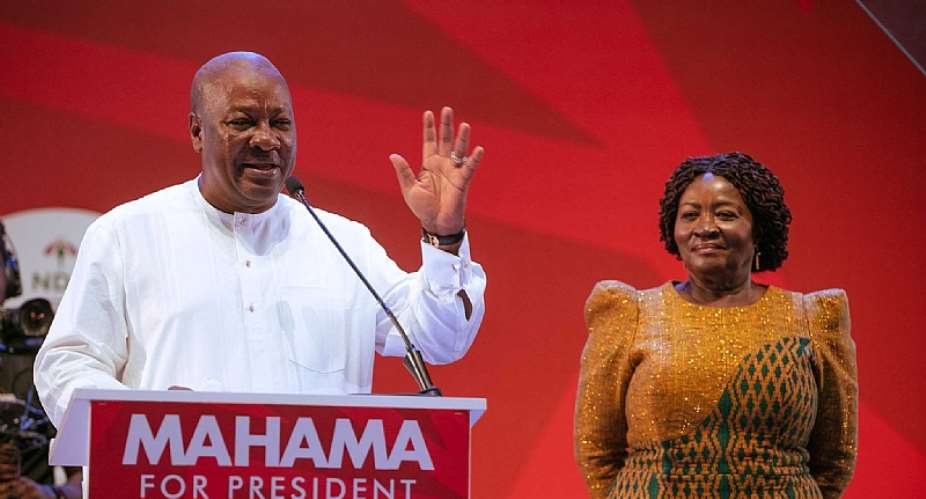
Ghanaians who care deeply about the strength and future of the country’s democracy continue to grapple with an important question: Is it too late for President Mahama and Vice President Opoku-Agyemang to alter Ghana’s current trajectory?
Many observers argue that meaningful change is still possible. Even at this stage, there remains room for decisive action that could reshape the tone and direction of national governance. The call for reform reflects a broader public desire for transparency, accountability, and a renewed commitment to democratic principles.
A significant starting point, frequently raised in public discourse, is the issue of asset declaration. Advocates for stronger governance standards suggest that a public declaration of assets by the President, the Vice President, and their spouses would set a powerful precedent for high-level officeholders. Such a gesture is often described as a confidence-building measure that could reinforce public trust and signal a clear commitment to integrity in public life.
Another proposal gaining attention is the strengthening of institutional checks on corruption. Commentators have long argued that granting the Auditor-General prosecutorial powers—through parliamentary legislation—would enhance the fight against high-level corruption and improve accountability across public institutions.
Reform advocates also highlight the importance of deepening local democracy. One of the most discussed measures is the election of Metropolitan, Municipal, and District Chief Executives (MMDCEs). Supporters of this idea contend that making these positions elective would shift local governance away from partisan control and toward community-driven development priorities. They argue that such a change would empower citizens, improve responsiveness, and ensure that local development reflects the needs of ordinary people rather than the interests of political actors.
If these reforms were pursued, many analysts believe they would represent a significant shift in Ghana’s political culture—one that could demonstrate a renewed commitment to transparency, accountability, and democratic participation.

 Cape Coast assembly declares war on floods, announces demolitions and emergency ...
 Fire guts GBC staff quarters in Wa
 PRINPAG condemns high court jailing of Herald Newspaper editor Larry Dogbe
 NPP gives disciplinary committee two weeks to probe petitions against Kennedy Ag...
 Yaw Dabo mistaken for a child on live 2026 World Cup broadcast
 Free-for-all fight at NPP NEC meeting as supporters clash over 'Ken Must Go' pro...
 TOR resumes crude oil processing after four years maintenance shutdown
 Cabinet approves State Assets Protection Bill to safeguard public property – Mah...
 Asantehene calls for engineering solutions to curb flooding in Ghana
 “I’ll divorce my wife If Ghana doesn’t beat Croatia” – Lil Win


