




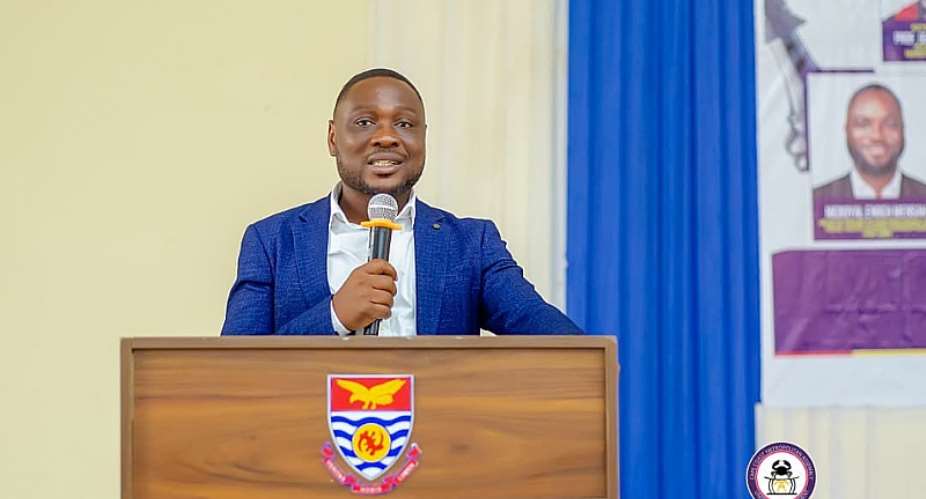
The Cape Coast Metropolitan Assembly (CCMA) has announced a comprehensive emergency response plan following a devastating rainstorm that claimed four lives and displaced nearly 3,000 residents.
Metropolitan Chief Executive George Justice Arthur unveiled the measures at a press conference on Thursday, June 25, 2026, saying the Assembly had identified major infrastructural and regulatory lapses that contributed to the flooding and was determined to prevent a recurrence.
The heavy rainfall on Friday, June 19, inundated several communities, including areas that had not previously experienced flooding. Among the worst affected were Ekon, Abura, the University of Cape Coast (UCC) and surrounding communities, Ameen Sangari, DVLA/Nokaans, Eyifua, Mpeasem, Adisadel, Nkanfoa, and Asenadze.
According to the MCE, the floods caused the collapse of 10 mud houses, resulting in the deaths of four people, including three children. One person remains missing, while eight others are in critical condition and receiving treatment at Ewim Polyclinic and the Cape Coast Teaching Hospital. In all, 2,929 residents have been displaced.
Mr Arthur said an assessment by the Assembly identified four major causes of the flooding. These include inadequate drainage infrastructure, the absence of a comprehensive drainage master plan, the existence of ageing mud buildings, unauthorized construction on waterways, and indiscriminate disposal of waste into drains and other unauthorized locations.
As part of the emergency response, the Assembly has established two committees to oversee enforcement and resettlement efforts.
The first committee has been tasked with identifying dilapidated structures, determining the number of occupants in affected buildings, identifying suitable land for resettlement, and preparing a funding proposal to support displaced residents.
The second committee will identify buildings constructed on waterways and walkways, verify the validity of building permits, develop plans for the removal of illegal structures, and identify historic buildings that can be preserved and restored for tourism purposes.
The Assembly has also outlined a long-term strategy to improve flood resilience across the metropolis. The plan includes the preparation of a drainage master plan, regular desilting of drains, expansion of existing drainage infrastructure, implementation of a community-based sanitation programme, and a major decongestion exercise.
Mr Arthur noted that the Assembly had undertaken several interventions following last year's floods, including the expansion of the Kru Town storm drain, desilting of drains at Aquarium and Abura, demolition of illegal structures at Adisadel and London Bridge, and the establishment of a joint technical committee with the University of Cape Coast.
Despite those measures, he acknowledged that the scale of the latest disaster has underscored the need for more far-reaching interventions.
With the Ghana Meteorological Agency forecasting more rainfall in the coming months, the Assembly says it is moving swiftly to implement the new measures to reduce the risk of future flooding and safeguard lives and property.


 Baffour Awuah wanted over alleged financial loss, dissipation of public funds an...
 Brazil is the main source of cocaine in Ghana by sea concealed in sugar containe...
 'The cacophony of noises surrounding my comments were pure mischief' — Chief Jus...
 ‘Judges must not abandon their humanity because of their judicial office’ – Chie...
 BoG personnel costs more than double to GH¢3.29bn in three years as staff number...
 GTEC flags over 100 tertiary institutions as unrecognised
 Political protection may be behind decline in visible cocaine trafficking in Gha...
 Ghana identified as source of explosives used in Sahel conflicts — Crime Index r...
 EOCO could have written to Speaker Bagbin instead of seeking arrest warrant for ...
 Reduce unnecessary remands, utilise Community Service Act – Chief of Staff urges...


