




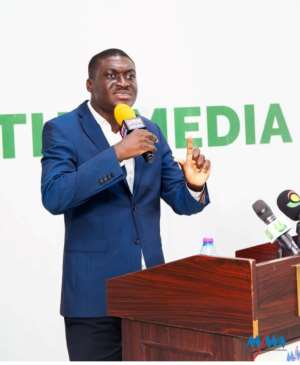
Today, June 26th, marks World Drug Day, a moment for global reflection on a crisis that claims lives, destroys families, and undermines national development. This year's theme, "The World Drug Problem: Persisting Issues, New Challenges, Innovative Responses," reminds us that while the landscape of drug abuse evolves, its fundamental tragedy remains unchanged: the perversion of substances that could heal into agents of harm.
As a toxicologist, I stand at the intersection of chemistry and human health. My daily work involves analyzing poisons, understanding their mechanisms, and determining how substances whether medicines or illicit drugs interact with the human body. From this vantage point, the line between a lifesaving medicine and a deadly poison is not a chasm but a razor's edge, defined primarily by a single variable (dose). This World Drug Day, I urge the world, and my fellow Ghanaians especially, to understand this delicate balance and recognize the emerging threats that blur it further.
The Golden Rule of Toxicology: "The Dose Makes the Poison"
This foundational principle, attributed to the Renaissance physician Paracelsus, remains the cornerstone of my field. Any substance, no matter how beneficial, can be harmful in the wrong amount. Even water, essential for life, can be lethal when consumed in extreme excess. Medicines are no exception. At the correct therapeutic dose, a drug can heal, reduce pain, or cure an infection. At an excessive dose, it can induce organ failure, respiratory depression, or death.
The therapeutic window range between a drug's effective dose and its toxic dose and varies widely. Some medications have a wide safety margin, while others, like certain heart medications or powerful painkillers, have a narrow one, where even a small miscalculation can prove fatal. This is why drugs are powerful tools, requiring respect and professional oversight. When used carelessly, they can cause harm.
The Ghanaian Context: A Generation at Risk
In Ghana, this toxicological truth is playing out with devastating consequences, particularly among our youth. The warnings from our national authorities are stark and data-driven. The Narcotics Control Commission (NACOC) has reported that the majority of individuals abusing drugs in Ghana fall within the 20 to 29-year age bracket, a demographic upon which our future depends. This trend carries immense implications for national development, productivity, and social stability. As NACOC's Director-General, Brigadier General Maxwell Obuba Mantey, has warned, Ghana risks losing a significant portion of its young population if decisive measures are not taken.
Data from the Ministry of Youth Development and Empowerment reinforces this alarm. Recent reports indicate that 41% of tertiary students and a staggering 37% of senior high school students have encountered drug use, a clear sign that the problem has permeated our educational institutions. First-time users are increasingly young, with 26% aged between 14 and 15, and 41% between 16 and 17. This early exposure comes at a critical period for brain development, impairing memory, learning, and emotional control, and setting the stage for a lifetime of struggle. The Minister for Youth Development and Empowerment rightly describe this as a growing national crisis that threatens the country's future workforce.
The Tramadol Crisis: A Case Study in Blurred Lines
Perhaps the most glaring example of the "thin line" in Ghana is the widespread misuse of Tramadol, a prescription opioid analgesic. Originally formulated for moderate-to-severe pain management, it has become a drug of choice for many young Ghanaians seeking an energy boost, enhanced physical performance, or euphoria.
A 2025 study published in the Archives of Public Health reveals the grim specifics of this trend. Among youth in urban informal settlements in the Asokore Mampong Municipality who use Tramadol, a shocking 44.5% reported using it daily, and 68.5% used it multiple times a day. More alarmingly, 36.5% were consuming dosage strengths of 225mg or higher which far exceeds the medically recommended 50mg dose. These higher doses are known to drastically exacerbate adverse effects, including the risk of fatal intoxication or seizures. The study also found that 75% of users consistently combined Tramadol with other substances, primarily energy drinks and alcohol, a practice that further worsens its toxicity. The research identified key social factors associated with severe misuse, including being young, male, unemployed, and having low income. This paints a picture of a vulnerable population, turning to a powerful synthetic opioid to cope with economic hardship and social pressures, inadvertently walking a path towards poisoning.
The New Frontier: Synthetic Drugs and Digital Markets
As warned by the National Drug Law Enforcement Agency (NDLEA) and the UNODC regarding this year's theme, new challenges are compounding old ones. The threat is no longer limited to traditional plant-based drugs like cannabis, which remains the most commonly abused substance in Ghana. We are now facing a wave of new synthetic substances, the abuse of prescription medicines, and the exploitation of young people by criminal networks operating on encrypted platforms and social media. These synthetic drugs are often more potent, more dangerous, and their effects are less predictable than natural substances, making them a nightmare for toxicologists and healthcare providers. The ability to order drugs with minimal human interaction through online platforms makes enforcement and prevention far more challenging.
Recommendations: A Call to Action
World Drug Day is not just for reflection; it is a call to action. As we confront these persisting issues and new challenges, a multi-pronged approach is essential for Ghana and the world.
For the Public and Patients: There is a critical need for education and awareness. Citizens must learn to respect medicines as powerful chemicals. Following prescribed instructions carefully and avoiding the mixing of medicines without professional advice are fundamental safety practices. The common habit of self-medication, buying prescription drugs from unlicensed sources, and sharing medications must be treated as a dangerous public health risk.
For the Government and Institutions: This calls for a sustained, coordinated national response. The partnership between NACOC and the National House of Chiefs is a welcome and innovative step, leveraging the influence of traditional leaders in community sensitization. This must be expanded. We need to strengthen counselling units in schools and communities; currently, only 36% of educational institutions have adequate support services for students dealing with substance-related problems. Decisive action is needed to disrupt trafficking networks and clamp down on the illicit online sale of drugs. Furthermore, interventions should be targeted at addressing the root causes of drug abuse such as poverty, unemployment, and social despair. As the Tramadol study suggests, creating gainful employment may be as effective a drug prevention strategy as any law enforcement.
For Healthcare Professionals: Vigilance is paramount. We must educate patients on the therapeutic and toxic potential of prescribed drugs. We must also look out for signs of non-medical use and dependency, especially regarding prescription opioids. The development of accessible, community-based treatment programs for drug use disorders is an urgent necessity.
For the Media: Continue to educate the public on this "thin line." Reports should not just sensationalize seizures and arrests but also explain the toxicological realities and health consequences. Raising awareness about both acute and chronic toxicity is vital, as drug toxicity may show up suddenly or gradually.
As a toxicologist, I see a future where scientific literacy informs public policy and individual choices. This World Drug Day, let us move beyond stigmatization and towards education and evidence-based action. Let us remember that today, which is World Drug Day, the line between healing and harm can be found in a single misused pill. We must protect our generation and future generations from crossing that line.
Authored by: Yakubu Adam, Toxicologist-FIND-GH ([email protected])
References
- Ghana Health Service. (2024). National Drug and Substance Abuse Report. Accra: Ministry of Health.
- Mantey, M. O. (2025). Annual Report on Narcotics Control and Drug Abuse in Ghana. Narcotics Control Commission (NACOC).
- Ministry of Youth Development and Empowerment. (2025). Youth and Substance Abuse Survey Report. Government of Ghana.
- National Drug Law Enforcement Agency (NDLEA). (2025). Emerging Synthetic Drug Threats in West Africa. NDLEA Publications.
- Owusu-Ansah, F., Mensah, K., & Adjei, S. (2025). Patterns and correlates of Tramadol misuse among youth in urban informal settlements in Ghana. Archives of Public Health, 83(1), 45-58.
- Paracelsus. (1538). Die dritte Defension wegen des Schreibens der neuen Rezepte. (Reprinted in Paracelsus: Selected Writings, 1995).
- United Nations Office on Drugs and Crime (UNODC). (2025). World Drug Report 2025. Vienna: UNODC.
- World Health Organization. (2024). Guidelines for the Safe Use of Opioid Analgesics. Geneva: WHO Press.


 Court dismisses Afenyo-Markin’s GH¢15m defamation suit against Sammy Gyamfi over...
 NDC’s Affi Agbenyo appointment seeks to balance EC’s partisan composition – Hamz...
 MoMo payments also attract 20% digital services tax, not only banks – GRA
 October 14: Cedi sells at GHS12.30 on forex market, GHS11.71 on BoG interbank
 Majority's accusation against Asafo Adjei to divert attention from South Africa ...
 PMMC audits were initiated in 2024, not 2025 – Former MD replies Sammy Gyamfi
 Fire at GRIDCo’s Mallam Substation disrupts power supply to parts of Accra
 Chairman Wontumi’s lawyer says plea-bargaining talks with state ended over unfav...
 University Administrators demands 114% market premium before calling off strike
 We need your support in fight against illegal mining - Mahama appeals to chiefs



Comments
Thank you sir for this eye opener, may we read, understands and practice as proposed.