




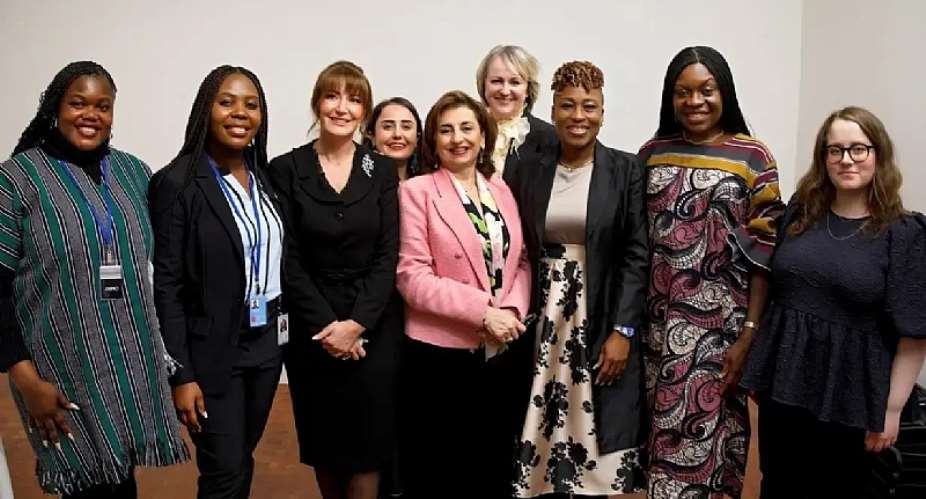
On the sidelines of the ongoing 70th session of the Commission on the Status of Women in New York, the UN Women Leaders Network, in collaboration with the Government of Iceland and the United Nations Foundation, convened a high level side event bringing together emerging and established women leaders to address one of the most pressing challenges in gender equality: access to justice for women and girls.
The event, titled Women Leaders Paving the Way: Access to Justice for All Women and Girls, was held on March 11 and gathered an intergenerational group of leaders from law, policymaking, research, youth activism and public advocacy. Participants examined how women’s leadership can reshape justice systems and dismantle structural barriers that prevent women and girls from fully realising their rights.
A document from UN Women obtained by Communication for Development and Advocacy Consult revealed that the discussions took place against a challenging global backdrop marked by widening inequalities, democratic backsliding and persistent discriminatory laws. These concerns align with the priority theme of CSW70, which focuses on strengthening inclusive and equitable legal frameworks for women and girls.
Founder of the Jahjaga Foundation, Atifete Jahjaga, stressed the urgency of collective action and accountability.
“We couldn’t find a better moment to convene and to be here together than today. While the world is under fire, we are more than ever in need of uniting, because women and children are the ones who are suffering the greatest consequences. And it is our moral obligation as leaders to join forces and respond,” she said.
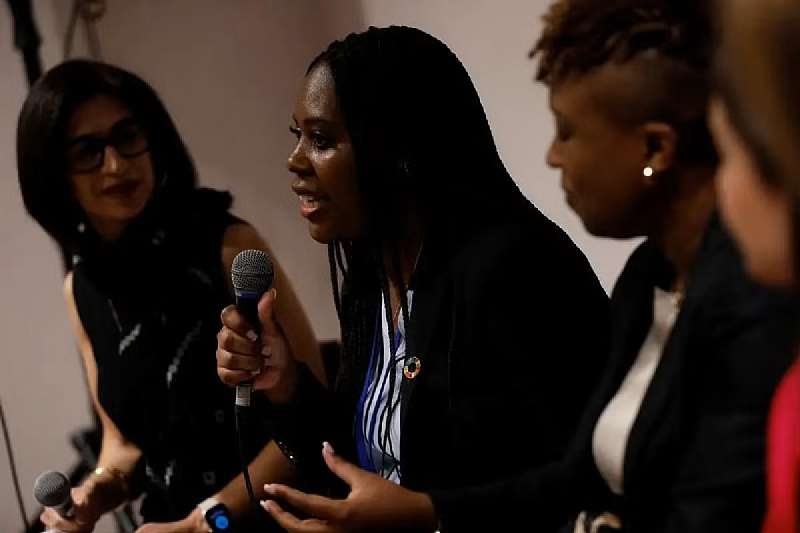
Young voices also played a central role in the dialogue. Human rights lawyer and United Nations Young Leaders for the SDGs member İlayda Eskitaşcioğlu highlighted the need for stronger accountability structures.
“Leaders must start rewarding connected accountability. They say that a chain is only as strong as its weakest link. I do not agree with that. A chain is as strong as how well linked and how well connected it is,” she said.
Shantel Marekera Chakara of the World Bank Group programme Women, Business and the Law reflected on the critical role of legal frameworks in shaping women’s everyday opportunities.
“For me, access to justice means women and girls not having to think twice about making basic decisions. Whether we are going to walk safely to work, whether we can even access education, or whether we are going to get the same pay,” she said.
The discussion was moderated by human rights lawyer Yasmeen Hassan, former Global Executive Director of Equality Now, who emphasised the importance of collaboration across sectors in advancing gender justice.
The event ended with a strong call for collective mobilisation. Lawyer, political activist and founder of Women in Leadership, Shola Mos-Shogbamimu, urged participants to rethink traditional approaches to justice reform.
“I believe in mass mobilisation. Access to justice has to be achieved unconventionally. It has to be achieved in untraditional ways because that is where we ought to be today,” she said.
Closing the session, Sima Bahous, Executive Director of UN Women, highlighted proven strategies for expanding justice for women and girls.
“We know what works: integrated justice systems. Accessible legal services and legal aid free of charge. Strong and well funded women’s organisations. Inclusive technologies and robust data. Women’s leadership, always and in every space,” she stated.
The overall message from the gathering was clear: advancing justice for women and girls requires not only stronger laws but also courageous leadership, sustained political will and coordinated action across governments, civil society and international institutions.
Meanwhile, Ministry of Gender, Children and Social Protection (Ghana) is using the global platform to highlight Ghana’s progress in promoting gender equality, while representatives from civil society organisations and women’s rights groups are expected to raise ongoing challenges affecting women and girls.
Ghana plans to showcase its gender mainstreaming policies and highlight national efforts to combat gender based violence. The country is also expected to host a side event to promote its cultural identity, including traditional and national attire.
The Commission on the Status of Women remains the principal global intergovernmental body dedicated exclusively to promoting gender equality and the empowerment of women. It was established in 1946 by the United Nations Economic and Social Council.
For seven decades, the commission has played a central role in advancing women’s rights by documenting the realities of women’s lives worldwide and shaping international standards on gender equality.
As the body marks its 70th session, global leaders say its work remains essential in addressing persistent challenges such as inequality, violence against women, conflict, climate change, food insecurity and democratic erosion. They stress that achieving gender equality is critical to accelerating progress toward the Sustainable Development Goals and the 2030 Agenda.
 Iran offers strait deal, Trump says he's not satisfied
 Here are areas to be affected by ECG's planned maintenance today
 Suma Paramount Chief commends President Mahama’s development agenda
 How faulty fan regulator sparked fire, destroyed two rooms at Suhum Konfine
 Don’t store bread beyond four days – Baker advises
 Mahama cuts sod for construction of 24-hour economy market at Asesewa
 Mahama commissions divisional police headquarters at Laasi, Krobo-Odumase
 Lambussie district assembly fails to elect presiding member after two rounds of ...
 Public sector workers struggling to meet pressing needs – TUC secretary
 Seven arrested in Ashaiman police operation over robbery, arms supply


