




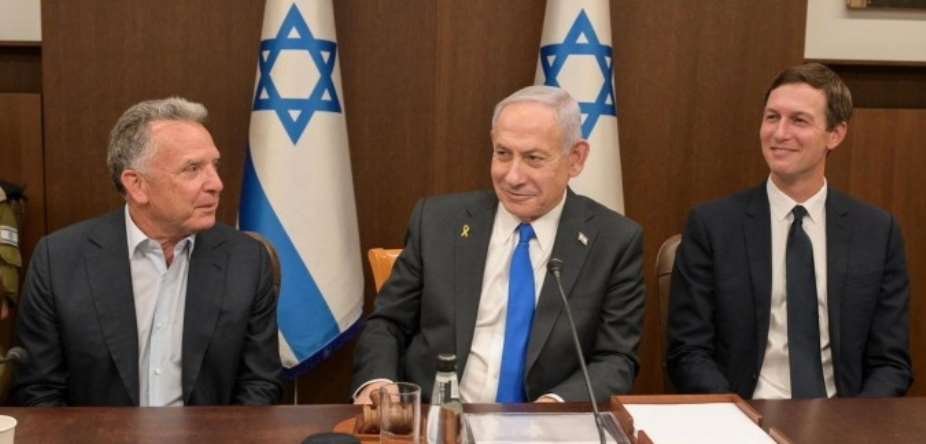
In recent years, Jared Kushner and Steve Witkoff have emerged as unusual figures in Middle East diplomacy. Neither came from traditional diplomatic backgrounds. Instead, both were real-estate businessmen closely tied to Donald Trump, and their involvement in negotiations over Israel, Palestine, and the wider region has sparked debate about whether they were pragmatic “deal‑makers” or political manipulators shaping outcomes behind the scenes.
Real Estate Diplomacy
Kushner’s approach to the Middle East was heavily influenced by his background in real estate. Critics say he viewed regional conflicts less as historical struggles and more as negotiations similar to business deals. According to reports, Kushner himself described diplomacy as something different from traditional foreign policy because he and his colleagues were “deal guys” rather than historians or diplomats.
This mindset shaped the 2019 U.S. Middle East peace proposal, often called the “Deal of the Century.” The plan focused strongly on economic investment and regional cooperation but was criticized for excluding Palestinian leadership from its development and negotiations.
Many analysts argued that this technocratic and business driven approach ignored the historical, political, and humanitarian dimensions of the conflict.
The Witkoff–Kushner Negotiating Style
Steve Witkoff later joined Kushner as one of Trump’s key envoys dealing with the Israel–Palestine conflict. Both men operated with unusually broad authority from the White House, often conducting negotiations directly with regional actors.
In one reported episode during negotiations over the Gaza war, the two envoys even met directly with senior Hamas representatives in Egypt. The meeting reportedly helped break a deadlock and contributed to a ceasefire agreement and prisoner exchange plan.
Supporters of their approach argued that their informal style and close relationship with the U.S. president allowed them to move quickly and bypass bureaucratic barriers.
Criticism and Allegations of Manipulation
However, critics have described their role as manipulative or biased. Some analysts argue that Kushner’s diplomacy consistently prioritized Israeli interests while sidelining Palestinian concerns.
Others raised concerns about potential conflicts of interest, noting that Kushner maintained business ties and financial relationships in the region while simultaneously conducting diplomacy.
Intelligence reports earlier in Trump’s presidency even suggested that officials from several countries believed Kushner’s lack of diplomatic experience and complex business interests made him vulnerable to manipulation by foreign governments.
Impact on U.S. Relations with Israel, Saudi Arabia, and the Gulf States
Kushner’s Middle East strategy fundamentally reshaped U.S. engagement in the region:
Israel – Kushner fostered a close, personal relationship with Israeli Prime Minister Benjamin Netanyahu, supporting policies aligned with Israeli security priorities. This included backing the annexation of parts of the West Bank in policy discussions, while also orchestrating economic initiatives for Palestinian territories.
Saudi Arabia – Kushner’s frequent visits to Riyadh and coordination with Crown Prince Mohammed bin Salman strengthened bilateral ties but drew criticism for overlooking human rights concerns. He positioned Saudi Arabia as a key partner in regional stabilization, including financial backing for Palestinian economic projects and indirect support for Gulf-backed ceasefire efforts in Gaza.
The Gulf States – The Abraham Accords, which normalized relations between Israel, the UAE, Bahrain, and later Sudan and Morocco, are often cited as Kushner’s signature achievement. By leveraging economic incentives and high-level diplomacy, he created a new framework for Gulf-Israeli cooperation, though critics note that Palestinian political grievances remained largely unaddressed.
Overall, his approach prioritized strategic alliances, economic deals, and personal diplomacy over long-standing conflict resolution frameworks, leaving a mixed legacy: tangible agreements and partnerships, but unresolved core tensions.
Conclusion:
Kushner and Witkoff’s involvement in Middle East diplomacy illustrates a shift toward business style negotiation in geopolitics. They helped strengthen U.S. ties with Israel and key Gulf partners, opened new economic and security channels, and brokered high-profile deals like the Abraham Accords. Yet their methods drew accusations of manipulation, biased prioritization, and inadequate attention to historical grievances, particularly regarding the Palestinian question.
Mustapha Bature Sallama.
Medical/ Science Communicator,
Private Investigator, Criminal investigation and Intelligence Analysis.
International Conflict Management and Peace Building.USIP
[email protected]
+233-555-275-880

 Iran says closed Strait of Hormuz as US deal hits obstacle ahead of Swiss talks
 World Cup 2026: Brobbey, Gakpo score braces as rampant Netherlands crush Sweden
 'What power do you have to collapse NPP you did not build?' – Awal Mohammed jabs...
 Chaos at Central University as vendors demand refunds after SRC Week cancellatio...
 GMet issues severe weather alert for Northern Ghana as heavy rainstorm approache...
 Ken Ofori-Atta is the first Ghanaian minister to use sickness to flee from accou...
 Family demands justice for 14-year-old girl allegedly raped, killed in Binaba
 Trump cuts HIV funding to South Africa
 88 dilapidated buildings marked for demolition in Sekondi-Takoradi
 Police crack suspected robbery network in Ashanti South, two suspects killed in ...


