




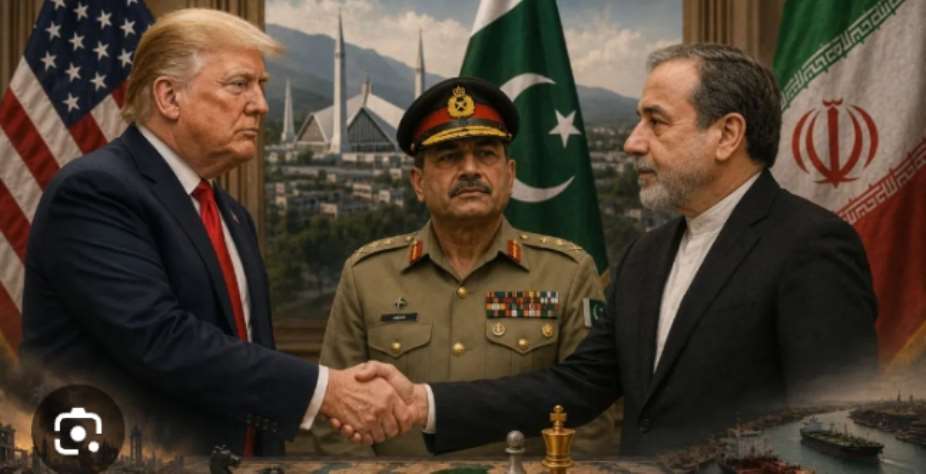
After 109 days of open warfare between the United States, Israel and Iran, a memorandum of understanding signed electronically in Switzerland on June 17, 2026 by President Trump, Vice President JD Vance and Iranian Parliament Speaker Mohammad Bagher Ghalibaf has formally ended the fighting on paper. But as Al Jazeera's daily wrap-up coverage has made clear, the gap between a signed agreement and a genuine peace remains wide, contested, and in places actively violated even as the ink dries.
What the Deal Actually Says
Iran's National Security Council has described the agreement as ending fighting on all fronts, including in Lebanon, and lifting the US naval blockade on Iranian ports. Both sides have said negotiations over Iran's nuclear programme and sanctions relief will continue during a 60-day follow-up period. Trump declared the Strait of Hormuz would be open to all from the day of signing, while Vance said there would be no tolls on traffic through the waterway during that window, and CENTCOM has confirmed that blockade enforcement efforts have ceased, though US forces remain in the region. Pakistan's Prime Minister Shehbaz Sharif also signed the memorandum, underscoring the deal's regional dimension beyond the three primary belligerents.
Iran: Survival Claimed as Victory
For Tehran, the central objective throughout the war was never battlefield supremacy but regime survival, and on that narrow measure Iran considers itself to have prevailed. The human and military cost, however, has been severe. The war killed more than 3,400 Iranian citizens, including dozens of senior political and military leaders, and within the first two weeks Iranian missile and drone attacks had fallen by 90 percent as US and Israeli strikes destroyed launchers faster than Tehran could replace them. The conflict exposed the limits of a deterrent built over two decades, leaving Iran unable to fully protect its leadership, its arsenal, or its nuclear programme. Yet survival of the governing system, regardless of cost, is the metric by which Tehran is choosing to measure the outcome, and it is presenting the war's end as a vindication of that endurance.
Washington: A Win-Win Narrative Under Strain
JD Vance has publicly called the agreement a win-win for the American people, pointing to falling oil prices and resumed flows through Hormuz as evidence of success. That framing sits awkwardly beside Trump's earlier characterization of the deal as Iran's unconditional surrender, a claim that itself threw the negotiations into temporary doubt and delayed Vance's planned diplomatic trip.
The contradiction between declaring total victory and then negotiating sanctions relief and nuclear talks as equal partners has left analysts questioning how durable Washington's framing of this outcome will prove to be, particularly with pro-Israel groups and politicians already signaling intent to push back against further diplomatic normalization with Tehran.
Lebanon: The Unfinished Front
The clearest evidence that this remains a fragile peace rather than a resolved one is Lebanon. Despite the MoU's claim to end fighting on all fronts, Israeli attacks across southern Lebanon killed at least 47 people in the 24 hours before June 19 alone, prompting Iran's Foreign Ministry to denounce what it called Israel's continued war-making and warn of serious and immediate consequences. A US official has said Israel and Hezbollah agreed to renew their ceasefire even as the attacks continued, a pattern that has repeated itself throughout the post-MoU period: diplomatic commitments on one track, continued strikes on another. Tehran has reportedly held back from fully cementing ceasefire arrangements specifically because of these ongoing Israeli operations in Lebanon, making the Lebanese front the single greatest threat to the broader deal's survival.
The Strait of Hormuz: A Recovery That May Never Be Complete
Beyond the political battlefield, the war's commercial scars may prove the longest-lasting. Saman Rezaei, head of Iran's merchant marine union, told Al Jazeera he believes Hormuz transit will never return to its pre-war condition, with genuine recovery depending on a convergence of sustainable peace, reduced perceived threat, and multiple cycles of incident-free transit. Some 22,000 seafarers were stranded in the Gulf for nearly four months during the conflict, many suffering significant hardship, and their safe departure remains an immediate humanitarian priority independent of the war's political outcome.
The Questions Still Hanging Over the Peace
What emerges from Al Jazeera's running assessment is a peace defined more by what it has not yet resolved than what it has settled. Iran's nuclear programme remains an open question for the 60-day follow-up talks. Sanctions relief is promised but undelivered. Lebanon continues to absorb Israeli strikes despite a renewed ceasefire. And the credibility of Hormuz as a secure shipping corridor may take years, not weeks, to rebuild. Both Washington and Tehran are claiming forms of victory that are difficult to reconcile with the facts on the ground, a sign that this ceasefire, however formally signed, remains a beginning rather than a conclusion.
Mustapha Bature Sallama.
Medical/ Science Communicator,
Private Investigator, Criminal investigation and Intelligence Analysis.
International Conflict Management and Peace Building.USIP
[email protected]
+233-555-275-880
References
Al Jazeera "Iran war day 109: Tehran, Washington, sign MoU electronically," June 16, 2026
Al Jazeera "LIVE: Israel, Hezbollah agree ceasefire, says US official; attacks continue," June 19, 2026
Al Jazeera "Iran after 100 days of war: The triumph of survival," June 7, 2026
Al Jazeera "Israeli attacks on southern Lebanon kill three despite US-Iran deal," June 18, 2026
Al Jazeera "As Lebanon tests US-Iran deal, Trump must rein in Netanyahu, analysts say," June 19, 2026
Al Jazeera "What's in the US-Iran agreement? Read the US account of the unreleased 14-point ceasefire memorandum," June 17, 2026
Al Jazeera "Iran war updates: Trump says US-Iran deal to be signed on Sunday," June 13, 2026
Al Jazeera "US-Israel war on Iran" tag page, latest updates
Al Jazeera Newsfeed "Trump claims victory in Iran but is this really a win?" with Kimberly Halkett, April 8, 2026

 Israel strikes south Lebanon despite truce announced with Hezbollah
 'United front' on slavery reparations after historic summit in Ghana
 Trump unveils new Air Force One converted from luxury jet gifted by Qatar
 Mexican archaeologists unearth 'unprecedented' ancient ruins with Mayan features
 Trans-Saharan Gas Pipeline: an African dream that could reshape world energy mar...
 Israel, Hezbollah agree to ceasefire in Lebanon as attacks strain US-Iran interi...
 DR Congo's deadly Ebola outbreak is 'evolving fast', WHO warns
 Ireland deports 42 South Africans
 Chief Justice Baffoe-Bonnie's Canada trip self-funded — Judicial Service
 Boakye Agyarko is best suited to lead NPP as National Chairman – Kpandai MP


