




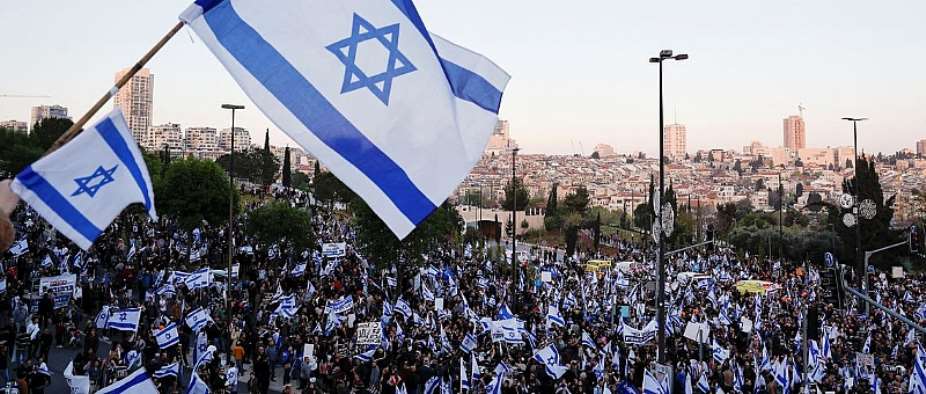
When most people think of Israel, especially Christians in Ghana, Nigeria and several East African countries, they imagine a deeply religious nation. The land of the Bible, the birthplace of Judaism, home to the Western Wall in Jerusalem, and the fulfillment of God’s covenant with the Israelites. Yet, anyone who visits Israel or studies its people quickly realizes that reality is far more nuanced. From secular cities to ultra-Orthodox communities, from cultural Judaism to modern politics, the religious life of Israelis defies simple stereotypes. In this article, we explore the truths, misconceptions, and fascinating revelations about how religion shapes, and sometimes challenges, life in Israel.
Israel: A Secular Nation in a Religious Land
One of the most surprising facts about Israel is that, while it is the historic homeland of the Jewish people, it is actually one of the most secular societies in the Middle East. Surveys suggest that roughly 65% of Israeli Jews identify as “not religious”, yet this does not mean they are atheists. Many are secular or culturally Jewish, maintaining traditions and identity without strict observance of religious laws. In fact, about 70-80% of Israelis say they believe in God, even if they do not regularly attend synagogue or follow every commandment of the Torah. This distinction is critical. In Israel, “not religious” is often a cultural identity rather than a denial of God. Many secular Israelis still celebrate major Jewish holidays --- Passover, Hanukkah, Yom Kippur --- as family or national traditions rather than strictly religious observances. Unlike in Christianity or Islam, where belief defines membership, Judaism allows for strong ethnic and cultural identity without strict religious practice.
A Historical Legacy of Secularism
The secular nature of modern Israel has roots in history. The founders of the Zionist movement that led to the creation of the modern state in 1948 were largely secular nationalists. Leaders such as David Ben-Gurion, Israel’s first prime minister, valued Jewish culture, history, and nationhood more than personal religious devotion. Moreover, many European Jewish immigrants came from societies influenced by enlightenment ideas, socialism, and secular nationalism. They envisioned Israel as a safe homeland and national project, rather than solely a religious state.
The Role of the Covenant and Biblical Patterns
Despite modern secularism, the story of Israel cannot be separated from its biblical roots. According to the Hebrew Bible, God made a covenant with Israel. Obedience would bring blessing and prosperity, while disobedience would bring hardship and exile. Yet the Bible repeatedly describes Israel as struggling with obedience.
A recurring pattern appears in books like Judges:
- The people follow God.
- Prosperity makes them complacent.
- They turn to other gods or ignore the commandments.
- They face hardship or oppression.
- They repent and are restored by a leader or prophet.
This cycle reveals a timeless truth: spiritual life is a struggle, even for God’s chosen people. Prosperity, outside influence, and changing leadership all test faithfulness.
Secular Israelis: Cultural, Not Pagan
It is important to clarify what “non-religious” means in Israel. Most secular Israelis are not atheists in the Western sense, nor do they practice pagan rituals. Instead, they often see Judaism as culture, heritage, and identity, while maintaining belief in God or at least a connection to spiritual ideas. Even among the 20-30% who might identify as atheist, the majority still celebrate Jewish traditions as cultural festivals, demonstrating that Jewish identity is as much about peoplehood and history as it is about theology.
The Religious Heart of Israel: Haredi and Orthodox Communities
While many Israelis are secular, religious communities in Israel, especially Haredi Jews (Ultra-Orthodox) are growing rapidly. Haredi families often have 6-7 children on average, compared with 2-3 among secular families, which means their population share is steadily increasing. Haredi communities prioritize religious education, with boys studying in yeshivas for many years, learning the Torah and Talmud. These communities often live in close-knit neighborhoods in Jerusalem, Bnei Brak, and other cities, preserving traditional lifestyle and strong family bonds. As a result, Haredi political parties such as Shas and United Torah Judaism wield growing influence in Israeli politics, advocating for religious education, observance, and exemptions for religious study. This demographic trend may significantly shape Israel’s social and political landscape in the coming decades.
Diverse Views on the Modern State
Even within Judaism, there is debate about whether the modern state of Israel fulfills the biblical covenant. Some ultra-Orthodox groups, such as Neturei Karta, argue that the true restoration of Israel must only occur with the coming of the Messiah, and that human-led political creation of the state cannot yet be the promised redemption. Meanwhile, religious Zionists see the founding of Israel in 1948 as part of God’s plan, a step toward redemption even if the state is not fully observant. This diversity reflects a key feature of Judaism. Faith is interpreted through multiple lenses, balancing tradition, prophecy, and modern reality.
Chosen, Yet Judged
One of the most fascinating and often misunderstood aspects of Israel’s biblical identity is that, although chosen by God, Israel is frequently judged more strictly than other nations. This principle, summarized as “to whom much is given, much is required”, appears throughout Deuteronomy, Judges, Kings, and the Prophets. Because Israel has received God’s law and guidance, the people bear greater responsibility. Disobedience results in exile, oppression, or hardship. The prophets explain that trials and punishment are intended to restore the nation to faithfulness, not to reject it.
Jewish and Christian Perspectives
Interpretations of God’s covenant differ between Judaism and Christianity:
- Judaism sees the covenant as eternal and ongoing, tied to obedience to the Torah and the identity of the Jewish people.
- Christianity often interprets the covenant as fulfilled or renewed through Jesus Christ, emphasizing faith and spiritual transformation.
Even within Christianity, views diverge. Some believe the church replaced Israel in God’s plan (Supersessionism), while others, including Christian Zionists, see Israel as continuing to play a special role in prophecy. These differing interpretations highlight the complexity of understanding Israel’s religious identity: one nation, multiple spiritual narratives.
Lessons for Modern Readers
Understanding the religious lives of Israelis offers several insights:
- Identity is multifaceted: Being Jewish in Israel can mean religious devotion, cultural heritage, or national belonging.
- Obedience is challenging: Even those chosen by God face cycles of faithfulness and disobedience.
- Secular does not mean godless: Many Israelis retain belief and tradition in ways outside formal religious observance.
- Demographics shape the future: Rapid growth of religious communities will influence Israel’s culture and politics in coming decades.
- Faith and culture intertwine: The modern Israeli experience demonstrates that religion, culture, and nationhood are deeply connected.
My Thoughts
Israel is a country of contrasts. Secular cities and ultra-Orthodox neighborhoods, ancient holy sites and modern skyscrapers, Jewish cultural identity and vibrant democracy. Its people are bound by history, faith, and the ongoing story of a covenant that demands both blessing and responsibility. Understanding these nuances allows us to see beyond stereotypes and appreciate the complex, evolving religious life of Israel, a nation where faith, culture, and identity continually intersect. For readers in Ghana and beyond, these insights reveal that religion is not just about belief or ritual, it is about heritage, responsibility, and the human struggle to live up to higher ideals. Israel teaches that even a chosen people face challenges, yet their story continues to inspire reflection and conversation across the world.
FUSEINI ABDULAI BRAIMAH
+233208282575 / +233550558008
[email protected]

 July 3: Cedi sells at GHS12.25 on forex market, GHS11.40 on BoG interbank
 'Resign if you still don't understand double track' — Kwasi Kwarteng tells Educa...
 'We're building an electronic warfare centre to strengthen security surveillance...
 'June 29 floods were not caused by YEA-Zoomlion contract cancellation' — Manasse...
 Don't consume any food or product retrieved from June 29 flood waters — FDA caut...
 AMA begins week-long clean-up to clear debris of June 29 floods
 NADMO, Zoomlion Intensify Drain‑Clearing Blitz Under “No Do No Do” Campaign Afte...
 High Court Orders Extradition of ‘Abu Trica’ to U.S. in Alleged $8m Romance Scam...
 NHIA Announces Free NHIS Registration for Accra Flood Victims Amid Cholera, Diar...
 COCOBOD Releases GH¢2.6bn to LBCs to Clear Outstanding Payments to Cocoa Farmers
