




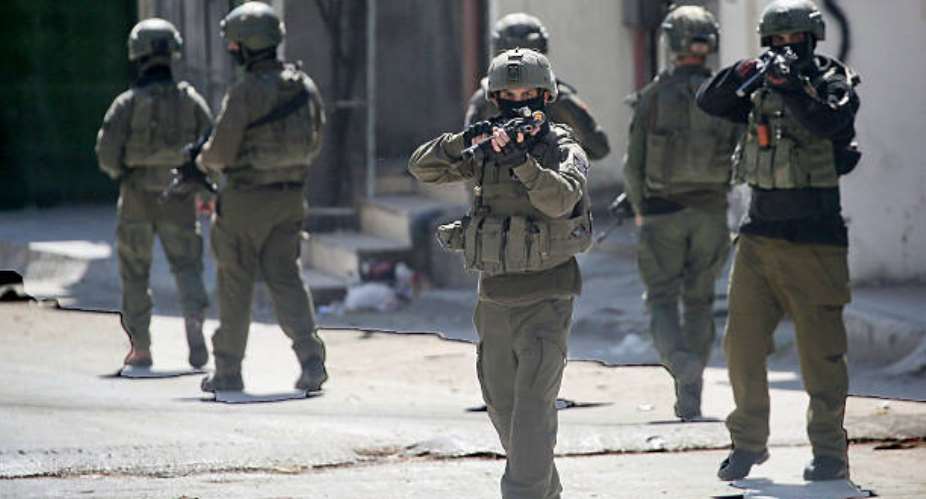
The 2026 Israel–Iran war represents a moment of strategic consequence that extends far beyond the historical tensions between the two states. Since the establishment of the Islamic Republic in 1979, Israel and Iran have been locked in a complex rivalry, punctuated by proxy conflicts, covert operations and intermittent direct engagements. What began in late February 2026 as coordinated joint strikes by Israel and the United States against Iranian military and nuclear targets has rapidly escalated into a multifaceted conflict spanning multiple theaters, from Tehran and Isfahan to the Strait of Hormuz, and drawing in regional actors while triggering global concerns over energy security, trade routes and the broader architecture of deterrence in the Middle East.
During this crucible of combat, Israel’s military superiority, cultivated over decades through investment in advanced weaponry, integrated intelligence systems and doctrinal rigour, has been tested against a larger, determined adversary that seeks not only battlefield advantage but also the imposition of regional costs. The unfolding conflict underscores how Israel’s operational doctrine and strategic integration continue to outperform Iran’s military capabilities, even under conditions of extreme escalation and widespread retaliation.
A New Phase in an Old Rivalry
The current war erupted on 28 February 2026, when Israel and the United States launched coordinated strikes against Iran in operations respectively codenamed Operation Lion’s Roar and Operation Epic Fury. The targets included strategic military infrastructure, government facilities, nuclear sites and logistical nodes across major Iranian cities, including Tehran, Isfahan, Qom, Karaj and Kermanshah. The strikes included precision operations against senior leadership, with multiple sources confirming the killing of Supreme Leader Ayatollah Ali Khamenei in the joint U.S.–Israel attacks, a development that represents a seismic shift in Iran’s political and military hierarchy.
The immediate objective of these strikes was to degrade Iran’s ability to wage war, disrupt its ballistic missile and drone capabilities and weaken its nuclear programme, concerns that have driven Israeli and US strategic thinking for decades. Iran responded swiftly, launching retaliatory missile and drone attacks targeting Israel, US military positions in the region and critical infrastructure in Gulf states hosting American forces. Iran also moved to close the Strait of Hormuz, a chokepoint for roughly 20% of global oil shipments, sending shockwaves through international energy markets and underscoring the global ramifications of the conflict.
The rapid escalation distinguishes the 2026 war from the comparatively contained 12‑day Israel–Iran clash in 2025. While the earlier engagement demonstrated Israel’s technological and operational superiority, the battlefield was largely limited to direct exchanges of missiles, drones and air strikes. The 2026 conflict, by contrast, incorporates multi‑front hostilities, proxy escalations such as Hezbollah’s missile attacks from Lebanon, cyber operations and a broader geographic scope involving Gulf states and critical global infrastructure. This shift highlights a new era of conflict, in which modern wars are multi-dimensional, interconnected and capable of immediate international impact.
Strategic Superiority Through Technology, Doctrine and Alliances
Israel’s qualitative advantage over Iran is foundational to its military strategy. The Israeli Defense Forces (IDF) have invested decades in developing advanced aviation platforms, integrated missile defense systems, precision-guided munitions and near-real-time intelligence fusion. These capabilities are complemented by extensive interoperability with US forces, amplifying operational reach far beyond what Israel could sustain independently.
Iran, while possessing a numerically larger force and an extensive missile inventory, suffers from outdated equipment, limited access to cutting-edge technology due to longstanding sanctions and fragmented logistics infrastructure. These limitations are exacerbated by internal political constraints and the regime’s reliance on paramilitary forces and proxy networks for regional influence.
The strategic payoff of Israel’s investment became evident in the opening phases of the 2026 conflict. Israeli and US forces reportedly struck thousands of targets while maintaining air superiority over key Iranian airspace, a feat that enabled subsequent precision strikes against missile launchers, command centers and critical logistical networks. Iran, recognizing its conventional inferiority, pivoted towards asymmetric strategies; launching missile and drone salvos aimed at imposing economic, political and psychological costs on adversaries. While these tactics generate disruption, they do not challenge Israel’s air dominance directly, illustrating the operational gap between the two militaries.
Operational Dominance
Control of the air and mastery of operational tempo are decisive in modern conflict. In 2026, Israel’s integration of air power, precision strike capability and real-time intelligence has allowed it to dictate the pace of combat. More than 2,000 Iranian targets have reportedly been struck since the onset of hostilities, with Israeli forces prioritizing missile systems and command nodes, while US assets focus on air defense suppression and logistical networks.
This operational dominance produces effects beyond simply reducing Iran’s military capabilities. By neutralizing air defenses early, Israeli and American forces create “windows of opportunity” for coalition aircraft to operate with lower risk, allowing for deep strikes against high-value targets. Even amid heavy Iranian retaliation, the coalition’s ability to maintain freedom of movement underscores the gulf between Israel’s operational design and Iran’s limitations.
The cumulative effect is clear: Israel can degrade Iranian warfighting capacity while imposing costs that Iran struggles to reciprocate at comparable scale. In modern war, such control over initiative and precision targeting often proves more decisive than sheer numerical advantage.
Tactical Resilience
Israel’s multi-layered air and missile defense systems, including Iron Dome, David’s Sling and the Arrow family, have once again proven decisive in the 2026 conflict. Hundreds of Iranian missiles and drones launched in retaliatory salvos have been intercepted, minimizing civilian casualties and preserving critical infrastructure.
The effectiveness of these systems relies on more than technology. Sensor networks, command-and-control integration, and rapid response protocols are all crucial in ensuring interceptors are deployed where and when needed. This operational depth provides Israel not only protection for civilians but also sustained operational flexibility, allowing offensive campaigns to continue despite ongoing missile barrages.
Iran, conversely, relies on saturation attacks, seeking to overwhelm defenses through quantity rather than quality. While theoretically possible to breach any defense with sufficient volume, Israel’s layered network is uniquely deep and informed by decades of experience combating both state and non-state actors. The result is a defensive resilience that amplifies Israel’s strategic freedom in both offensive and defensive operations.
The Economics of Offense and Defense
A key but often overlooked aspect of modern warfare is the economic imbalance between offensive and defensive systems. Each Iranian missile launched represents a relatively inexpensive investment, but interception by Israel’s advanced systems often costs multiples of the offensive weapon’s price. This creates a long-term strategic advantage for Israel, as it can absorb and replenish defensive capacity with US logistical support while Iran faces constraints in missile stockpile regeneration.
In the 2025 12-day clash, Israel reportedly destroyed half of Iran’s missile inventory, slowing Tehran’s replenishment capacity. The 2026 conflict suggests this attrition continues, constraining Iran’s ability to sustain high-volume attacks without external aid. This economic asymmetry underscores how Israel’s qualitative edge, reinforced by alliance support, can produce disproportionate operational effects in extended high-intensity conflict.
Regional and Global Geopolitical Ramifications
The 2026 conflict reverberates far beyond Israel and Iran. Iranian retaliation has manifested in attacks on US bases, provocations towards Gulf states and threats to global energy flows through the Strait of Hormuz. One notable incident involved a missile, likely of Iranian origin, intercepted near Turkish airspace by NATO forces, illustrating how the war’s effects extend beyond the immediate combatants and potentially trigger multilateral responses.
Iran’s strategy is designed not merely for battlefield success but for raising the geopolitical costs of intervention. By threatening energy shipments, disrupting global trade and creating instability, Tehran seeks to deter prolonged engagement by Israel or external powers. Whether this strategy succeeds remains uncertain, but it highlights Tehran’s awareness of its conventional disadvantages and reliance on asymmetric escalation as a compensatory tool.
The Human and Political Terrain
Casualties have mounted on all sides. Iranian death tolls reportedly reach thousands, while Israeli civilian casualties, though comparatively limited, generate internal pressure on policymakers to sustain or recalibrate war aims.
Politically, Israel emphasizes a limited, decisive campaign, with Prime Minister Benjamin Netanyahu framing the war in terms of weeks, not years. In the United States, domestic debates over military support intertwine with electoral considerations, demonstrating how external conflicts are inextricably linked with internal politics.
Iran faces similar pressures. Protests, economic hardship and leadership disruptions challenge Tehran’s cohesion. The reported elimination of senior leaders, including the supreme leader, has created command and control challenges, while retaliatory strikes serve as a show of capability intended to maintain internal legitimacy. These dynamics illustrate how modern conflict is simultaneously military, political and societal in nature.
Conclusion
The 2026 Israel–Iran conflict is not a simple continuation of past engagements but a strategic inflection point in 21st‑century warfare. Israel’s military superiority, grounded in advanced technology, integrated doctrine, alliance support and layered defenses, has allowed it to withstand extensive retaliation, project force deep into hostile territory, and conduct sustained precision operations across multiple domains.
Iran’s asymmetric strategy, focused on raising regional and global costs, has imposed disruption but has consistently failed to achieve decisive battlefield effects against Israel’s integrated military architecture. The conflict highlights a broader trend in modern warfare: qualitative capability, operational coherence, and alliance integration often outweigh sheer numerical advantage or volume of fire.
While the ultimate outcome remains uncertain, Israel’s performance in 2026 validates its approach to military preparedness. The conflict’s geopolitical ripple effects, from energy market disruption to alliance politics, will shape regional dynamics for years. However, the operational lesson is clear: in an era dominated by precision, intelligence integration and high-tech defense, Israel’s model of military superiority remains highly effective, at least for the present moment.
The writer is a journalist, journalism lecturer, and a member of the Ghana Journalists Association, the Society of Professional Journalists, Investigative Reporters and Editors and the African Journalism Education Network. Email: [email protected]


 ‘Too arrogant, too sure of itself’ France confronts its legacy in Africa
 Nigeria's unwritten power-sharing rule looms over presidential race
 Several killed, dozens wounded in Jordan church shooting
 ‘I killed lots of terrorists, but it didn’t make me feel better’: The trauma hau...
 Casualties feared as multi-storey building collapses in Nairobi
 Cabinet approves bill to regulate public relations practice – Shamima Muslim
 Bawumia was right; NDC's economy is only on paper, not in people's pockets – Kwa...
 NDC should credit Bawumia for introducing gold-for-reserves policy – Kwadwo Poku
 Obuasi SHTS sex scandal: Gender Ministry deploys team to support affected studen...
 Adwoa Safo's Dome-Kwabenya comeback bid must push Elikplim Akurugu to deliver mo...


