




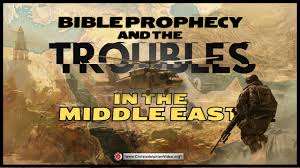
In times of escalating conflict in the Middle East, many Christians turn instinctively to biblical prophecy. Headlines are read alongside Ezekiel. Missile exchanges are interpreted through Daniel. Political alliances are measured against apocalyptic imagery. Yet in the urgency to interpret events, a crucial biblical principle is often overlooked. God’s covenant promises were never presented as unconditional guarantees of political or military triumph. They were relational, moral, and deeply conditional. If we are to think faithfully, and not merely emotionally about modern Israel, Romans 11, and Ezekiel 38, we must begin where Scripture itself begins, with covenant responsibility.
The Foundation: Blessing and Responsibility
From the earliest covenantal frameworks in Scripture, we see a pattern that is impossible to ignore. God binds Himself to His people, but He does not do so in a vacuum of moral indifference. The covenant revealed in Deuteronomy 28-30 makes the structure unmistakable:
- If you obey, blessing follows.
- If you rebel, consequences follow.
- If you repent, restoration is possible.
This is not a peripheral theme. It is central to Israel’s national experience. Prosperity, land security, and victory over enemies were never handed over as automatic entitlements. They were attached to covenant fidelity. The historical books of the Old Testament demonstrate this repeatedly. When Israel walked in justice, idolatry was removed, and the law was honored, stability followed. When injustice, oppression, and false worship dominated, invasion followed. Foreign powers were not merely geopolitical actors; they were instruments of discipline. The prophets never reassured a rebellious nation with guaranteed victory. Instead, they called for repentance. Military crisis was treated as a spiritual alarm, not merely a strategic problem. This pattern forms the theological backdrop against which all later prophetic interpretation must be measured.
Romans 11: Promise without Presumption
Romans 11 is often cited as proof that national Israel has an irrevocable guarantee of future triumph. The apostle Paul speaks of a partial hardening, of Gentile inclusion, and of a future moment when “all Israel will be saved.” These words have generated centuries of theological debate. Three broad interpretations dominate Christian thought.
- The first view sees a future large-scale turning of ethnic Israel to Christ. According to this perspective, God’s covenant faithfulness requires a national spiritual awakening prior to the culmination of history. Importantly, even within this interpretation, salvation comes through repentance and faith, not ethnicity alone. The promise is spiritual before it is political.
- The second interpretation understands “all Israel” to mean the full number of elect Jews throughout history --- the remnant preserved by grace. In this view, there is no single end-time national event; rather, God has consistently saved Jewish believers across generations.
- The third perspective interprets “Israel” in a corporate, spiritual sense. The total people of God composed of Jew and Gentile alike. Here, the focus shifts from national identity to covenant membership through Christ.
Despite their differences, all three interpretations agree on one point. Salvation is through mercy and faith, not through geopolitical status. Paul does not promise military dominance. He does not describe territorial supremacy. He emphasizes humility. Gentile believers are warned not to boast. Israel’s future hope is tied to mercy and turning to God. Romans 11, therefore, supports covenant faithfulness, not nationalist presumption.
The Modern State of Israel: Prophetic Fulfillment or Providential Event?
The establishment of the modern state of Israel in 1948 dramatically reshaped prophetic interpretation. Many Christians saw it as the literal fulfillment of re-gathering prophecies in Ezekiel and Isaiah. Others approached it with caution, distinguishing between providence and prophecy. One common argument points to Ezekiel 37 --- the vision of dry bones coming to life, as a two-stage process. Physical re-gathering first, spiritual renewal later. In this framework, modern Israel represents stage one of God’s plan.
Another perspective sees those re-gathering prophecies as fulfilled in the return from Babylonian exile. From this standpoint, modern Israel may be historically significant, but not necessarily prophetically mandated. A third theological tradition views the land promises as ultimately expanded and transformed in Christ. The inheritance becomes global and spiritual, encompassing the kingdom of God rather than a specific political territory.
Whichever position one adopts, the biblical pattern remains constant. Land and security are never separated from moral accountability. The prophets consistently connect restoration with cleansing, obedience, and renewed devotion. National revival without spiritual transformation has no biblical precedent for lasting peace. Therefore, even if one believes modern Israel has prophetic significance, the covenant principle remains: security is tied to righteousness.
Ezekiel 38: Literal War or Symbolic Vision?
Ezekiel 38-39 describes a dramatic invasion by a coalition led by “Gog of the land of Magog,” including Persia and other nations. Many contemporary interpreters equate Persia with modern Iran and see current tensions as precursors to this battle. There are three primary approaches to understanding this prophecy.
- The literal futurist interpretation expects a specific end-time military invasion of Israel by identifiable modern nations. In this view, God intervenes supernaturally to defend Israel in a climactic display of power.
- A symbolic interpretation understands Gog as representing the ultimate embodiment of global opposition to God. This approach connects Ezekiel’s imagery with the apocalyptic symbolism found later in Revelation. The focus shifts from geography to theology. It is the final confrontation between divine sovereignty and human rebellion.
- A third view places the prophecy in its ancient Near Eastern context, interpreting it as reassurance to post-exilic Israel that future threats would not thwart God’s purposes.
What is often overlooked is the literary structure preceding the Gog narrative. Ezekiel 36 speaks of cleansing and a new heart. Ezekiel 37 describes spiritual resurrection and reunification. Only after spiritual restoration does the invasion narrative appear. The theological sequence is striking. Renewal precedes protection. The emphasis of the prophecy is not on Israel’s military strength, but on God’s holiness being vindicated among the nations. The crisis becomes a stage for divine self-revelation. Thus, even in the most literal reading, the central theme is not guaranteed national superiority. It is God acting for the sake of His name among a restored people.
The Forgotten Emphasis: Repentance
One of the most sobering realities in Scripture is that divine discipline sometimes takes the form of defeat. Jerusalem fell in 586 BC not because God was powerless, but because covenant violation had reached its limit. The destruction of the Second Temple in 70 AD likewise occurred within a prophetic framework that warned of consequences for spiritual blindness. This pattern should caution modern interpreters against triumphal certainty. Scripture does not teach that geopolitical survival automatically signals divine approval. Nor does conflict automatically signal prophetic fulfillment. Instead, crisis becomes a call to examine covenant faithfulness. For Christians, this principle deepens. The New Testament shifts the focal point from territorial promise to kingdom reality. Jesus wept over Jerusalem not because Rome was strong, but because repentance had been rejected. The apostolic writings consistently warn believers to remain watchful, humble, and morally alert. The appropriate response to global turmoil is not speculation but self-examination.
A Theological Warning against Simplistic Victory Narratives
In some prophetic circles, current events are framed in a way that presumes inevitable Israeli military victory as proof of biblical reliability. Yet such narratives risk flattening the complexity of Scripture. God’s purposes cannot fail. That is certain. But the means by which those purposes unfold are intertwined with human responsibility. Covenant relationship has always involved both promise and demand. Worship God alone, practice justice, reject oppression, and walk in humility. When these are abandoned, prophets do not shout “Victory!” They cry “Repent!” To read prophecy as a script guaranteeing one nation’s triumph regardless of moral condition is to misunderstand the covenant structure of Scripture.
What Should Christians Do?
If we take the Bible seriously, three responses emerge. First, humility. Paul explicitly warns Gentile believers against arrogance. The story of Israel is a lesson in both grace and accountability. Second, prayer for repentance, beginning with ourselves. Covenant responsibility applies to the Church as much as to any nation. Judgment, Scripture says, begins with the household of God. Third, discernment. Not every war is Gog and Magog. Not every alliance fulfills Ezekiel. The Bible calls believers to sobriety, not sensationalism.
My Thoughts: Promise within Relationship
The Middle East, especially involving Israel and Iran, has been volatile for decades. Ongoing hostility between Israel and Iran since 1979. Proxy conflicts in Lebanon, Syria, and Gaza. Periodic military exchanges. So a prophecy that says “war will break out between Israel and Iran” is statistically more likely to appear fulfilled at some point. This doesn’t automatically invalidate prophetic ministry, but it does mean discernment is required. God did not promise victory on a silver platter. He promised faithfulness within relationship. He promised mercy to the repentant. He promised restoration to the humbled. He promised that His purposes would stand, even when nations faltered. The covenants of Scripture are not mechanical contracts. They are relational bonds grounded in holiness. Blessing flows from alignment with God’s character. As the Middle East continues to experience tension and conflict, Christians would do well to remember this foundational truth. Prophecy is not given to fuel nationalist enthusiasm. It is given to reveal God’s sovereignty and to call His people to repentance. If modern Israel has a role in God’s unfolding purposes, that role will ultimately be secured not by military strength but by spiritual renewal. And if the Church is to interpret the times rightly, it must do so not with triumphalism, but with trembling reverence. Covenant always carries conditions. The question is not merely what God will do. The question is whether His people, wherever they are, will return to Him. Saying “Israel and Iran will likely clash militarily in the coming years” is reasonable geopolitical forecasting. The hostility has existed for decades. That does not automatically equal divine revelation.
FUSEINI ABDULAI BRAIMAH
+233208282575 / +233550558008
[email protected]

 There’s a space for effective OSP with special prosecution powers — Mahama
 UG, KNUST and UCC lecturers to withdraw services over unpaid promotion arrears
 "24-hour economy markets will transform the economy" — Hon Jerry Ameko
 Mahama begins Eastern Region tour with May Day address and key projects
 Free Zones boss alleges political sabotage in Akosombo sub-station fire
 Family demands justice for man lynched over witchcraft allegations in Kpandai
 Two mortuary security guards die hours apart on duty in Suhum
 We will expand the economy to create jobs and prosperity — Mahama
 Lead a final onslaught on galamsey — TUC urges Mahama
 Akosombo substation fire an opportunity to modernise power infrastructure — Maha...


