




The history of post-colonial Africa cannot be told without confronting a painful truth. Many of its political ruptures were not merely domestic failures, but episodes deeply entangled in the geopolitical chessboard of global powers. From Accra to Algiers, from Santiago to Baghdad, regime change has often been justified in the language of “stability,” “anti-communism,” “security,” or “democracy.” Yet history repeatedly shows that externally backed coups and interventions have frequently left behind fractured institutions, economic regression, and generational instability.
Ghana’s own experience in 1966 remains one of the clearest examples. But Ghana was not alone. Across Africa, Latin America, and the Arab world, foreign involvement in regime change, particularly during the Cold War and its aftermath, has profoundly shaped national destinies. This is not conspiracy theory. Much of this history has been documented, declassified, and acknowledged in scholarly and governmental records. The question before us is no longer whether it happened. The question is, what has it done to the global order? And what are we risking by normalizing it once again?
African Cases of Foreign-Backed Regime Change
- Ghana (1966) – The Overthrow of Kwame Nkrumah: On 24 February 1966, while Nkrumah was on a peace mission to Asia, the Ghana Armed Forces removed him from power. Declassified documents later revealed U.S. intelligence awareness of and contact with coup plotters amid Cold War tensions. Nkrumah’s Pan-African socialism and ties with the Eastern Bloc had made Washington uneasy. The coup derailed Ghana’s early industrialization agenda and altered its continental leadership trajectory.
- Congo (1961) – The Assassination of Patrice Lumumba: Lumumba, the first democratically elected Prime Minister of independent Congo, was assassinated following secessionist crises and foreign interference. Belgian authorities and Western intelligence services were implicated in destabilization efforts. His removal plunged Congo into decades of dictatorship under Mobutu Sese Seko.
- Togo (1963) – The Killing of Sylvanus Olympio: Olympio was assassinated in a coup involving soldiers with French colonial military backgrounds. France’s continuing influence in Francophone Africa shaped Togo’s post-coup political direction.
- Nigeria (1966): While Nigeria’s first coup was locally executed, Britain’s deep post-colonial military ties and Cold War strategic interests influenced the broader political environment. The resulting instability culminated in civil war.
- Uganda (1971) – Milton Obote Ousted by Idi Amin: Britain and Israel initially supported Amin’s military establishment amid shifting Cold War alliances. The consequences were catastrophic. Repression, economic collapse, and international isolation.
- Ethiopia (1974) – Fall of Haile Selassie: Though largely a domestic military revolt, Cold War maneuvering between the United States and the Soviet Union rapidly internationalized Ethiopia’s political transition.
- Angola (1975–): Following independence, Angola became a Cold War battleground. The United States and apartheid South Africa backed UNITA rebels against the Soviet- and Cuban-supported MPLA government, turning regime contestation into prolonged civil war.
- Libya (2011) – The Fall of Muammar Gaddafi: NATO intervention shifted from civilian protection to regime change. Gaddafi’s removal fractured Libya into militia rule, human trafficking corridors, and enduring instability.
- Burkina Faso (1987) – The Killing of Thomas Sankara: Sankara’s revolutionary policies and anti-imperialist posture alarmed Western interests and regional allies. His assassination in a coup led by Blaise Compaoré ended one of Africa’s most radical reform experiments. Today, under Captain Ibrahim Traoré, the country reports repeated attempts at destabilization allegedly linked to foreign interests.
Cases outside Africa
- Iran (1953) – Operation Ajax: The CIA and MI6 overthrew Prime Minister Mohammad Mossadegh after he nationalized oil. The Shah, Mohammad Reza Pahlavi, was restored, sowing resentment that later fueled the 1979 revolution.
- Guatemala (1954) – Jacobo Árbenz: His overthrow followed land reforms that threatened U.S. corporate interests. The aftermath was decades of civil war and repression.
- Brazil (1964): The U.S. supported military forces that ousted President João Goulart amid fears of leftist alignment. Brazil entered two decades of dictatorship.
- Chile (1973) – Salvador Allende: Declassified U.S. records confirm extensive efforts to destabilize Allende’s government. General Augusto Pinochet’s coup ushered in years of authoritarian rule and human rights abuses.
- Panama (1989) – Manuel Noriega: The United States launched Operation Just Cause, invading Panama to depose Noriega, raising profound questions about unilateral military intervention.
- Iraq (2003) – Saddam Hussein: The U.S.-led invasion toppled Hussein under claims of weapons of mass destruction, none of which were found. The aftermath destabilized Iraq and reshaped regional politics, giving rise to sectarian violence and extremist movements.
Patterns and Consequences
Across these cases, familiar patterns emerge:
- Strategic resources: oil in Iran and Iraq; minerals in Congo.
- Ideological competition: anti-communism during the Cold War.
- Geopolitical positioning: military bases, trade routes, regional leverage.
- Corporate interests: land reforms and nationalizations triggering external anxiety.
But what has regime change delivered? Rarely durable democracy. Often prolonged instability.
The Present Danger: Iran and the Precedent Question
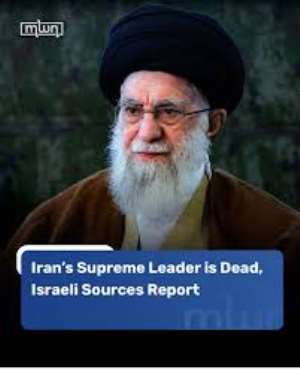
Today, rhetoric surrounding leadership change in Iran, particularly targeting Ali Khamenei revives troubling precedents. Reports filtering in suggest that Ayatollah Khamenei is alleged to have died following bombardment of his residence. At the time of writing, these reports remain unverified and fluid. Yet even the circulation of such claims underscores how volatile the moment has become. Even if a leader is deeply controversial internationally, the removal of a sovereign head of state by foreign design violates the principles enshrined in the United Nations Charter. History warns us that eliminating one leader does not guarantee moderation. It may empower harder factions. It may radicalize the populace. It may destabilize an entire region.
And we must ask a sobering question. Are we certain that whoever is chosen, or emerges to replace him would embody fewer of the traits that the United States and Israel found objectionable? Or could a successor be even more ideologically rigid, more confrontational, and less constrained? The belief that democracy can be delivered through externally engineered leadership change has repeatedly proven flawed.
The Developmental and Legal Costs
Regime change almost always carries immense cost:
- Weak institutions: Frequent leadership disruptions erode democratic norms and entrench military dominance.
- Economic stagnation: Political instability deters investment and undermines long-term planning.
- Social fractures: Ethnic, regional, and ideological divisions deepen when power is seized by force or foreign meddling.
- Violation of sovereignty: Military, covert, or diplomatic interventions challenge core principles of international law.
These costs are not abstract. In Ghana, the overthrow of Nkrumah forestalled early industrial and Pan-African initiatives that might have charted a different course for economic autonomy. In parts of the Sahel today, repeated coups have made democratic consolidation elusive, inviting foreign powers to fill security vacuums.
Sovereignty, Global Order, and the Rule of Law
If the fate of Iran’s leadership is influenced externally, it would not only contravene the UN Charter but also set a dangerous precedent of powerful states selecting leaders for weaker ones. A praxis that history shows produces more chaos than order. For decades, the global order rested, however imperfectly, on respect for sovereignty. When powerful nations normalize intervention as a policy tool, they weaken the very architecture that protects smaller states. Two wrongs never make a right. Illegality does not produce legitimacy. Destabilization rarely births democracy. Africa knows this story intimately. So does Latin America. So does the Middle East.
My Thoughts
The United Nations Security Council must be unequivocal in condemning acts that undermine sovereignty. Selective enforcement erodes credibility. International law cannot apply only to weaker states. Leadership change must arise from domestic constitutional processes. International disputes must be resolved through diplomacy, not covert destabilization.
From Accra in 1966 to Baghdad in 2003, regime change has too often left scars deeper than the injustices it claimed to cure. The world once looked to major powers as custodians of the rule of law. Today, that expectation stands shaken. Unless we recommit to principle over power, the age of uncertainty may only be beginning.
For Africa and the broader developing world, safeguarding sovereignty is not an abstract ideal. It is a prerequisite for sustainable development, democratic maturation, and true self-determination. Regime change should not be the currency of global politics. Respect for sovereign choice, anchored in the rule of law and mutual non-interference, must be our collective compass if we are to avoid repeating the tragedies of the last century.
FUSEINI ABDULAI BRAIMAH
+233208282575 / +233550558008
[email protected]

 NaIMOS arrests 49 suspected illegal miners after armed clash at Adiewoso
 Upper East Regional Minister leads technical assessment for proposed airport pro...
 Missing car dealer found dead as police arrest friend over alleged murder
 Teacher Sir Ola shares inspiring story of sacrifice and compassion
 Extreme heat is a growing threat to health, jobs and food security in southern A...
 Mali lawyer critical of junta abducted overnight
 Two women die on migrant boat near France seeking to reach UK
 Iran offers strait deal, Trump says he's not satisfied
 How faulty fan regulator sparked fire, destroyed two rooms at Suhum Konfine
 Don’t store bread beyond four days – Baker advises


