




When Ghana, Guinea, and Mali declared a political union in the late 1950s, they raised aspirations not merely of regional cooperation, but of a united Africa. The Union of African States (1958–1963), spearheaded by Kwame Nkrumah, Sékou Touré, and Modibo Keïta, sought a common foreign policy, collective defense, and economic unity as steps toward a United States of Africa. Yet, within a few years, ideological differences, weak institutions, and the machinations of Cold War geopolitics ended the experiment, not for lack of vision, but for lack of institutional depth and external support. Scholars such as Walter Rodney and others have noted that structural weaknesses, more than ideological failure, doomed early unionist projects. Nkrumah’s dream was ahead of its institutional foundations. This tension, vision without systems, persists today across Africa’s many regional blocs, from ECOWAS in West Africa to the EAC in the East and SADC in the South. Africa is part of the African Union (AU), whose Constitutive Act envisions “greater unity, cohesion and solidarity between African countries and nations.” Yet despite this grand purpose, the AU and its component regional economic communities struggle to deliver on the promise of continental integration.
Regional Economic Communities --- Pillars with Uneven Records
The AU recognizes eight Regional Economic Communities (RECs) as building blocks for broader African integration: ECOWAS, EAC, SADC, COMESA, ECCAS, AMU, CEN-SAD, and IGAD. These RECs are meant to foster cooperation in trade, infrastructure, security, and movement of people. In theory, they are central to the African Economic Community and eventual continental unity. But in practice, their successes and failures are uneven.
ECOWAS --- Vision Constrained by Politics?
Established in 1975, the Economic Community of West African States aimed to build economic integration, security cooperation, and democratic governance. ECOWAS has intervened successfully in civil conflicts (e.g., Liberia and Sierra Leone) and remains a key diplomatic platform in West Africa. But it is also widely seen as underperforming in promoting deep economic integration and political coherence. As observers have noted, jihadist violence, coups, and climate pressures increasingly test ECOWAS’s relevance. The withdrawal of Burkina Faso, Mali, and Niger to form the Alliance of Sahel States (AES) compounds the bloc’s credibility crisis, even as citizens still enjoy visa-free movement and certain trade benefits under existing protocols, at least for now. Many scholars argue that ECOWAS’s challenges stem not only from internal politics but from divergent member interests and external influences, particularly where former colonial powers retain economic leverage. The Organization of Trade Unions of West Africa has critiqued ECOWAS for failing to translate integration into job growth and shared prosperity, underscoring the social deficiencies of regionalism without development outcomes.
EAC --- Integration in Action but With Caveats
In contrast, the East African Community (EAC) offers a more positive model of regional cooperation. Since its revival in 2000, it has expanded membership to eight states and developed four pillars --- the Customs Union, Common Market, Monetary Union, and a long-term Political Federation. Its progress in reducing trade barriers and facilitating movement has led the Africa Regional Integration Index to rank the EAC as the most integrated REC on the continent. Yet even the EAC faces challenges, including political disparities among members and questions about how to manage expansion without undermining cohesion.
Other Blocs --- Promise amidst Stagnation
Elsewhere, COMESA and SADC play important roles in trade and infrastructure cooperation, but often struggle with overlapping mandates and inconsistent implementation. The Arab Maghreb Union remains largely inactive, hamstrung by the Algeria–Morocco border closure and political rivalries that have turned economic cooperation into an afterthought. Across all these RECs, the fundamental pattern persists. Good intent, weak institutions, and mixed outcomes. Without deepening institutional capacity and harmonizing policies, regional integration will remain both an aspiration and an occasional headline.
African Union --- A Continental Vision Still Under Construction
The African Union (AU), successor to the Organization of African Unity, enshrines unity, sovereignty, and shared prosperity in its Constitutive Act. But the AU’s effectiveness is limited by fiscal dependence on external donors, limited enforcement mechanisms, and the often symbolic nature of its summitry. Yet there are signposts of progress. The African Continental Free Trade Area (AfCFTA) is one of the most ambitious trade liberalization frameworks in the world, with the potential to raise intra-African trade significantly, diversify markets, and deepen integration. While AfCFTA’s impact is still emerging, it signals what strategic continental coordination can achieve when backed by political commitment. Academically, researchers link deeper integration with increased economic growth, provided infrastructure, policy coordination, and institutional quality improve. The AU’s role should not be underestimated, but it must evolve beyond rhetoric to enforceable mechanisms and accountable institutions.
Burkina Faso under Traoré --- Sovereignty, Reform, and Contention
No discussion of West African integration in 2026 can ignore Burkina Faso’s current trajectory under Captain Ibrahim Traoré. Since seizing power in 2022, Traoré’s leadership has attracted both praise and controversy across Africa. Traoré’s government has pursued a suite of nationalist reforms intended to assert economic sovereignty. These include:
- Nationalizing significant mining assets and building the country’s first gold refinery, halting export of unprocessed gold so value addition remains within national borders.
- Reorienting state revenues toward rural development, infrastructure, and social investments in a context where traditional development financing (IMF/World Bank) is viewed by some as limiting sovereignty.
- Establishing agro-industrial facilities and transportation projects that aim to link Burkina’s interior with export pathways and neighboring economies.
These changes resonate with a broader continental sentiment toward resource sovereignty and self-determination. In surveys, many Burkinabè express acceptance, even preference, for this direction, even as elections remain postponed and democratic institutions reshaped. However, the picture is complex. Security remains a critical issue. Jihadist violence has intensified, and independent reporting suggests that Burkina Faso’s security forces and allied militias are responsible for significant civilian harm, even as territory control fluctuates and humanitarian conditions worsen. Meanwhile, human rights groups have raised concerns about moves such as reinstating the death penalty for terrorism and treason, actions that critics see as setbacks in rule of law. Traoré’s leadership, therefore, is a mix of assertive reforms and contested governance, a duality common in contemporary African politics where security pressures, economic independence, and democratic norms collide.
Ghana–Burkina Faso Partnership --- A Model for Bilateral Integration
Against this backdrop, Ghana and Burkina Faso offer an important case study in bilateral cooperation and regional integration. Relations between the two countries have grown beyond diplomatic symbolism to policy initiatives that matter.
- Trade and Economic Linkages -- In 2025, trade between Ghana and Burkina Faso reached over CFA franc 7.7 billion, illustrating the tangible benefits of enhanced cross-border commerce. A memorandum of understanding to streamline transit along the Ouagadougou-Accra corridor could catalyze a more integrated supply chain linking landlocked Burkina to Ghana’s ports and markets
- Direct flights between Accra and Ouagadougou, under discussion, are more than convenience; they are connectivity infrastructure that reduces transaction costs and increases business, tourism, and investment flows.
- Infrastructure Vision -- Rail, Roads, and Energy: A logical extension of these ties is rail infrastructure. A fast train linking Accra and Ouagadougou would transform regional logistics, facilitating movement of goods from the Sahel to coastal ports, a critical enabler for manufacturing, agribusiness, and export growth. Ghana’s comparative advantage in stable ports and energy, and Burkina’s agricultural and mineral assets, make this rail corridor economically sensible.
- Energy cooperation is also on the table: discussions about pipelines and electrical interconnections point to shared critical infrastructure that enhances reliability and lowers costs for both economies.
- Security and Joint Defense -- Security collaboration is another pillar. Coordinated efforts against terrorism, joint training exercises, and shared intelligence would spread defense costs and increase regional stability, a prerequisite for sustained economic cooperation. Such cooperation was explicitly discussed by the two leaders in late 2025.
- Cultural and Human Capital Exchange -- Finally, deeper people-to-people ties --- language, education, student exchanges, and shared sporting events build social integration that outlasts political leadership cycles.
Ghana’s Strategic Reforms for Credible Anchor State Leadership
For Ghana to be a credible anchor state in West Africa and beyond, it must undertake reforms in several core areas:
- Institutional Deepening Over Personality Politics -- Ghana’s democratic institutions are stronger than many in the region, but they must be fortified to manage regional leadership responsibilities. This includes ensuring fiscal transparency, strengthening rule of law, enhancing parliamentary oversight, and investing in robust public sector planning. trong institutions make partnerships sustainable, not episodic.
- Trade and Infrastructure Priorities -- Ghana must invest in inland logistics (dry ports, road corridors), expand rail networks connecting northern Ghana to Burkina and beyond, and support liberalization that reduces non-tariff barriers. These moves will deepen intra-West African trade well beyond bilateral flows.
- Economic Diversification and Value Addition -- Ghana has succeeded in cocoa and gold, but more value-added industry, agro-processing, light manufacturing, steel, is essential. Partnerships with Burkina Faso can complement this if policies align.
- Security Cooperation and Defense Cadres -- A stable West Africa requires cooperative defense architectures. Ghana’s contribution should include joint exercises, shared intelligence frameworks, and training academies.
- Thoughtful Diplomacy and Balanced Partnerships -- Africa must diversify diplomatic engagements, balancing old ties with new partnerships that enhance sovereignty without trading dependencies. Ghana, with its diplomatic heritage, can lead in crafting African-led development frameworks.
My Thoughts --- Integration through Action, Not Rhetoric
Africa’s journey toward unity has been marked by glorious visions and sobering realities. From Ghana-Guinea-Mali’s early union aspirations to today’s complex web of RECs and the AU, the continent has learned that institutional depth trumps charismatic leadership when it comes to sustainable integration. At the same time, bilateral and sub-regional partnerships, like the growing cooperation between Ghana and Burkina Faso prove that integration does not need to wait for continental consensus. Strategies anchored in shared economic interests, integrated infrastructure, and coordinated security can transform West Africa. Ghana’s role as a stable democracy, economic hub, and diplomatic heavyweight positions it to lead not through dominance, but through cooperation, an anchor not just in name, but in structural influence. The rail tracks between Accra and Ouagadougou, the trade routes that crisscross borders, and the shared defenses that protect citizenry can become the true architecture of 21st-century African integration.
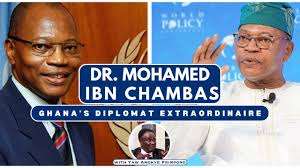
[Dr. Mohammed Ibn Chambers, bonjour mon grand frère. J’espère que tu vas bien et que tu savoures cette belle vie de retraité. Je suis tellement fier de toi. Je t’adresse tous mes meilleurs vœux.]
FUSEINI ABDULAI BRAIMAH
+233208282575 / +233550558008
[email protected]

 Gov’t renames 24-hour economy markets as District Economy Markets, targets 100% ...
 BoG, Police arrest 7 in Accra over alleged use of cedi notes for money bouquets,...
 SkyTrain trial: High Court adjourns case management conference to October 19
 Edudzi Tameklo recalls how Duffuor was slapped with GH¢100 million bail in 2020,...
 About 800 Director I and II applicants unreachable due to invalid contact number...
 'Boakye Agyarko was seen as anti-Bawumia' – Lecturer on John Boadu’s victory
 'NPP delegates made wrong choice electing John Boadu as chairman' — Political Sc...
 MTN Ghana secures new 5G spectrum in 700 MHz and 3 GHz bands
 Bawumia explains NPP hunt for winnable parliamentary candidates, not deep-pocket...
 Ghana to tap Egypt’s expertise for new capital city, housing projects – Mahama


