




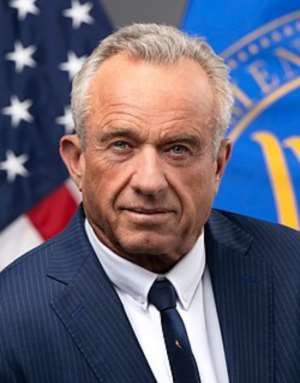
From Environmental Advocate to Health Secretary
Robert F. Kennedy Jr. is a long-time environmental lawyer and activist who previously led efforts to protect clean water and raised awareness about pollution’s health impacts. He also co-founded Children’s Health Defense, a nonprofit known for questioning mainstream vaccine science and promoting alternative health narratives.
In 2025, he was appointed U.S. Secretary of Health and Human Services and quickly became a highly influential and polarizing figure in American public health.
STAT
Make America Healthy Again (MAHA): The Flagship Initiative
Central to Kennedy’s leadership is the Make America Healthy Again (MAHA) initiative a sweeping policy framework aimed at addressing chronic illness, environmental exposures, nutrition, and other perceived drivers of poor health in the U.S.
Key elements of the MAHA approach:
Focus on Chronic Disease
A commission chaired by Kennedy was established to investigate the rise of chronic conditions in children including autism and psychiatric disorders and sources ranging from pesticides to food additives. Kennedy described the effort as evidence-based inquiry into “root causes.”
Nutrition and Lifestyle Reforms
Under MAHA, federal dietary guidelines underwent a historic reset in early 2026, emphasizing whole, nutrient-dense foods while discouraging processed food and added sugar. These guidelines invert traditional dietary models and place greater emphasis on protein and nutrient quality.
Environmental Health Emphasis
MAHA policies have broadened health science to include environmental toxin reductions air and water quality based on the belief that pollution significantly contributes to chronic diseases.
Controversial Revisions to Science and Practice
Kennedy’s tenure has included several dramatic shifts in mainstream public health science:
Vaccine Policy Changes
In January 2026, the recommended U.S. childhood vaccination schedule was significantly altered, reducing the number of federally encouraged vaccines. Critics argue this move undermines decades of evidence showing high vaccine coverage prevents disease and loss of life.
Public health scientists have raised concerns that such changes could increase vulnerability to preventable conditions. Many major medical organizations continue to uphold the previous, broader recommendations at state and practice levels.
Science and Research Restructuring
Kennedy’s leadership has seen reshuffling and cuts within HHS agencies, including substantial layoffs, the firing of top research leaders, and reductions in traditional scientific research funding particularly for infectious disease and mRNA vaccine development.
Some HHS actions have proposed shifting research priorities toward “alternative” and preventive health studies, though critics contend this risks de-emphasizing rigorous, evidence-based science.
Advisory Influence & Publication Culture
Reports have emerged that departments under Kennedy’s supervision considered limiting publication of government scientists in leading medical journals, citing concerns about pharmaceutical influence. This kind of internal cultural change has alarmed scientific communities.
Reception by the Scientific Community
Kennedy’s leadership has elicited sharp debate:
Supporters argue that MAHA brings overdue attention to chronic disease prevention, nutrition, environmental exposures, and transparency in public health. Some public surveys suggest widespread public interest in lifestyle and nutrition-focused health science.
Critics including major medical associations, former public health officials, and evidence-based researchers contend that Kennedy’s shifts often rely on unproven or debunked claims, particularly regarding vaccines and environmental exposures. They warn that sidelining established scientific consensus may risk public health outcomes.
Some international analysts have even argued that current policy shifts could weaken U.S. scientific leadership and backtrack decades of progress in immunization and disease prevention.
Implications for Health Science and Policy
Under Kennedy’s stewardship, American health science and policy is undergoing one of its most scientific Priorities are evolving to include broader environmental, nutritional, and alternative treatment narratives.
Government Research and Regulatory Bodies are being reconfigured with a focus on preventive and lifestyle health, though often amid controversy.
Public Trust and Debate over scientific authority, expertise, and evidence in health policy has sharpened considerably.
What remains clear is that Kennedy’s influence will shape U.S. health science discourse and policy for better or worse well into the coming years.
Mustapha Bature Sallama
Medical Science communicator.
Private Investigator and Criminal
Investigation and Intelligence Analysis,
International Conflict Management and Peace Building. Alumni Gandhi Global Academy United States Institute of Peace.
[email protected]
+233-555-275-880

 Mahama announces establishment of three expert panels to advance reparatory just...
 GNPC Explorco, Tamale Technical University partner to drive technical capacity a...
 I will use scientific approach to restore NPP's glory as Greater Accra Regional ...
 Bawumia will never repeat 2024 early concession— Kpandai MP
 Digital learning interventions supporting over 120,000 SHS students — Education ...
 'No Fees Stress': Over GHC888.8 million spent on 312,448 students so far — Educa...
 'Avoid too much alignment with government, NDC' — The People’s Forum urges Chief...
 Reparatory fight will be won just as we did with colonialism and apartheid — Abl...
 2026 World Cup: Young Lawyer dies while celebrating Ghana’s victory over Panama
 WASSCE 2026: Six students arrested in separate arson and rioting incidents — Pol...


