




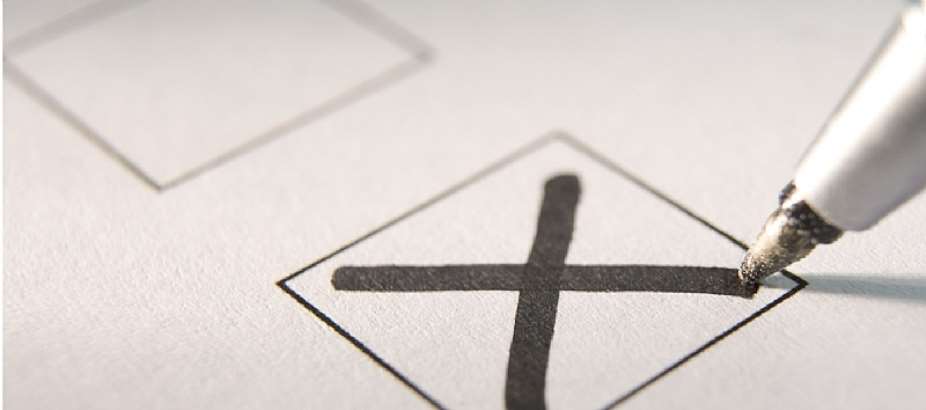
Democracy is not, at its core, a system of ballots, constitutions, or institutions. It is a conversation. It lives or dies by the quality of dialogue among citizens—by their willingness to listen, to reason, to disagree without dehumanizing one another. Long before democracy became a system of government, it was a moral practice: the habit of speaking and being heard among equals.
In earlier societies, this conversation took place face-to-face. One spoke carefully because words had weight, and because one would meet the other again in the market, the square, or the home. Today, that restraint has dissolved. Technology has stretched our voices across vast distances while severing them from accountability. The result is a public sphere where speech travels farther than responsibility, and where anger travels fastest of all. This is the environment in which what may be called the rage machine thrives.
The rage machine is not a conspiracy, nor is it a single institution. It is a system formed by the convergence of human psychology and digital design. Social media platforms, driven by algorithms that reward engagement above all else, amplify content that provokes strong emotional reactions. Anger, fear, and outrage outperform reflection and nuance. They travel faster, spread wider, and keep users locked in place.
What emerges is a distortion of public discourse. The most provocative voices rise to the top. The most thoughtful sink quietly below. Over time, outrage becomes currency. Insult becomes influence. And reason, though still present, struggles to be heard.
In Ghana, this global phenomenon takes on a particular intensity. Our society is deeply relational, emotionally expressive, and politically charged. Social media enters this environment not as a neutral tool but as an accelerant. Ethnic sensitivities, political grievances, religious identities, and economic frustrations become raw material for digital conflict. The line between criticism and contempt erodes. What begins as a debate becomes a spectacle.
Those who master this new grammar of outrage often gain large followings. They speak with certainty in a world of confusion. They offer enemies instead of explanations. For many, especially those who feel marginalized or unheard, this provides both a sense of belonging and power. The rage is not merely emotional—it is social capital.
However, this dynamic carries a grave cost. When public discourse is driven by anger, the possibility of collective reasoning collapses. Dialogue gives way to performance. Persuasion gives way to provocation. Truth becomes secondary to attention. The very habits that sustain democratic life—patience, good faith, mutual recognition—are slowly eroded.
This is not simply a problem of manners; it is a threat to democratic stability. A society cannot deliberate on its future if its citizens cannot speak without contempt. It cannot govern itself if disagreement is treated as betrayal. When outrage becomes the default language, the space for compromise, reform, and shared purpose shrinks.
Technology did not create this moral weakness, but it magnifies it. Algorithms reward intensity, not integrity. They do not ask whether a statement builds understanding, only whether it keeps eyes on screens. In such a system, outrage is not a side effect—it is the product.
However, this does not absolve individuals of responsibility. The machinery of amplification works only because people participate in it. Each click, share, and retweet feeds the cycle. To recognize this is not to excuse the system but to reclaim agency within it.
A healthy democracy requires more than free speech; it requires disciplined speech. It demands citizens who can disagree without dehumanizing, argue without destroying, and criticize without contempt. This is not a call for silence, but for seriousness, not for politeness, but for moral restraint.
The future of democratic life depends not merely on laws or platforms, but on the character of its citizens. If we allow rage to become our everyday language, we will inherit a public square that is loud, fractured, and incapable of self-government. But if we recover the habits of thoughtful disagreement—listening, patience, humility—we may yet restore the possibility of genuine dialogue.
Democracy, after all, is not sustained by noise. It is sustained by conversation. And conversation, unlike outrage, requires the courage to listen as well as the courage to speak.


 Creative Arts Agency Board Engages Lands Minister Over Welfare Project for Aged...
 I will rebuild demolished La Pleasure Beach if elected in 2028 to save jobs — Ba...
 Free primary healthcare requires recruitment of more nurses – GRNMA
 Ethiopia's Tigray rebels abandon regional capital as govt advances
 Mahama in Egypt for AU Mid-Year Summit
 SSNIT defends La Beach demolition, cites encroachment and security concerns
 Russia strikes another major bridge across Kyiv's Dnipro river
 Co-pilot on Flydubai flight was banned from flying by Oman for holding extremist...
 Spanish lawmakers vote down affordable housing bills in blow to Sanchez’s govern...


