




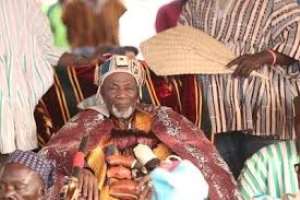
Human history is a history of movement. No people, nation, or ethnic group emerged fully formed from the soil of a single place. Migration, conquest, alliance, and assimilation have shaped societies from antiquity to the present. Yet, when questions of land ownership and political authority arise today, history becomes contentious. Who came first? Who conquered whom? And what claims can the past legitimately make on the present?
When Europeans arrived in the Americas from the late 15th century onward, they did not encounter empty lands. They met complex indigenous societies --- often collectively (and inaccurately) called “Red Indians,” a term now regarded as outdated and offensive. The preferred terms are Native Americans, Indigenous Peoples, or First Nations, depending on context. These societies occupied territories stretching from the Arctic to Tierra del Fuego, with sophisticated political systems, agriculture, trade networks, and spiritual traditions (Mann, 2005).
The Europeans did not come primarily as tourists or explorers. They came to settle, extract resources, and exercise sovereignty. Through warfare, disease, treaties signed under duress, and legal doctrines such as terra nullius and the Doctrine of Discovery, indigenous populations were dispossessed of their lands and confined to reservations (Banner, 2005). Resistance was often met with brutal suppression.
This pattern of migration followed by domination is not unique to the Americas. It appears across world history, including in biblical narratives. When Moses led the Israelites from Egypt toward the “Promised Land,” that land was not uninhabited. Biblical texts themselves acknowledge the presence of Canaanite peoples whom the Israelites displaced through warfare and settlement (Dever, 2003). The moral logic of divine promise overrode prior occupancy.
Today, however, the international system no longer permits such processes. Modern states operate under conventions that recognize territorial integrity, sovereignty, and internationally recognized borders. Britain’s claim to the Falkland Islands, despite Argentina’s proximity and counterclaim, rests not on discovery alone but on continuous administration, population settlement, and international diplomacy (Freedman, 2005).
This tension between historical movement and modern legal finality lies at the heart of many African land disputes, including those involving Dagbon and the Konkomba.
Migration and State Formation in Northern Ghana
Like all peoples, the Dagomba did not “sprout” from the land they now occupy. Oral traditions and historical reconstructions suggest that the Dagbon State emerged between the 14th and 16th centuries, influenced by Mande political culture and Islamized Sahelian statecraft (Wilks, 1989; Levtzion, 1975). Their migration and expansion brought them into contact with earlier inhabitants of the region.
When the Dagomba settled in what is now Eastern and Western Dagbon, they did not encounter empty lands of trees and wildlife alone. They met aboriginal populations, notably the Konkomba in the east and the Kpariba in the west. These groups practiced sedentary agriculture, held land through kinship systems, and maintained spiritual relationships with the land mediated by Tindanas, earth priests who served as custodians of the land and intermediaries with ancestral and territorial spirits (Rattray, 1932).
Crucially, these societies did not operate centralized chieftaincy systems. Political authority was dispersed among clans and households, and social cohesion rarely extended beyond lineage structures. This decentralization made them vulnerable to domination by centralized states.
The Dagomba arrived with a chieftaincy institution, organized military forces, codified systems of tribute, and hierarchical governance. Through a combination of warfare, alliance, and subjugation, they expanded their authority over surrounding peoples. Many communities were forced to pay allegiance to the Ya Naa, while others were raided for slaves --- a common practice in pre-colonial West Africa and a key component of regional political economy (Lovejoy, 2012).
Dagomba military expeditions extended as far as Bassar in present-day Togo, not primarily to acquire land, but to weaken rivals and capture slaves. This expansion mirrors patterns seen in other African states such as Asante, Oyo, and Bornu, where political power was consolidated through coercion and control of human labor rather than territorial occupation alone (Iliffe, 1995).
Resistance, Consent, and the Question of Legitimacy
Did the Konkomba, Bassare, Komba or Chokossi resist Dagomba expansion? Historical evidence suggests that resistance occurred but was fragmented. Without centralized leadership or standing armies, Konkomba communities for instance could not mount sustained opposition. There is no record of a Konkomba “chief” formally receiving the Dagomba because chieftaincy, as an institution, did not exist among them at the time. Instead, Dagomba authority was imposed, gradually normalized, and later formalized under colonial rule.
British colonial administration reinforced this hierarchy through indirect rule, recognizing Dagomba chiefs as “traditional authorities” while marginalizing acephalous groups such as the Konkomba. Colonial ethnography often misrepresented these societies as politically backward, further entrenching their exclusion from formal governance (Mamdani, 1996). Thus, the modern structure of land ownership and chieftaincy in Dagbon is not purely pre-colonial. It is the product of conquest, colonial codification, and post-colonial continuity.
Can History Be Reversed?
This brings us to a critical question. If Native Americans cannot reclaim the United States, can the Konkomba reclaim Dagbon? The answer, legally and politically, is NO! In the Americas, indigenous land claims are constrained by doctrines such as sovereignty succession, statutes of limitation, and state continuity. While Native American nations have won land settlements, compensation, and self-governance rights, no modern state has been dismantled to restore pre-colonial territorial arrangements (Banner, 2005). Similarly, in Ghana, the post-colonial state recognizes existing traditional authorities as part of constitutional governance. Dagbon, as a recognized traditional area, cannot be dissolved on the basis of pre-colonial conquest without destabilizing the entire political order. History explains how power was acquired; it does not automatically justify undoing it.
Recognition without Reversal: Lessons from Bawku
The Konkomba demand recognition of their legitimate rights to land in Dagbon, drawing comparisons to Bawku, where Kusasi land rights have been acknowledged. However, the two cases are not identical. In Bawku, colonial and post-colonial policies created overlapping claims between Mamprusi chiefs and Kusasi earth priests. Subsequent reforms sought to correct colonial distortions by recognizing indigenous land custodianship without expelling settlers (Lund, 2008).
For the Konkomba, the path forward is not to ask the Dagomba to “go back” to where they came from --- a demand that no modern legal system can accommodate, but to pursue institutional recognition, land tenure security, and political inclusion within the existing framework of the Ghanaian state.
My Thoughts: Living With History, Not Inside It
History is not a courtroom where verdicts can be endlessly retried. It is a record of how power was acquired, exercised, and institutionalized. From the Americas to Dagbon, conquest created new realities that time, law, and political necessity have hardened into permanence. The task of the present is not to undo history, but to civilize its consequences --- to ensure that those who were marginalized by conquest are not perpetually excluded from dignity, land security, and political voice. The Konkomba struggle, like that of indigenous peoples worldwide, is not illegitimate. But its resolution lies not in reversing centuries of state formation, but in building a more inclusive future that acknowledges historical truth while refusing historical vengeance. That is the only path history has ever shown to be sustainable.
References
Banner, S. (2005). How the Indians Lost Their Land: Law and Power on the
Frontier. Harvard University Press.
Dever, W. G. (2003). Who Were the Early Israelites and Where Did They Come
From? Eerdmans.
Freedman, L. (2005). The Official History of the Falklands Campaign.
Routledge.
Iliffe, J. (1995). Africans: The History of a Continent. Cambridge University Press.
Levtzion, N. (1975). Ancient Ghana and Mali. Methuen.
Lovejoy, P. E. (2012). Transformations in Slavery. Cambridge University Press.
Lund, C. (2008). Local Politics and the Dynamics of Property in Africa.
Cambridge University Press.
Mamdani, M. (1996). Citizen and Subject. Princeton University Press.
Mann, C. C. (2005). 1491: New Revelations of the Americas before Columbus.
Knopf.
Rattray, R. S. (1932). The Tribes of the Ashanti Hinterland. Oxford University
Press.
Wilks, I. (1989). Wa and the Wala: Islam and Polity in Northwestern Ghana.
Cambridge University Press.
FUSEINI ABDULAI BRAIMAH
+233208282575 / +233550558008
[email protected]


 Gov’t renames 24-hour economy markets as District Economy Markets, targets 100% ...
 BoG, Police arrest 7 in Accra over alleged use of cedi notes for money bouquets,...
 SkyTrain trial: High Court adjourns case management conference to October 19
 Edudzi Tameklo recalls how Duffuor was slapped with GH¢100 million bail in 2020,...
 About 800 Director I and II applicants unreachable due to invalid contact number...
 'Boakye Agyarko was seen as anti-Bawumia' – Lecturer on John Boadu’s victory
 'NPP delegates made wrong choice electing John Boadu as chairman' — Political Sc...
 MTN Ghana secures new 5G spectrum in 700 MHz and 3 GHz bands
 Bawumia explains NPP hunt for winnable parliamentary candidates, not deep-pocket...
 Ghana to tap Egypt’s expertise for new capital city, housing projects – Mahama



Comments
Northern region every tribe have their lands and no tribe is owns all the lands . So konkombas have their lands and dagombas also have their lands , the problem now is konkombas want to separate ourselves from dagombas traditional council and which is possible and the government must do it now .those claiming dagombas conquered konkombas and bassari are all liars and there's no proves on that . Konkombas are the indigenous people in the northern region and no tribe have ever defeated us not to ...
Author's Reply
Thank you for engaging with the article and for sharing a Konkomba perspective. The concerns you raise about land, political representation, and the impact of colonial administration on acephalous groups like the Konkomba are important and deserve serious attention. It is historically documented that colonial indirect rule privileged centralized chieftaincy systems and often marginalized communities whose governance structures did not fit that model. At the same time, the history of Northern Ghana is complex and layered. Migration histories, claims of indigeneity, conquest, accommodation, and political authority are understood differently across communities and sources --- oral traditions, colonial records, and academic research do not always align, and no single narrative can be treated as the complete or uncontested truth. For this reason, historians tend to speak in terms of changing power relations and political dominance rather than absolute claims of conquest or total indigeneity. The purpose of the article was not to deny Konkomba land rights or lived presence, but to highlight how historical processes, especially colonial administration and post-colonial governance, shaped present-day disputes and perceptions. Constructive dialogue requires acknowledging both historical marginalization and the fact that multiple communities hold deeply rooted, and sometimes conflicting, understandings of the past. I appreciate your contribution and hope discussions like this can remain focused on evidence and mutual understanding.