




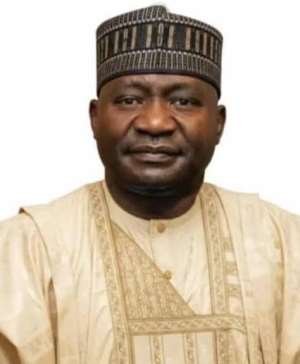
General Christopher Musa served nearly four decades in the military, rising through the ranks and holding key appointments in operations, administration, policy, and command.
He previously served as Chief of Defence Staff (CDS), and under his leadership the armed forces reportedly made meaningful gains: through operations such as Operation Hadin Kai, his command helped liberate hostages and reclaim territory in insurgency-affected regions, contributing to a decline in insurgent attacks.
Musa’s career includes multinational and joint-command experience: he commanded a sector of the Multinational Joint Task Force (MNJTF), working with forces from neighboring countries, giving him exposure to regional security dynamics.
He also has undergone advanced military training, including at institutions like the Armed Forces Command and Staff College, the National Defence University (China), and the US Army War College. Throughout his service, Musa has gained recognition and honors, reflecting both his operational record and his perceived commitment to service.
In short: Musa is not a political novice he is a career soldier with substantial experience in insurgency-prone theatres, joint/multinational operations, and leadership of Nigeria’s armed forces.
Why his appointment as Defence Minister is seen as significant now
His appointment by President Bola Ahmed Tinubu comes at a critical juncture for Nigeria, as the country faces escalating insecurity, mass kidnappings, banditry, insurgency and general collapse of security in many areas. The previous minister resigned amid mounting violence.
Many analysts and stakeholders consider his track record of operational success, modernization efforts, and inter-agency coordination as assets that could help steer the security apparatus toward renewed effectiveness.
There is optimism that under Musa, the defence ministry will pursue reforms that combine kinetic operations (military action) with structural improvements: better intelligence sharing, enhanced funding and procurement of modern equipment, troop welfare, and institutional accountability.
His leadership style appears to emphasize not just combat but also civil-military relations, community engagement, and holistic security strategies reflecting recognition that military force alone cannot solve Nigeria’s complex security problems.
In other words: his appointment signals a potential shift from reactive crisis-management to a more comprehensive, reform-oriented, and long-term security strategy.
Major challenges and problems he must confront
Even with Musa’s credentials, several structural and contextual obstacles could limit or complicate his success:
Outdated equipment and under-resourced military infrastructure: During his confirmation hearing, lawmakers emphasized that many arms and hardware are outdated, arguing that confronting modern threats requires advanced weapons, better surveillance, intelligence systems, and rapid procurement.
Funding bottlenecks and bureaucratic delays: Historically, delays in release of funds and bureaucratic red tape have hampered timely procurement and deployment. Some senators urged that the military be placed on “first line charge” i.e. guarantee automatic, uninterrupted funding.
Complexity of threats not just insurgency, but kidnappings, banditry, communal conflicts, oil-theft, organized crime, etc. The multiplicity of security challenges across different regions demands diverse strategies rather than a one-size-fits-all military response.
Need for inter-agency cooperation and community involvement: Musa himself admitted that the armed forces alone can only contribute about 20–25% of the solution; success depends on cooperation among federal and state agencies, local governments, communities, and other stakeholders.
Socioeconomic roots of insecurity poverty, lack of development, weak governance: Many analysts argue that unless root causes (poverty, underdevelopment, lack of opportunity) are addressed, military operations will only provide temporary relief.
Risk of human rights abuses and ensuring accountability: As with any large-scale military operation, aggressive counter-insurgency campaigns run the risk of collateral damage or abuse. Ensuring professional conduct, transparency, and respect for human rights remains essential for legitimacy. While Musa’s tenure as CDS saw some institutional reforms and attempts at professionalization, the challenge persists.
In essence: many of the structural problems underfunding, weak institutions, governance issues, social conditions will not be solved simply by changing who leads the Ministry. Success will depend as much on political will, resources, inter-agency coordination, and broader reforms as on Musa’s personal competence.
What people expect (and hope) from Musa’s leadership
Renewal of strategic aggression against insurgency, banditry, kidnappings: Given his history with operations like Operation Hadin Kai and work with the MNJTF, many believe Musa can coordinate effective campaigns to reclaim territory, neutralize high-value criminals, and rescue hostages.
Modernization of the military: Expectations include procurement of modern equipment (surveillance, drones, and precision weaponry), upgrading barracks/training infrastructure, strengthening intelligence capacity, and professionalizing the forces.
Institutional and systemic reform: Some anticipate reforms in defence funding structure, better oversight of procurement, improved welfare for troops, and increased accountability to reduce corruption and ensure efficient use of resources.
Holistic security strategy: Many hope Musa will champion a “whole-of-society” approach combining military force with community engagement, social development, intelligence recognizing that fighting insecurity in Nigeria requires more than just guns.
Restoration of public trust and morale: Both among citizens (who seek security and normalcy) and within the military (troop welfare, ethical conduct), there is hope that Musa’s leadership can restore confidence in Nigeria’s security apparatus.
Why this appointment matters — a broader national perspective
Given the scale and complexity of Nigeria’s security challenges insurgency in the Northeast, banditry and kidnappings across the Northwest and central regions, oil-theft and militancy in the Niger Delta, organized crime and communal conflicts the choice of Defence Minister is not merely symbolic. It shapes the direction of the entire security policy.
By picking a veteran soldier with operational experience and prior leadership of the armed forces (rather than a civilian politician), the government appears to signal seriousness about tackling insecurity with renewed vigor. The appointment of Musa, therefore, offers a possible turning point: a chance to combine military strength with systemic reforms, better intelligence, and holistic security governance.
If successful, Musa’s tenure could stabilize troubled regions, restore confidence both domestically and internationally and help Nigeria reposition its security architecture for the challenges of the 2020s (terrorism, transnational crime, kidnapping, organized militancy, communal violence).
But much depends on political will, resources, coordination with other agencies, and crucially support from communities across Nigeria.
Mustapha Bature Sallama
Medical Science communicator.
Private Investigator and Criminal
Investigation and Intelligence Analysis,
International Conflict Management and Peace Building. Alumni Gandhi Global Academy United States Institute of Peace.
[email protected]
+233-555-275-880


 'We don't reject partnerships, but those partnerships must be on our terms' — Ma...
 Mahama receives five reports ahead of Ghana’s 2027 AU chairmanship
 Police arrest suspect in GH¢1.1m fake gold deal in Berekum
 C/R: Wildlife Guard shot dead by suspected poacher at Kakum Forest Reserve
 Here are areas affected by planned power interruption on Sunday from 3 AM to 6 P...
 Upper East youth raise concern over ‘snail-paced’ development
 Gold buyer reportedly shot dead in daylight robbery at Manso Adubia
 50 Aspirants Pick Forms for 11 National Executive Positions in NPP Elections
 Amoah: Minority’s Questions on GoldBod Are Legitimate and Necessary

