




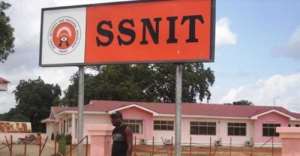
As Ghana’s pensioners cry out for fairness and transparency, one haunting question refuses to fade --- can SSNIT truly sustain itself for future generations? In this sixth part of our series on SSNIT pensions, we dig into the numbers behind the moral story: what SSNIT earns, what it loses, how government indebtedness drains the fund, and what lessons Ghana can learn from Mauritius and Rwanda’s more resilient pension systems.
The Economics of Hope
The Social Security and National Insurance Trust (SSNIT) was created to be a cushion --- a system of collective security, a promise that when Ghanaian workers grow old and frail, their years of labour will not end in misery. But in recent times, that promise has begun to sound hollow. Pensioners lament the meagre sums they receive. Contributors question whether their deductions are safe. And behind the public frustration lies a deeper, more complex question. Can SSNIT ever be financially sustainable?
Counting the Cedis: What SSNIT Earns and What It Pays
At the heart of SSNIT’s sustainability problem is a basic economic mismatch between what it earns and what it pays out. The Trust’s investment portfolio, valued in the tens of billions of cedis, is spread across government securities, real estate, equities, and joint ventures. In theory, that sounds healthy. But in practice, many of these investments yield less than expected, and some are bleeding value.
According to SSNIT’s own financial statements in recent years, over 70% of annual contributions go into paying existing pensioners, leaving a slim margin for long-term growth. That means the system operates almost like a “pay-as-you-go” scheme, relying heavily on the active workforce to finance retirees --- a structure that is only sustainable if employment remains high and contributions are consistent. But Ghana’s formal sector is shrinking relative to the informal economy. Only a fraction of workers contribute regularly, while thousands operate outside the formal payroll system. This imbalance means SSNIT is drawing from a small pool to serve a rapidly growing retired population.
The Transparency Question: Where Do the Losses Come From?
Public trust in SSNIT’s management is also eroded by the perception, and sometimes the reality of waste and opacity. Over the years, audit reports and parliamentary queries have highlighted questionable investments. Hotels that underperform, real estate projects that remain unoccupied, joint ventures that yield little or no returns. These are not isolated issues. They reflect a systemic weakness in how SSNIT evaluates and monitors its investments. When a pension fund loses money through bad decisions, those losses are not abstract, they translate directly into lower pensions, delayed increments, and diminished reserves.
To rebuild credibility, SSNIT must open its books more boldly. Pensioners and contributors have the right to know:
- What percentage of investments are performing below benchmark?
- What is the real return on investment after inflation?
- Which assets are non-performing, and what recovery plans exist?
Transparency is not a threat to management; it is the oxygen of sustainability.
Government Indebtedness
Perhaps the most under-discussed issue in SSNIT’s financial health is government indebtedness. Over the years, successive governments have borrowed from or owed arrears to SSNIT, from unpaid contributions of state institutions to delayed payments on government bonds held by the Trust. In 2022, for example, government debt to SSNIT reportedly ran into billions of cedis. When the state delays or defaults, SSNIT’s liquidity suffers. Yet, the same government is the fund’s regulator, overseer, and largest employer. This creates a troubling conflict of interest.
It is time for Parliament and civil society to insist on ring-fencing pension funds from the whims of politics. A sustainable SSNIT must be insulated from fiscal pressures and treated with the same prudence as a sovereign wealth fund. Pension money is not government money, it belongs to workers.
A Broken Investment Philosophy
The Trust’s investment strategy has often been criticized as conservative and outdated. Too much reliance on real estate and local equities exposes the fund to market shocks and inflationary erosion. Ghana’s stock market, while important, has been volatile. Meanwhile, large investments in government securities, though considered “safe” yield modest returns, often below real inflation.
A 21st-century pension system must diversify smarter. That means looking beyond short-term returns toward innovation, regional diversification, and digital growth sectors. Pension funds around the world are investing in renewable energy, healthcare infrastructure, technology startups, and agricultural value chains, all of which can generate sustainable returns while creating jobs. SSNIT must rethink its investment policy to balance safety, liquidity, and growth, not just political comfort.
Learning from Africa: Two Models That Work
If the question is whether sustainability is possible, Africa already offers examples of hope. Two models, one from Mauritius, and the other from Rwanda prove that effective pension systems can thrive even in developing economies.
- Mauritius: The Power of Universality
Mauritius operates a universal pension scheme, where every citizen above 60 receives a monthly benefit, regardless of prior contribution. The scheme, financed through taxes and managed transparently, has achieved what many African systems struggle with --- inclusivity and trust. The Mauritian model works because of clear governance structures, annual public audits, and political commitment to protect pension funds from interference. Pensioners do not need to queue or beg; they are seen as rights-holders, not charity cases. While Ghana’s economy differs, there is a key lesson. A transparent, citizen-centered pension model creates national pride and social stability.
- Rwanda: The Community-Based Innovation
Rwanda’s approach is both innovative and deeply local. Through its Community-Based Pension Scheme, informal sector workers --- farmers, traders, artisans --- contribute small but regular amounts via digital platforms like Ejo Heza “a brighter future”. The government matches contributions for low-income earners, creating a culture of savings even among those who were previously excluded. The system is digital, traceable, and directly linked to national ID cards. The results have been impressive. Millions of Rwandans who once lived outside the formal pension system now have future security. It is a model of inclusion Ghana could easily adapt, given our widespread mobile money use and digital ID infrastructure.
Ghana’s Missed Opportunity: The Digital Dividend
SSNIT has made some progress in digitization, but its potential remains untapped. Imagine a future where artisans in Tamale, traders in Techiman, or taxi drivers in Takoradi can all contribute small daily amounts to their SSNIT account via mobile wallet, and track their balance in real time. Such a reform would expand the contributor base dramatically, spread risk, and strengthen sustainability. It would also rebuild public trust by making the system more accessible and transparent. And imagine a SSNIT contributor in dire need of a small amount of money just use his SSNIT number to access a loan on his phone.
Restoring the Moral Contract
At its core, SSNIT is not just a financial institution; it is a social contract between the state and its citizens. The sustainability question is therefore not only about numbers, but about accountability and faith. When people believe that their contributions are managed prudently and fairly, they contribute willingly. When they see waste and opacity, they withdraw emotionally, and sometimes literally. Ghana’s pension future depends on rebuilding that faith. The Trust must communicate better, publish more data, and engage contributors in policy reviews. Civil society and the media must continue to scrutinize its performance. And government must stop treating SSNIT as a convenient financial reservoir.
The Economics of Hope
Hope is not wishful thinking, it is a strategy anchored in truth and reform. SSNIT’s sustainability can only be secured through radical transparency, sound investment management, and inclusive participation. Ghana can learn from others, but the first step is to confront its own contradictions --- a pension fund meant to protect workers cannot itself be impoverished by the very system it serves. If Mauritius can make pensions universal and Rwanda can innovate for the informal sector, then Ghana, with its stronger economy and digital base, can certainly reform SSNIT to work, not just for today’s pensioners, but for generations yet unborn.
The real question is not whether SSNIT can be sustainable. It is whether we, as a nation, have the courage to demand it.
Author’s Note:
This article is part of the ongoing series on “SSNIT Pensions” The series explores the legal, moral, and economic realities of Ghana’s SSNIT pension scheme and advocates for transparency, reform, and dignity for pensioners. Hopefully, Part 7 brings down the curtains on the series.
FUSEINI ABDULAI BRAIMAH
+233208282575 / +233550558008
[email protected]

 South Africa xenophobia: Business allegedly declines after ownership shift from ...
 Kpone Traditional Council announces death of paramount chief after 37 years of r...
 Middle East live: Iran says will target any vessel traffic in Strait of Hormuz
 Bill Gates calls Epstein meetings a ‘grave error’ while defending actions in hou...
 Infantino defends World Cup ticket prices, dismisses referee US entry dispute
 Rainstorms from Nigeria, Benin to trigger thunderstorms in Ghana — GMet warns
 Accra floods: 70 seized excavators to be deployed to NADMO for desilting — Munta...
 Kasseh Market executives stop sale of food near toilet facility
 Three arrested over theft of critical equipment at Komenda Sugar Factory
 Nearly half of Ghanaians say military rule can be justified if governments fail ...


