




Abstract
Road traffic accidents constitute one of the most serious public safety and developmental challenges confronting Ghana. Despite significant legislative interventions and institutional reforms, road crashes continue to claim thousands of lives annually, resulting in devastating social and economic consequences. This article examines the road traffic accident phenomenon from constitutional, statutory, and international law perspectives. It argues that the persistence of road fatalities reflects not merely individual negligence but systemic failures involving weak law enforcement, inadequate infrastructure, poor regulatory compliance, and ineffective governance. Drawing upon the 1992 Constitution of Ghana, the Road Traffic Act, 2004 (Act 683), the National Road Safety Authority Act, 2019 (Act 993), judicial authorities, and international road safety frameworks, the article contends that road safety should be viewed as a constitutional obligation of the State. It concludes by proposing comprehensive legal and policy reforms aimed at reducing fatalities and strengthening road safety governance in Ghana.
Introduction
Road traffic accidents have emerged as a global public health crisis. According to the World Health Organization (WHO), road crashes remain among the leading causes of death worldwide, particularly among young people between the ages of 5 and 29 years.
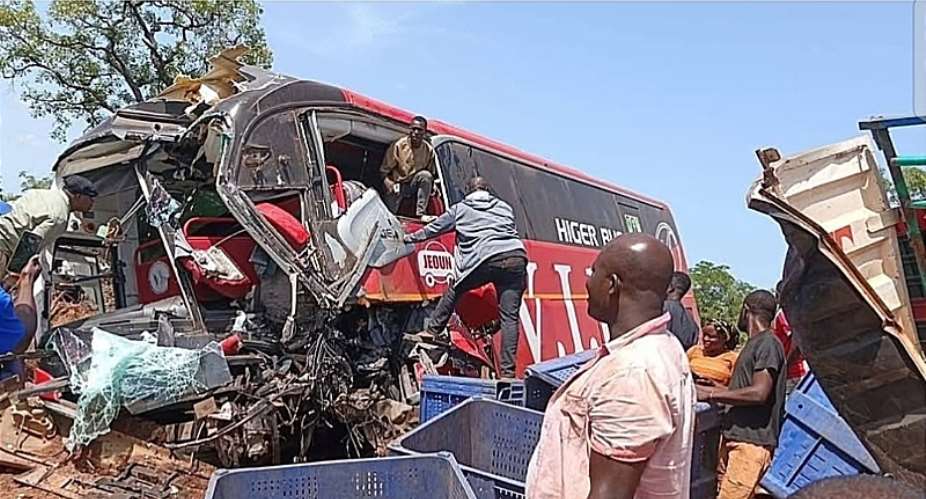
In Ghana, the situation has become increasingly alarming. Every year, thousands of individuals lose their lives while many more suffer permanent disabilities resulting from road crashes. Beyond the immediate loss of life, road accidents generate significant economic losses, strain healthcare resources, and diminish national productivity.
The prevalence of road traffic accidents raises fundamental constitutional and legal questions concerning the duty of the State to protect life, ensure public safety, and provide adequate transportation infrastructure. It also raises questions regarding the effectiveness of existing road safety legislation and enforcement mechanisms. This article critically examines the causes, legal implications, constitutional dimensions, and policy responses to road traffic accidents in Ghana.
Conceptual Framework of Road Traffic Accidents
A road traffic accident refers to an unexpected collision involving one or more road users that results in death, injury, or property damage. Road crashes generally arise from three interconnected factors: Human factors, Vehicle factors, and Environmental factors.
- Human factors account for the overwhelming majority of accidents and include: Speeding; Reckless driving; Driving under the influence of alcohol;Fatigue; Distracted driving.
- Vehicle factors include: Brake failure; Tyre defects; Mechanical faults.
- Environmental factors include: Poor roads; Inadequate lighting; Defective traffic signals; Adverse weather conditions.
The interaction of these factors creates conditions conducive to road crashes.
Constitutional Foundations of Road Safety in Ghana
Although the 1992 Constitution does not expressly mention road safety, several constitutional provisions establish a framework imposing obligations upon the State.
- Right to Life; Article 13(1) provides: No person shall be deprived of his life intentionally except in the exercise of the execution of a sentence of a court. The right to life imposes positive obligations on the State to adopt measures protecting citizens from foreseeable dangers.
The continuous occurrence of preventable road accidents therefore raises constitutional concerns regarding the adequacy of governmental protection of life.
- Directive Principles of State Policy; Article 36(1) requires the State to: take all necessary action to ensure that the national economy is managed in such a manner as to maximise the rate of economic development. Road accidents undermine economic development through: Loss of productive labour; Medical expenditure; Insurance claims; Infrastructure damage.
Consequently, road safety falls within the constitutional development mandate.
Public Safety Obligations; Article 35(1) mandates the State to promote conditions necessary for the welfare of citizens. Safe transportation systems constitute an essential element of public welfare.
Statutory Framework Governing Road Safety
Road Traffic Act, 2004 (Act 683); Act 683 remains Ghana's principal legislation regulating road transportation. The Act addresses: Driver licensing; Vehicle registration; Traffic offences; Roadworthiness requirements. Section 1 prohibits the operation of motor vehicles without proper authorization. The Act criminalizes: Dangerous driving; Careless driving; Driving under the influence.
- Road Traffic Regulations, 2012 (L.I. 2180). The Regulations supplement Act 683 by prescribing detailed rules regarding: Speed limits; Road signs; Seat belts; Vehicle standards. These regulations provide the practical framework for road safety enforcement.
- National Road Safety Authority Act, 2019 (Act 993); Act 993 established the National Road Safety Authority (NRSA). The Authority is mandated to: Coordinate road safety policies; Conduct public education; Monitor accident trends; Promote safer road usage. The Act represents a significant institutional reform in road safety governance.
Negligence and Civil Liability in Road Traffic
Road accident litigation is predominantly governed by the tort of negligence. To establish negligence, a claimant must prove: duty of care, breach of duty, and damage. The classic authority remains: Donoghue v Stevenson [1932] AC 562, Lord Atkin established the famous "Neighbour Principle." Drivers owe a duty of care to: Other motorists; Passengers; Pedestrians. Failure to exercise reasonable care may result in liability.
Criminal Liability for Road Traffic Offences
Criminal sanctions apply where conduct exceeds ordinary negligence. Offences include: Dangerous Driving, A person who drives in a manner dangerous to the public commits an offence, Causing Death by Dangerous Driving, Where reckless driving results in death, criminal prosecution may follow. Driving Under the Influence Alcohol-related driving remains one of the major contributors to fatal accidents. Criminal liability serves both punitive and deterrent purposes.
Judicial Approaches to Road Traffic Negligence
Ghanaian courts have consistently emphasized the duty of drivers to exercise reasonable care. Boadi v Yartey [1977] GLR 287. The court affirmed that motorists owe a duty of care to other road users. Nyamekye v Teyeh [1978] GLR 42,the court held that excessive speed and failure to maintain proper control may constitute negligence. These decisions reinforce accountability in road usage.
Road Traffic Accidents as a Human Rights Issue
Road safety increasingly falls within international human rights discourse. The right to life under: The Universal Declaration of Human Rights; The International Covenant on Civil and Political Rights;The African Charter on Human and Peoples' Rights; imposes obligations on States to adopt measures protecting citizens from preventable deaths. Article 4 of the African Charter guarantees the inviolability of human life. Preventable road fatalities may therefore be viewed as a human rights concern.
International Legal Framework
Sustainable Development Goals; Target 3.6 of the SDGs seeks to: halve the number of global deaths and injuries from road traffic accidents. Ghana has committed itself to achieving this target.
African Union Road Safety Framework; The African Union has repeatedly urged member states to strengthen road safety legislation and enforcement. Road safety forms part of broader continental development objectives.
Institutional Failures and Governance Challenges
Several governance failures contribute significantly to road accidents.
Weak Law Enforcement; Traffic violations frequently go unpunished. Selective enforcement weakens deterrence.
Corruption; Bribery within enforcement systems undermines road safety efforts.
Poor Road Infrastructure; Numerous roads suffer from: Potholes; Poor drainage; Inadequate lighting; Missing road signs.
Inadequate Public Education; Many drivers remain unaware of road safety regulations.
Economic Cost of Road Traffic Accidents
Road accidents impose significant economic costs.
These include:
- Direct Costs; Medical treatment; Vehicle repairs; Insurance claims.
- Indirect Costs; Lost productivity; Disability; Loss of future earnings.
The cumulative effect significantly affects national development.
Recommendations
To reduce road fatalities, Ghana should adopt the following measures: Legislative Reforms. Increase penalties for dangerous driving.
Introduce mandatory periodic driver re-certification.
Enforcement Reforms; Expand speed camera networks. Increase highway patrol operations.
Infrastructure Reforms: Improve road maintenance. Install adequate street lighting. Enhance pedestrian facilities.
Educational Reforms; Introduce road safety education at all educational levels. Strengthen public awareness campaigns.
Judicial Reforms; Establish specialized traffic courts. Expedite accident-related prosecutions.
Conclusion
Road traffic accidents represent one of Ghana's most significant public safety challenges. Their persistence reflects deficiencies in law enforcement, governance, infrastructure development, and public compliance. The constitutional right to life imposes a duty on the State to take proactive measures aimed at reducing preventable road fatalities. While Ghana possesses a relatively comprehensive legal framework, implementation remains inadequate.
The fight against road traffic accidents must therefore be viewed not merely as a transportation issue but as a constitutional, developmental, and human rights imperative. Effective enforcement, improved infrastructure, institutional accountability, and public education remain essential if Ghana is to reverse the alarming trend of road fatalities and create safer roads for future generations.
Reference
1. World Health Organization, Global Status Report on Road Safety 2023 (WHO 2023).
2. Constitution of the Republic of Ghana 1992, art 13.
3. Constitution of the Republic of Ghana 1992, art 35.
4. Constitution of the Republic of Ghana 1992, art 36.
5. Road Traffic Act 2004 (Act 683).
6. Road Traffic Regulations 2012 (LI 2180).
7. National Road Safety Authority Act 2019 (Act 993).
8. Donoghue v Stevenson [1932] AC 562 (HL).
9. Boadi v Yartey [1977] GLR 287.
10. Nyamekye v Teyeh [1978] GLR 42.
11. Universal Declaration of Human Rights 1948, art 3.
12. International Covenant on Civil and Political Rights 1966, art 6.
13. African Charter on Human and Peoples' Rights 1981, art 4.
14. United Nations, Sustainable Development Goals, Target 3.6.

 Accra floods: 70 seized excavators to be deployed to NADMO for desilting — Munta...
 Kasseh Market executives stop sale of food near toilet facility
 Three arrested over theft of critical equipment at Komenda Sugar Factory
 Nearly half of Ghanaians say military rule can be justified if governments fail ...
 GWL resumes production at Barekese Water Treatment Plant after completion of rep...
 Economic performance most powerful source of Mahama’s goodwill — IEA
 Nyinahini SHS assault: Court strikes out case, urges reconciliation
 Even traffic lights in front of police headquarters are being stolen — Roads Min...
 One major cause of Ablekuma North rerun violence was lack of security coordinati...
 BTU Council divided as Chairman rejects parliamentary mediation in VC dispute



Comments
There are so many vehicles that are not roads worthy to be on our streets. The government should ban so many trucks on the streets.