




Africa’s New Gold Rush
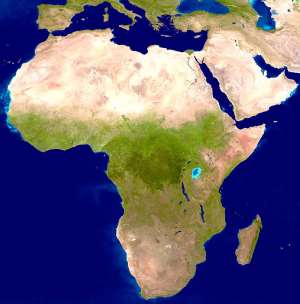
A quiet race is under way beneath Africa’s soil. Across the continent, nations are discovering not just gold or oil, but a new kind of treasure — rare earth elements (REEs). These seventeen minerals, vital to electric vehicles, smartphones, wind turbines and military hardware, are now as strategic as oil once was.
Burundi holds niobium; Congo’s cobalt keeps the world’s batteries alive; Malawi harbours uranium; Namibia is rich in lithium; and South Africa controls vast platinum-group deposits. Every ton dug from African earth feeds the engines of global industry. But the scramble is on — between China, which refines 70 percent of the world’s rare earths, and Western nations desperate to break that monopoly.
Africa could yet become the world’s next technological supplier — if it learns to refine, not merely extract.
Nigeria’s Double Blessing
Nigeria, better known for its oil, is quietly part of this rare-earth map. Surveys have identified lithium, tin, columbite and tantalum in Nasarawa, Kogi, Benue and Taraba States. These could support a booming battery and electronics industry.
But Nigeria’s greater wealth lies not underground. It stretches across her green valleys and river plains. With over 70 million hectares of arable land and rainfall patterns that favour year-round cultivation, Nigeria could feed all of West Africa — and still export. Benue and Taraba are the nation’s breadbaskets, while the vast Middle Belt could anchor agro-industrial corridors from Jos to Makurdi.
When Oil Replaced Food
For decades, however, Nigeria’s rulers turned their backs on the hoe and worshipped the barrel. The discovery of oil in the 1950s created a rentier mindset: agriculture was abandoned, extension services collapsed, and farm loans dried up. The once-vibrant groundnut pyramids of Kano, cocoa plantations of the southwest and palm groves of the east faded into history.
Today, Nigeria imports food worth billions of dollars annually — a staggering irony for a nation so richly endowed.
Militants, Herders and the New Famine
If government neglect were not enough, insecurity has finished the job. The fertile heartlands of Benue, Taraba and Plateau have become killing fields. Armed Fulani herders and militant groups terrorise farming communities, displacing thousands and torching villages. The fields lie fallow, markets are deserted, and hunger deepens.
The World Food Programme warns that up to 26 million Nigerians face acute food insecurity in 2025 — a figure more commonly associated with war-torn countries. Inflation, driven by food scarcity, now erodes household incomes faster than any economic policy can repair.
This crisis is not only humanitarian. It is political. Food security is national security, and Nigeria’s failure to protect farmers is feeding discontent from the villages to the cities.
A Tale of Two Economies
Beneath the soil, a mineral revolution beckons; above it, a farming collapse unfolds. Both stories tell of Nigeria’s paradox — a land of plenty plagued by poor governance.
Imagine, for a moment, if the lithium from Kogi were refined domestically, powering electric motorcycles built in Lagos, while Benue’s rice and maize fed the region from Ghana to Niger. Nigeria could be an industrial and agricultural hub, linking mineral wealth to food self-sufficiency.
Instead, it remains a warehouse of raw potential — a nation that exports ore and imports hunger.
Rediscovering Vision
To reverse this, Nigeria must first restore security to its rural areas. No farmer will plant in fear. Next, the state must revive agricultural banks, research institutes and mechanisation programmes — not as photo opportunities, but as policy pillars. Finally, mining licences should favour partnerships that include local processing and community development, not the fly-by-night foreign companies that leave behind dust and broken roads.
China turned its rare earths into global leverage. Rwanda turned small-scale agriculture into an export machine. Nigeria can do both — if it remembers that national strength grows from the ground up.
Until then, Africa’s richest soil will continue to yield its poorest harvest.
_By Christopher Achobang_


 Surrogacy: Supreme Court judge warns of citizenship and inheritance challenges f...
 Ghana has a surrogacy law, but… - Supreme Court Justice
 Ghana faces challenge to persuade Brics it deserves a seat at the table
 Stop the Sermon Before the Engine Starts: Why Ghana Regulates Preaching on Movin...
 Don’t let speed of information become your judgement — Chief Justice tells new l...
 ‘Big Push’: Government assures contractors of prompt payments
 GES to develop plan to recover teaching time lost during teachers’ strike – Clem...
 'All human emotions': French astronaut Sophie Adenot's first words since returni...
 French astronaut recounts 'astonishing' emotions after return to Earth
 India's 'cockroach' movement chief detained ahead of major protest


