




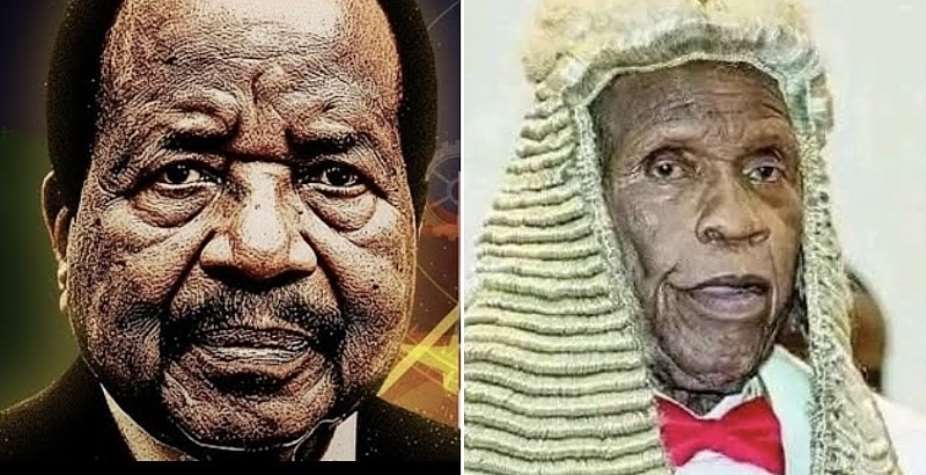
The October 12, 2025 presidential election in Cameroon has been presented, once again, as a victory for Paul Biya and his ruling Cameroon People’s Democratic Movement (CPDM). Official figures show the 92-year-old incumbent cruising to yet another term with a comfortable majority. But beyond the glossy percentages and mathematical illusions lies a far grimmer reality, one of apathy, exclusion, and statistical deception.
The Illusion of Percentages
According to the official data, less than 30 percent of eligible Cameroonians registered to vote. Cameroon’s population stands at roughly 30 million, of whom about 15 million are of voting age. This means that only around 4.5 million people registered.
Of this small number, only 35 percent actually voted, translating to roughly 1.57 million ballots cast nationwide. That means only about 10 percent of all adult Cameroonians participated in choosing the country’s next president.
To put it bluntly: nine out of ten Cameroonian adults did not vote.
Yet the official results are presented in percentages of those who voted, not of those who could vote. When the electoral commission announces that Paul Biya won “70 percent” of the vote, it hides the fact that this figure represents less than 7 percent of the total adult population.
The War Zones That “Voted”
Nowhere is this electoral fraud by arithmetic more visible than in the North West and South West regions, the heartlands of the ongoing Anglophone conflict. These two regions together have a population of about 3 million, but according to independent observers, less than 2 percent of that population participated in the poll.
That is roughly 60,000 people.
Yet, official tallies claim that these two war-torn regions voted for Paul Biya by 86 percent. This claim collapses under simple logic. Communities where people are displaced, villages are burned, and roads are unsafe cannot physically produce credible votes. In many districts, no polling stations functioned at all.
In effect, the “votes” from these regions were manufactured on paper, not produced by citizens queuing under gunfire to cast their ballots.
When Abstention Becomes a Verdict
Elections are meant to measure the will of the people. But what happens when the majority stays home? Cameroon’s 2025 election was not just a political contest, it was a referendum on public trust. The results speak less about who won, and more about who refused to play.
When 90 percent of adults do not participate, the legitimacy of any declared winner evaporates. Percentages cannot mask the emptiness of participation.
Breaking Down the Numbers
Indicator Estimated Value Percentage of Population Comment
Total Population 30 million 100% —
Voting-age citizens 15 million 50% Eligible adults
Registered voters 4.5 million 30% of eligible adults Massive registration failure
Actual voters 1.57 million 10.5% of eligible adults Record-low turnout
Votes attributed to Biya (70%) ≈ 1.1 million 7.3% of eligible adults “Victory” by statistical fraud
NW & SW population 3 million — War-affected regions
NW & SW turnout (2%) 60,000 — Mostly fictitious participation
Claimed Biya votes in NW & SW (86%) ≈ 51,600 — Likely fabricated
The Truth Behind the Numbers
Cameroon’s electoral crisis is not just about manipulation, it is about mathematical cosmetics. By reporting results as percentages of a tiny, filtered subset of voters, the regime turns a nationwide boycott into a “landslide victory.”
In reality, the 2025 presidential poll reflects the collapse of national confidence in elections. The figures expose a government sustained by abstention, not endorsement.
The story of Cameroon’s 2025 presidential election is not written in the glowing percentages on government posters. It is buried in the silence of the 90 percent who refused to vote.
When the history of Paul Biya’s regime is finally written, statisticians will not save him. Numbers may not lie, but politicians do with numbers.
Christopher Achobang reports from Kampala

 October 27: Cedi sells at GHS12.25 on forex market, GHS11.66 on BoG interbank
 SA evacuation: Why blame Ablakwa instead of officials who paid evacuees? – Hopes...
 Duplicate names in SA evacuation records could be people with same names – Hopes...
 South Africa evacuation: Dr. Tutu Boahene questions unsigned payment records
 NHIA inaugurates first-ever adjudication committee to resolve NHIS disputes
 Obuasi SHTS sexual abuse allegations: Emily Nyarko urges sustained pressure for ...
 Ghana, Canada sign agreement to deepen bilateral cooperation – Ablakwa
 US-EU trade truce at risk over $3.4 billion Airbus loan, Trump official warns
 Flavio Bolsonaro vows to lead opposition after Brazil court imposes travel ban
 Mecca pact nations hold talks with Iran to prevent renewed Middle East war


