




Trade policy in developing economies is both an industrial framework and a national employment instrument. It defines how a country positions itself in global markets, attracts investors, and distributes the gains of trade across its labor force. In Ghana, however, this mechanism has drifted far from its developmental purpose. What was once designed to nurture industry and employment has evolved into a fiscal machine of extraction. The nation’s tariff structure, often defended as protectionist, has transformed into a barrier to production and a tax on economic survival. Instead of protecting domestic producers, it punishes them. Instead of driving growth, it finances a state addicted to short-term customs revenue.
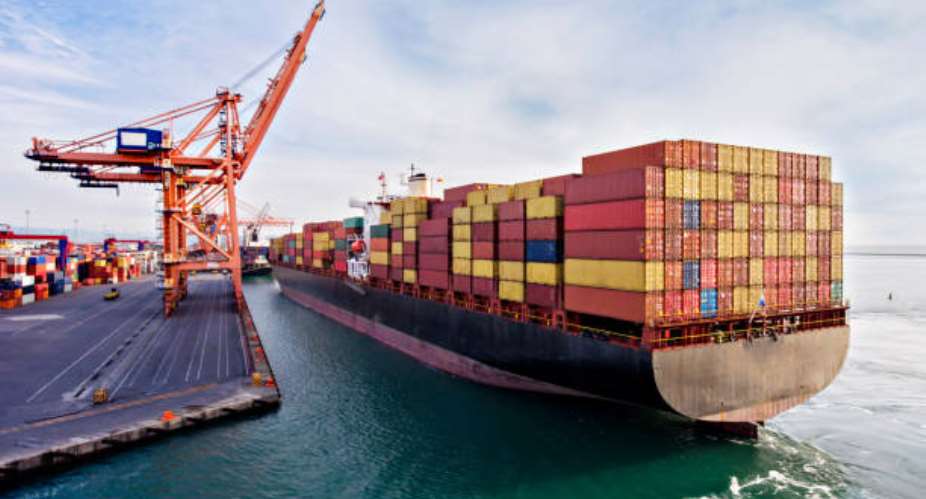
Since 2010, Ghana’s tariff system has been formally aligned with the ECOWAS Common External Tariff (CET), which sets rates of 0, 5, 10, 20, and 35 percent. Yet the official rates conceal a harsher fiscal reality. When all additional charges, value-added tax, special import levies, ECOWAS and African Union dues, inspection fees, and health recovery surcharges are added, the actual cost of importing goods can reach between 40 and 55 percent of value. The ports at Tema and Takoradi, once meant to be gateways for trade, have effectively become revenue vaults. According to the Ghana Revenue Authority (GRA), customs and associated duties now contribute close to one-third of total domestic revenue. The port, not production, has become the beating heart of the fiscal system. In consequence, the government’s solvency grows as the private sector’s competitiveness collapses.
This contradiction is evident in the composition of Ghana’s imports. More than two-thirds of all goods entering the country are essential capital or intermediate goods required for production, machinery, electrical components, pharmaceuticals, and building materials. The local manufacturing sector, by contrast, represents less than eleven percent of GDP and employs fewer than half a million people. Domestic firms rely heavily on imported materials, meaning that tariffs on these goods act as an indirect tax on Ghanaian production. By raising input costs, they squeeze profit margins and discourage expansion. The policy therefore serves not as protection but as punishment, shielding the treasury, not the entrepreneur.
Ghana’s reliance on import taxes has deepened over time. The tax-to-GDP ratio, hovering between 13 and 14 percent, remains below the African average and far below that of developed economies. Faced with limited capacity to collect income and property taxes, the state leans on border taxes as an easy source of revenue. During the fiscal crises of 2014 to 2016 and 2022 to 2024, customs receipts more than doubled, rising from GH¢8.7 billion to over GH¢23 billion. Yet industrial output stagnated, and employment growth slowed sharply. The country’s fiscal gains have come at the expense of its productive base, each uptick in revenue at the port is matched by another shuttered workshop or idle production line.
Labor-market data confirm this trend. From 2010 to 2024, manufacturing’s contribution to GDP fell from 10.2 to 8.5 percent, while formal industrial employment elasticity slipped to 0.25. The Ghana Living Standards Survey reveals that almost 88 percent of the labor force now operates informally, with less than twelve percent in formal wage employment. Private-sector job creation has lagged, with most small firms either downsizing or shifting into the informal economy to evade the cost pressures created by import taxation. In effect, Ghana’s tariff regime has eroded the very industrial base it was meant to protect, turning employment into a casualty of fiscal policy.
Policy instability compounds the damage. Tariffs and levies are revised almost yearly, often without industrial logic. The Special Import Levy, introduced in 2013, was repealed, reinstated, and revised multiple times. The same volatility surrounds the Energy Sector Levy and the Health Recovery Levy. Such unpredictable policymaking deters investment, as firms postpone expansion or hiring while waiting for clarity. This uncertainty inflates costs, undermines productivity, and reinforces Ghana’s reputation as a risky business environment.
Externally, Ghana’s exporters face similar instability. Non-traditional exports such as processed cocoa, aluminum, and apparel rely on preferential access through programs like the U.S. Generalized System of Preferences (GSP) and the EU’s Economic Partnership Agreements. But these arrangements are politically fragile. The U.S. GSP, for instance, has expired ten times in its last fourteen renewals, subjecting Ghanaian exports to abrupt tariff shocks. By contrast, the EU’s decision in 2014 to extend its GSP review period from three to ten years created stability that increased developing-country exports by roughly seven percent. Predictability, not charity, drives trade and employment. Ghana’s overreliance on uncertain preferences has done the opposite, it has discouraged long-term investment and industrial diversification.
Comparative lessons abound. Before joining the World Trade Organization in 2001, China’s exports faced unpredictable U.S. tariff reviews. Once China gained permanent trade status, investment surged, fueling decades of growth. Portugal’s accession to the European Community in 1986 similarly locked in market access, leading to explosive export and employment gains. Conversely, events like Brexit or the U.S.–China trade war demonstrate how uncertainty paralyzes industries and reduces jobs. Ghana’s problem is that its domestic and external trade environments are both unstable, its tariffs fluctuate internally, while its export preferences fluctuate externally. The outcome is economic paralysis on two fronts.
The inflationary consequences are severe. The Bank of Ghana estimates that about one-third of total inflation is linked to imported goods. Tariff-driven price increases feed directly into consumer costs, eroding real wages and disposable income. The government’s own monetary tightening cannot offset this inflation because its root cause lies not in demand but in fiscal design. The result is an economy where citizens pay more, consume less, and invest even less, a stagnant loop of fiscal extraction and social exhaustion.
At the center of this problem lies a fiscal system built on expediency. The state, unable to collect taxes equitably across income classes, targets the easiest revenue base, the port. With fewer than three million registered taxpayers in a labor force exceeding twelve million, customs duties are politically convenient, they are collected silently, without the resistance that would accompany direct taxation. But convenience breeds corruption and complacency. Over time, the port has evolved into a rent-seeking ecosystem where bureaucrats and intermediaries profit from inefficiency. Customs, originally an arm of industrial facilitation, has become an institution of obstruction.
This dependency undermines every attempt at structural transformation. Government programs such as “One District, One Factory” are sabotaged by the very tariff regime that is supposed to support them. Most of these factories rely on imported equipment and materials, each additional levy raises production costs and weakens competitiveness. According to the Ghana Statistical Service, more than eighty percent of manufacturing firms depend on imported inputs for at least half their production. Tariffs on such goods effectively tax domestic production itself, a self-inflicted wound on industry.
Other nations have taken a different route. Vietnam’s decision to lower input tariffs below five percent and Morocco’s maintenance of moderate, predictable rates around twelve percent were pragmatic employment strategies. These policies, combined with targeted investment incentives, generated millions of new industrial jobs. Ghana’s contrasting approach, high, unpredictable tariffs with little reinvestment, has trapped it in stagnation. Between 2014 and 2022, formal manufacturing employment grew by under two percent annually, while informal work rose by nearly seven percent. The economy now survives by taxing inefficiency, not rewarding productivity.
This system’s contradictions are philosophical as well as economic. Ghana’s tariff regime is neither developmental nor defensible. It is a relic of colonial fiscal logic, designed to extract revenue from trade rather than build capacity through it. No modern economy sustains growth by taxing what it does not produce. Import duties are the least progressive and most distortionary form of taxation, they penalize producers, reward smuggling, and inflate prices. Each cedi collected at the port subtracts from domestic investment and household purchasing power. The practice has no grounding in contemporary fiscal theory and no moral justification in a society struggling with unemployment and poverty.
The Ghana Revenue Authority and the Ghana Ports and Harbours Authority have together institutionalized this dysfunction. Their partnership has turned Ghana’s border into a zone of confiscation rather than commerce. Small and medium enterprises, the real engines of job creation, bear the heaviest burden. The car importer, the spare-parts dealer, the textile trader, the hardware merchant, all face duties and fees that decimate working capital and drive up prices. These levies do not improve logistics or expand infrastructure, they fund recurrent expenses in unrelated sectors. A trader who loses capital at the port represents multiple lost jobs, the sales attendant, the mechanic, the driver, the apprentice, all casualties of fiscal greed disguised as policy.
A state that taxes its most dynamic citizens to sustain its least productive sectors has inverted the logic of development. Celebrating record port revenue while firms collapse and prices soar is not governance, it is economic malpractice. A progressive government would tax production and income, not importation and survival. Ghana’s current model achieves the opposite, it rewards stagnation and punishes work.
The government’s public jubilation over rising customs revenue is therefore both ironic and intellectually indefensible. Higher port collections are not a sign of prosperity but of deepening distress. What appears as fiscal achievement on paper is, in reality, the liquidation of private capital. Every surge in revenue corresponds to higher costs of living, reduced business investment, and slower job creation. Yet policymakers parade these figures as victories, mistaking exploitation for performance.
The hypocrisy runs deeper when the same authorities lament the high cost of goods, cement, vehicles, or food, without acknowledging their own role in creating those prices. Ghana imposes cumulative import duties exceeding 40 percent, then wonders why its cement costs twice as much as in Togo or Benin, where tariffs average 10 percent. Ministries of Trade talk of competitiveness while the Ministry of Finance inflates import values to meet IMF targets. The government blames traders for inflation, even as it engineers it through border taxation. These contradictions expose either alarming ignorance or deliberate manipulation. If ignorance, it reveals a lack of basic economic literacy; if intentional, it constitutes willful exploitation of the citizenry to cover fiscal mismanagement. Either way, the outcome is the same, growth without production, taxation without wealth.
A government that measures success by customs collections rather than industrial output is not steering development, it is managing decline. Port revenues should serve as transitional instruments for investment in infrastructure and industrial support, not as permanent fiscal crutches. Instead, they are absorbed into recurrent spending, sustaining bureaucracy over productivity. This toll-booth economy rewards stagnation and penalizes movement. It thrives on delays, paperwork, and levies, on the very inefficiencies it should eliminate.
No nation has ever taxed its way into prosperity. Tariffs can protect, but they cannot innovate; they can slow imports, but they cannot build factories. Ghana’s fixation on customs performance is like celebrating a fever while ignoring the infection beneath it. It signals an economy that produces too little, imports too much, and survives by taxing the struggle of its own people.
Until Ghana breaks this cycle, until it shifts focus from border revenue to domestic value creation, it will remain locked in fiscal triumph but industrial decay. Real progress will require redefining success in terms of productivity, employment, and innovation rather than customs receipts. The government must cease confusing confiscation with competitiveness and stop pretending that impoverishing citizens is a sign of fiscal health.
A nation cannot claim to champion industrialization while strangling its own commerce at the border. The current import-duty regime is not merely inefficient, it is unjust, antiquated, and economically suicidal. Reforming it is no longer an economic option but a moral necessity. Ghana’s development will begin not when it celebrates revenue at the port, but when it celebrates production in the factory, jobs in the community, and innovation in the marketplace. Until then, its customs houses will stand as monuments not of progress, but of betrayal, of labor, of industry, and of national development itself.
By: David Asante-Ansong
Doctoral Researcher, Indiana University of Pennsylvania, Pennsylvania, United States of America
By: David Asante-Ansong


 NDC MP explains why Kevin Taylor was not arrested when he returned to Ghana
 Disruption of global order: 'We must expand opportunities for youth' – Mahama
 WN/R: Residents raise concern over abandoned truck on Benchemaa-Oseikojokrom hig...
 Gov’t invests GH¢4.12bn into road infrastructure in Bono Region — Asiedu Nketiah
 Mahama to cut sod for Sunyani Sports Stadium project in October
 Kwesi Pratt urges Ghana to revisit Nkrumah’s seven-year development Plan
 Ghana Jollof saga: 'Power is transient' — Annoh-Dompreh cautions against partisa...
 “I loved NDC but I’ve been disappointed and I’ve learned my lesson” — Mzbel
 Sista Afia laments how colleague musicians turned down her feature requests
 Joining NDC did me more harm than good – Mzbel


