




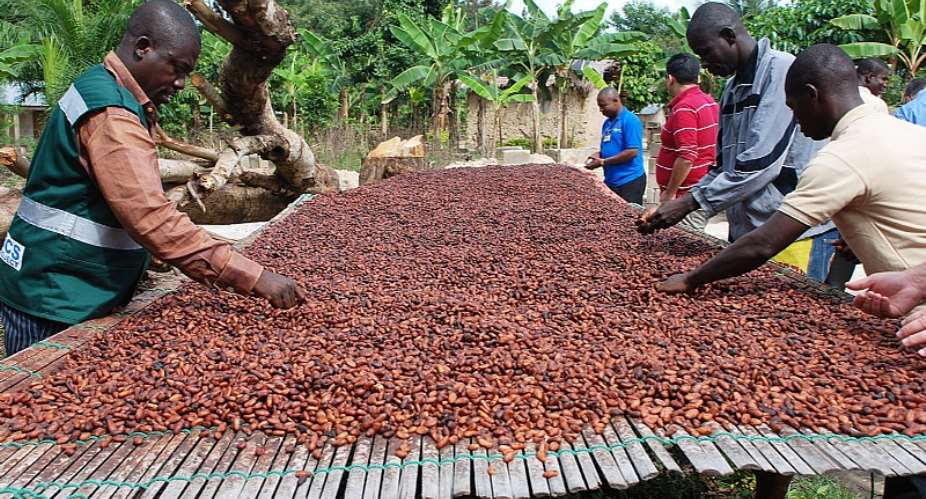
Ghana’s cocoa industry — long celebrated as the backbone of the national economy — is entering a pivotal phase. For decades, the country exported mostly raw beans while importing finished cocoa products. Now, a quiet transformation is underway as Accra-based processors invest in beverages, confectionery and even dairy production.
According to a recent analysis by the Accra Street Journal, Ghana’s share of value-added cocoa processing remains around 5% of total output. Yet industry developments show momentum. Niche Cocoa Industry Ltd, for instance, has installed the country’s first aseptic PET line for milk-based beverages — an industrial leap that allows local production of cocoa-milk drinks once imported from abroad.
Government policy is backing the shift. The Ghana Cocoa Board (COCOBOD) says it will prioritise domestic processing as a strategy to stabilise incomes and reduce exposure to global price swings. Finance Minister Dr Cassiel Ato Forson recently reiterated that “value addition is not optional; it’s the next frontier for Ghana’s cocoa economy.”
Still, the path forward is challenging. A report by Accra Street Journal notes that poor weather, crop disease and illegal mining have lowered yields, threatening the steady bean supply needed for processing. Production shortfalls have already forced revisions in COCOBOD’s forward-sales plans and strained factory inputs.
Why Processing Matters
Processed cocoa products — from chocolate bars to ready-to-drink beverages — command margins several times higher than raw exports. Market research suggests Ghana’s cocoa processing and confectionery segment could see steady growth through 2030 if the country can maintain feedstock and attract investment capital.
Beyond export value, the local economy stands to gain jobs. Cocoa beverage lines, packaging facilities and confectionery plants require engineers, operators, and logistics staff. “Each processing plant multiplies employment across the chain — from farmers to packaging workers,” says industry analyst Kofi Owusu-Mensah.
Emerging Players and New Products
The Accra Street Journal study identifies a wave of industrial expansion. Alongside Niche Cocoa, smaller processors are testing cocoa-based drink mixes and snack bars for local supermarkets. These ventures, though modest, represent Ghana’s first generation of consumer-ready cocoa goods designed and produced domestically.
Companies such as Cargill Ghana, Cocoa Processing Company (CPC), and Afrotropic Cocoa Processing have announced or implemented capacity upgrades in recent years, while local innovators explore artisanal chocolate production. Meanwhile, Ghanaian dairy processors are experimenting with cocoa-flavoured milk drinks to capture both urban and export demand.
Barriers Still Ahead
The key barriers remain capital intensity, traceability requirements, and bean availability. The European Union’s new Deforestation Regulation means Ghanaian exporters must prove sustainable sourcing — a compliance hurdle but also a brand opportunity. Processors who master traceability could earn premium pricing abroad.
At the same time, the volatility of cocoa harvests makes investors cautious. “You can’t build a beverage line without guaranteed beans,” one processor said. “That’s the fundamental risk.”
The Bigger Picture From Accra Street Journal
Analysts say the shift toward domestic processing, though still small, signals a broader re-imagination of Ghana’s economic model — one that moves from commodity dependence to manufacturing. If successful, the transformation could make “Made in Ghana” chocolate and cocoa beverages a reality rather than a slogan.
For now, Accra’s industrial corridor tells the story: warehouses once used for export storage are being refitted for packaging, blending and branding — proof that Ghana’s cocoa ambitions are expanding beyond the beans.

 Police place GH¢100,000 bounty on man for killing two people in Tema
 Ultraviolet sterilisation mandatory for safe water production — FDA warns sachet...
 Cocoa smuggling: Fiapre Circuit Court grants GHC10,000 bail each to four suspect...
 Tensions rise in Bogoso as youth block mine workers over employment dispute
 Police declare military officer wanted over alleged murder of couple, announce G...
 University of Ghana distances itself from unauthorised ‘UG Partner’ app, warns p...
 Ghana's inflation rises marginally to 3.4% in April, up from 3.2% in March — GSS
 Inflation rises to 3.4% in April
 Court remands three suspects over jewelry shop robberies at Airport Residential ...
 Release ex-Buffer Stock CEO and wife immediately — Afenyo-Markin to EOCO, AG


