




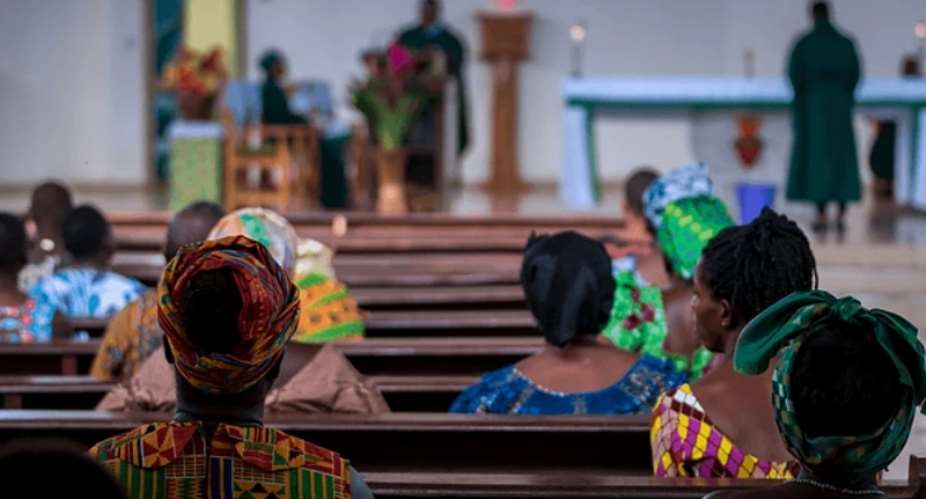
Ghana is a deeply religious nation. Faith is our anchor and our pride. Yet, our religious landscape is also being polluted, and the signs are alarming.
Turn on the television or radio and you are likely to hear promises of instant wealth, miracle charms, and “money doubling.” Some fetish priests openly advertise spells to eliminate work rivals. Others claim they can make wives control their husbands. Even self-styled “prophets” shamelessly prey on the vulnerable. This is not harmless noise; it is dangerous.
We need only recall April 2021 in Kasoa, when two teenagers brutally killed their 10-year-old friend, Ishmael Mensah Abdallah, hoping for wealth through a ritual they had seen advertised online. We also remember Madam Agradaa, whose money-doubling schemes landed her behind bars. These cases expose the dark fruits of unchecked religious fraud.
Why Self-Regulation Matters
If genuine religious groups stay silent, government will eventually be forced to step in heavy-handedly. Rwanda’s churches found this out the hard way after the genocide; Ethiopia now relies on an inter-religious council that often drowns in politics. Kenya learned after extremist attacks that waiting for a crisis is too costly.
Ghana must not wait. We need a homegrown model that protects freedom of worship but also shields our society from manipulation and abuse.
A Made-in-Ghana Solution
The way forward is simple: our leading religious bodies must take responsibility. The Church of Pentecost, under the leadership of its Chairman, has already outlined a bold vision to transform Ghanaian society. That vision should now include self-regulation of religious practice.
Imagine a national framework led by the Ghana Pentecostal and Charismatic Council (GPCC), the Christian Council of Ghana, the Catholic Bishops’ Conference, the Office of the National Chief Imam, and traditional faith leaders. Such a body could set clear ethical standards:
- Financial transparency and accountability
- Proper training and certification for pastors and preachers
- A code of conduct to prevent exploitation
- Mechanisms to resolve internal disputes before they spiral
This is not about government telling churches how to preach. It is about religious leaders defending their own integrity and protecting the people who trust them.
Time to Act
Ghana’s religious freedom is precious. But freedom without responsibility is fragile. If we continue to allow charlatans to dominate our airwaves, the cracks will widen, and we may wake up to a full-blown crisis.
This is the moment for our churches, mosques, and traditional leaders to unite around a single agenda: clean up the space before it collapses under its own abuse. A voluntary, structured self-regulation is the firewall Ghana needs.
The sacred trust between leaders and followers is one of our nation’s greatest assets. Let us guard it, not just with prayer, but with action.


 ‘We have turned the tide’ – Ato Forson says Ghana is ready to take off
 Sammy Gyamfi refuses to file defence, hides behind technicalities — Lawyers
 Osahen Afenyo-Markin vows to pursue case against Sammy Gyamfi despite high court...
 Let us all be mentors to our younger generation - Mahama
 Court stops Osenase homecoming over security concerns
 Supreme Court dismisses Solomon Asamoah's bid to stop Sky Train trial
 GRA denies imposing new 20% tax on Netflix, Google and Amazon subscriptions
 Police arrest 16 suspects, seize 209 rounds of ammunition at Gbane mining site
 ‘Mahama has lost his moral high ground’ – Dr Zaato on Affi Agbenyo’s EC appointm...
 Cassava, hemp could offer alternatives to plastics – Zanetor challenges scientis...



Comments
This article is very calculating. 'Tis just another ACADEMIC intellectu-CAL--referring to a calculating thinker with ingenuous motives--who USES democracy as a smokescreen to deceive the masses. Obviously, the writer is just another academic CONMAN. Repent!! Sincerely, Mawuetornam Dugbazah