




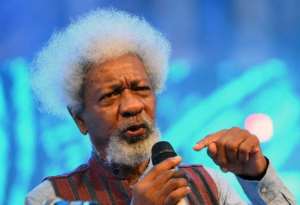
Nobel laureate and renowned Nigerian playwright Wole Soyinka has called for reparatory justice to focus on restoring the humanity of people affected by slavery rather than merely providing compensation.
Speaking at the Next Steps Conference on Reparatory Justice in Accra on Thursday, June 18, Soyinka stressed the need for Africans and people of African descent to recover their dignity, identity and collective memory.
He argued that genuine reparatory justice must address the lasting psychological and cultural impact of the trans-Atlantic slave trade alongside any economic considerations.
“Reparatory justice must restore humanity, not just compensate for its loss. The ‘Door of Return’ is more than a symbolic passage; it is a return to values that were distorted or wiped out,” he said.
Soyinka noted that the effects of slavery continue to shape the consciousness of affected communities and must be confronted through deliberate efforts aimed at rehumanisation.
According to him, remembrance and commemoration should go beyond ceremonies and public discussions to become practical tools for healing and rebuilding collective identity.
“Any means that enable us to recover collectively the rehumanization, even of memory, not just of the present, but even of memory, is essential to the collective development of those who have been traumatized as a people by this iniquitous commodity in human beings,” he stated.
He further emphasised the importance of the African diaspora in the reparations movement, describing initiatives such as the Door of Return as critical steps toward reconnecting descendants of enslaved Africans with their heritage and values.
The three-day Next Steps Conference on Reparatory Justice, convened by President John Dramani Mahama, is being held from June 17 to June 19 and has brought together representatives from more than 80 countries.
The gathering follows the adoption of United Nations Resolution A/RES/80/250 on March 25, which formally recognises the trans-Atlantic slave trade and the enslavement of Africans as the gravest crime against humanity.
The resolution was supported by 123 UN member states, while Israel, the United States and Argentina voted against it. Fifty-two countries, including the United Kingdom and France, abstained.
The conference is expected to build on the momentum generated by the resolution and advance discussions on the next phase of the global reparations agenda for Africans and people of African descent.

 Wontumi's Samreboi case: Atta Akyea will try to delay judgement beyond July 3 — ...
 Uncovering challenges of NDC's Isaac Adongo’s grinding mill projects
 ECOWAS launches regional fortnight to empower women cross-border traders
 June 19: Cedi sells at GHS12.25 on forex market, GHS11.18 on BoG interbank
 Celebrate your WASSCE completion in a law-abiding manner — NUGS to 2026 candidat...
 Gender Ministry congratulates Ghana’s Dr Sylvia Ama Adusu on election as first A...
 Reparatory justice must restore humanity, not just compensate for its loss — Wol...
 ‘I believe our fasting and prayers will work’ — Prophet Uche’s words before Blac...
 Iran peace talks put on hold after Vance scraps Swiss visit
 No vaccine, conflict, mistrust: Ebola's return to DR Congo



Comments
LECTIO MAGRISTRALIS by WOLE SOLENIKA. GHANA, BLACK AFRICA AND ALL AFRICAN DESCENDANTS ON THIS GLOBE must PRIORITIZE THEIR MINDSETS centred on BLACK-AFRICAN INTERESTS ,RISILIENT MANAGEMENT OF HUMAN CAPITALS AND OUR ABBOUNDANT NATURAL RESOURCES, then all other challenges from the West or from the East will follow.! We Blacks are not fully accepted anywhere :It is not only the pigmentation of our Skin / Colour! THis is indelibly entrenched in the LAWS of the GLOBAL NON-BLACK COMUNITY, WHE...