




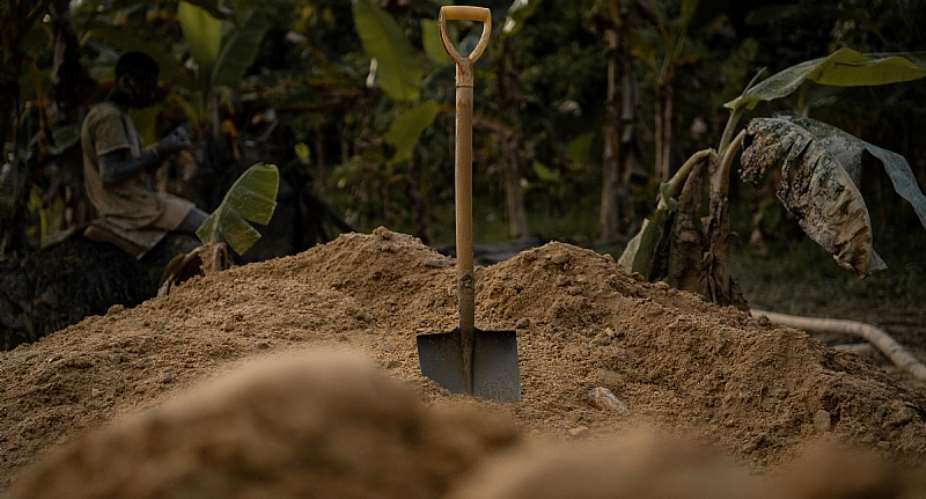
Ghana is bleeding. Not quietly, not secretly, but openly. Gold is ripped from the soil, rivers are poisoned, and forests are gutted — all before our very eyes. And yet, instead of outrage, much of our youth clap along, scroll TikTok, and idolize celebrities who pocket political money while the nation’s future goes up in flames.
This is not just an environmental crisis. It is national suicide, carefully disguised as politics, wrapped in entertainment, and applauded by indifference.
The Evidence We Refuse to Confront
Across Ghana’s mining belts, abandoned pits have become death traps, swallowing unsuspecting children and farmers. Villagers drink water laced with mercury, while cocoa farmers walk through fields that can no longer produce fruit because the soil has been poisoned.
Cocoa — once the backbone of Ghana’s global economic identity — is being uprooted for quick mining profits. And still, politicians parade in front of cameras with staged “raids,” burning a few excavators as though destruction on such scale could be stopped by spectacle.
The truth is simple: galamsey is not just stealing our gold. It is dismantling our survival.
The Future We Are Sleepwalking Into
If the trend continues, Ghana in 2030 will be unrecognizable. Rivers that once flowed with life will be permanently toxic. Communities will depend on imported water tankers. Cocoafarms will vanish, replaced with barren pits.
Food prices will soar as agriculture collapses under poisoned soils. Hospitals will overflow with mercury poisoning cases, cancers, and birth defects. The billions lost to smuggled gold and bribes will never be recovered, leaving behind a poorer, angrier, and more desperate country.
This is not prophecy. It is a trajectory — and every day of silence pushes us closer.
Who Benefits While Ghana Suffers?
Illegal miners are only pawns in a far bigger game. Behind them stand financiers, chiefs, businessmen, and politicians who treat Ghana’s natural resources as private wallets. Licenses are abused, oversight is ignored, and enforcement is reduced to theater for television cameras.
Even worse, celebrities and influencers — those with the loudest voices — have failed in their duty. Many prefer paid endorsements to courage. Instead of exposing corruption, they drown us in dances, hashtags, and shiny distractions. Fame has become an accomplice to destruction.
And the youth? The silence is deafening. Every ignored headline about children drowning in mining pits, every swipe past news of poisoned rivers, is an act of surrender.
Why Politicians Pretend
Thepolitical class understands the game well. Votes and money matter more than poisoned rivers. In mining constituencies, cracking down risks losing elections. For some officials, galamsey is not just tolerated — it is financed.
Their families do not live near abandoned pits. Their children do not drink poisoned water. The burden is carried by ordinary farmers, fishermen, and villagers whose survival is deemed expendable.
The Duty of a Generation
This crisis is not only political — it is generational. Young Ghanaians must decide: will they clap as their future burns, or resist with the urgency survival demands?
TikTok dances will not restore rivers. Neutrality is complicity. Silence is betrayal.
Influencers and celebrities must also decide: will their legacy be quick contracts and political gigs, or the defense of a land their children will inherit? Influence is not a toy. It is responsibility. To stay silent is to choose complicity over courage.
What Must Be Done
If government is serious, galamsey must be declared a national emergency. Not a nuisance, not a minor inconvenience — but a survival crisis. Financiers, not just desperate pit workers, must beexposed and prosecuted. Forests must be reclaimed, rivers restored, and abandoned pits sealed.
At the same time, alternatives must be created. Jobs in agriculture, aquaculture, eco-tourism, and green industries must replace illegal mining. Without options, desperation will only recycle the problem.
And education must change. Environmental stewardship cannot be treated as a side subject. It must become central to how Ghana raises its next generation.
A Final Warning
If nothing changes, Ghana risks becoming a global cautionary tale — a nation that chose short-term greed over long-term survival, that let its rivers die, its cocoa vanish, and its forests burn, all while its youth laughed on social media.
We cannot say we did not see it coming. We see it every day in poisoned streams, collapsing farms, and children lost in abandoned pits. The question is not whether Ghana is bleeding. The question is whether Ghanaians are prepared to rise in resistance — or clap themselves into extinction.
📌 Editor’s Note: This editorial was adapted from a longer piece originally written by and published on . For the full unabridged version, click: Ghana is bleeding gold and poison — and the youth clap instead of fighting

 Supreme Court unanimously dismisses challenges to Torkornoo's removal process
 TOR rules out immediate removal of refinery margin citing debt burden
 GES debunks viral claims of flood-damaged WASSCE papers
 Accra floods: 1,000 vehicles damaged at Odawna
 Prove NLA’s GH₵3bn giveaway allegation — Razak Kojo Opoku challenges The Fourth ...
 Illegal miners invade Adansi Asokwa Agenda 111 Hospital site
 Trader loses 15 shops in Odawna disaster
 July 2: Cedi sells at GHS12.30 on forex market, GHS11.36 on BoG interbank
 Alajo resident explains why he requested GH¢3,000 from NADMO officers before ret...
 GH¢350 million transferred for flood relief after Mahama orders Finance Ministry
