




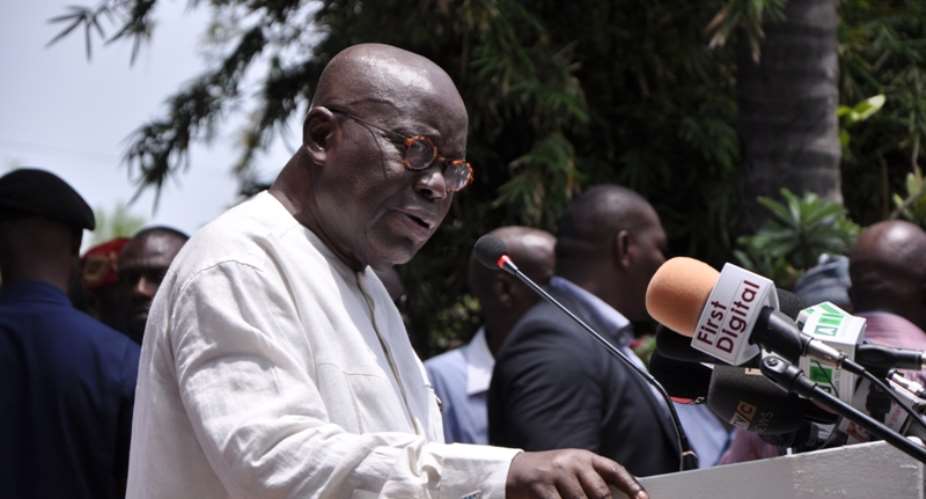
Since the tragic Helicopter disaster that cut short the lives of eight public servants, including two Cabinet Ministers, a lot of theories or explanations about the cause of the accident have been bandied about, especially on social media.
However, the one that has gained traction so far is the supernatural one that suggests that the NDC's victory was the result of the “juju” the party employed through human sacrifice. Thus, according to this theory, the helicopter crash was the result of this so-called supernatural intervention.
While this article does not seek to denigrate the role of the forces in the spiritual realm, in the affairs of humankind, this theory melts upon contact with the empirical evidence produced by independent analysts and credible media reporting to explain the crushing defeat of the New Patriotic Party in last year’s presidential and parliamentary elections.
Specifically, any theory that seeks to shift blame for the NPP’s crushing 2024 electoral defeat away from then-President Nana Akuffo-Addo should indeed be regarded with skepticism because the overwhelming evidence positions his leadership and decisions at the heart of the party’s downfall.
Instead of blaming the Party’s electoral defeat on any supernatural forces, we must not lose sight of a slew of factors that were engendered by Akuffo-Addo’s leadership style and the arrogance of power that was the hallmark of his administration.
The electorate underscored the Akuffo-Addo factor when Musa Dankwa, a respected political analyst, reported that approximately 80% of Ghanaian voters attributed the NPP's defeat directly to Nana Akuffo-Addo’s leadership over the preceding three years.
Under the watchful eyes of Akuffo-Addo and his Finance Minister, Ken Ofori-Attah, the NPP mismanaged the country’s economy to the point of criminality. Ghanaians couldn’t agree more when, upon attaining power, the NDC declared the whole country “a crime scene.”
The NPP failed to tackle mounting inflation, unemployment, and a collapsing cedi, while systemic corruption and governance failures became the key drivers behind the Party’s electoral loss.
Journalists like Samuel Ackom wrote about voters’ real-world struggles, which ranged from skyrocketing food, fertilizer, and transport costs to diminishing benefits from flagship programs like Free SHS.
While these growing hardships undermined confidence in the NPP and its stewardship, reports of financial scandals further tarnished the party’s image, eroding its credibility in the eyes of the electorate.
The arrogance of power that characterized Akuffo-Addo’s leadership style led to poor communication and a top-down approach by the party. This attitude resulted in the sidelining of grassroots voices, which eventually warded off participatory engagement at this level of party organisation. This was a major leadership failing that could not be discounted in the party’s electoral defeat.
The result of Akuffo-Addo’s leadership style, bad governance, and campaign missteps was that turnout dropped significantly, particularly among the party’s traditional base. Some party insiders, including communications officials, blamed this apathy for the loss—not because their supporters defected, but because they abstained from voting altogether.
The electorate simply punished the incumbents, holding them accountable primarily for economic mismanagement and perceived detachment, a situation that was consistent with a broader global trend of anti-incumbency sentiment, particularly where governance fails to deliver.
In conclusion, any attempt to deflect blame from Akuffo-Addo, such as the NDC invoking juju, overlooks the central, credible narrative:
Analysis and polls directly held Akuffo-Addo responsible. Whether through inflation, unemployment, tax burdens, or corruption, people felt betrayed. From communication breakdowns to grassroots disengagement, the leadership misread the electorate’s mood. The scale and geographic spread of the defeat underlined deep disaffection, not random variance.
Acheampong Yaw Amoateng, PhD. (Professor Emeritus of Sociology, Catholic University of Ghana, Fiapre, Sunyani. He writes in his capacity as the former Vice Chairman of the South African Branch of the NPP).


 Attorney-General appeals ruling halting trial of former Buffer Stock CEO, wife
 NAIMOS destroys 1,970 changfans, 863 Illegal mining structures in three months —...
 Let's see how Asiedu Nketia becomes NDC flagbearer with same people he conspired...
 Asiedu Nketiah opts out of NDC chairmanship race amid flagbearership speculation
 NDC insists Nkwanta North elections will proceed despite court injunction
 'My side of the story will shock you; I'm waiting for court days' – Obuasi SHTS ...
 Obuasi SHTS sexual abuse: 'GES must distant itself, allow the law to work' — For...
 Upper East: Fear grips nine Kusaug communities over mysterious fish deaths in da...
 NDC suspends Amasaman Communications Officer over 'irresponsible' remarks on Obu...
 Parliament secures religious leaders’ support to end witchcraft accusations


