




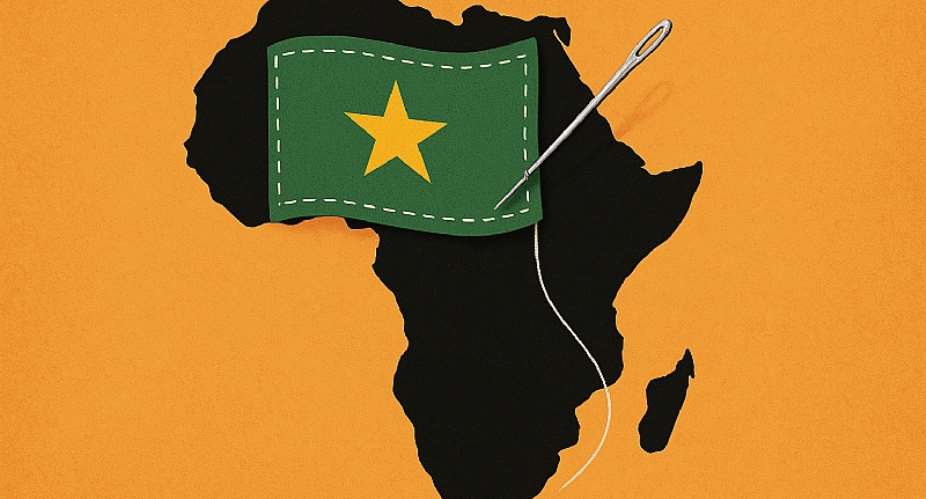
When the colonial powers gathered in Berlin in 1884–1885 to carve Africa into bite-sized territories, they were not thinking of unity, shared heritage, or mutual prosperity. They were thinking of control. The borders they drew were straight lines on a map, careless to the rivers, mountains, cultures, and kinships they divided. Those lines remain with us today, not only on paper but etched into our politics, our economies, and most tragically our minds.
A century later, Africans can travel from Paris to Berlin without a passport, but moving from Lagos to Accra still requires bureaucratic gymnastics. Our own brothers and sisters are treated as foreigners simply because a colonial pen once drew a boundary between us. This paradox of shared blood but segregated citizenship remains one of the greatest obstacles to Africa’s collective rise.
The Case for Continental Citizenship
The idea of a United States of Africa is not new. Leaders like Kwame Nkrumah, Julius Nyerere, and Haile Selassie envisioned a continent where borders would not divide Africans but unite them in purpose. Continental citizenship is a practical step toward that vision.
Imagine an Africa where a teacher from Senegal can take a job in Kenya without immigration hurdles; where a Nigerian entrepreneur can open a shop in Botswana without special permits; where a Ghanaian farmer can sell produce directly in Mali without paying tariffs designed to protect “foreign” goods. The economic benefits alone would be transformative unlocking trade, accelerating industrialization, and retaining African talent within Africa.
A united citizenship would also strengthen our political leverage. A continent of 1.4 billion people speaking with one diplomatic voice would command far more respect in global negotiations on trade, climate change, and security.
The Current Reality
Right now, Africa is a paradox: rich in resources yet poor in cohesion. The African Continental Free Trade Area (AfCFTA) has been signed by almost every nation, but its potential is crippled by restrictive visa policies and mutual suspicion. According to the African Development Bank, only about 27% of intra-African travel is visa-free. In contrast, the European Union grants full mobility to its members, an arrangement that has spurred both cultural exchange and economic integration.
We pride ourselves on Pan-African conferences, but the average African still faces more travel barriers within Africa than a European or American would. Worse still, xenophobic tensions erupt periodically, as seen in parts of South Africa, against fellow Africans seeking opportunities. This is the bitter fruit of borders without brotherhood.
Security and Sovereignty Concerns
Critics argue that free movement could worsen security problems by allowing criminals and insurgents to cross borders more easily. But this is a matter of governance, not an excuse for isolation. Europe has free movement but still tracks threats effectively through intelligence-sharing systems like Europol. Africa could establish its own security framework, an AfriPol to monitor cross-border crime while preserving freedom of movement for law-abiding citizens.
Others fear that stronger economies would be swamped by migrants from weaker states. But history shows that mobility often creates mutual growth, not one-sided dependency. When people can move freely, they also invest, transfer skills, and build cross-border networks.
The Moral Imperative
The African Union’s Agenda 2063 speaks of “an integrated, prosperous, and peaceful Africa, driven by its own citizens.” But this dream will remain ink on paper if Africans continue to treat each other as outsiders. Continental citizenship is more than an economic strategy, it is a moral imperative. It affirms that the African identity is not subordinate to colonial borders, that the child of the Nile and the child of the Niger are kin, and that our shared destiny is greater than any passport stamp.
Practical Steps Forward
1. Mutual Recognition of ID Cards : A Ghanaian ID should allow entry into Zambia as easily as it does in Togo.
2. Continental Passport Expansion: The African Union’s symbolic passport must move from photo opportunities for heads of state to practical use for everyday citizens.
3. Interconnected Security Systems: Establish continental crime databases and coordinated law enforcement to address legitimate security concerns.
4. Education and Cultural Exchange: Foster Pan-African identity through student exchange programs, cross-border cultural festivals, and shared media platforms.
5. Gradual Integration: Begin with regional blocs (ECOWAS, EAC, SADC) implementing full free movement, then expand to the whole continent.
Conclusion
The Berlin Conference gave us borders without brotherhood. The next century must give us brotherhood without borders. Our shared languages, histories, and struggles demand that we no longer see each other through the lens of foreignness. A passport should not be the only thing that makes us neighbors.
Continental citizenship is not a utopian fantasy; it is the logical next step for a continent that seeks to stand tall in the 21st century. We must choose whether to remain a patchwork of isolated nations or to stitch our flag into one strong, unbreakable fabric woven not just with geography, but with unity, trust, and common purpose.


 The week in pictures: Syria protests, Céline Dion on stage and Quito wildfires
 Nigeria's onion dispute with Ghana tests West African free trade
 Uganda suspends military ties with Turkey over extradition of Museveni critic
 US fears wider Middle East escalation after Houthi attack Riyadh
 Pop star Ed Sheeran calls Gaza situation “unjustifiable” amid controversy
 'We have spent 60years arguing about Nkrumah and rather less time doing what he ...
 Judge recounts attempted MoMo scam on him moments after jailing scammer
 'Systemic failure due to NACOC removal from port inspections' – Inusah Fuseini o...
 Foreign Affairs Ministry releases 200-page RTI response on GH¢49.7m South Africa...
 Chartered flights account for GH¢27.18m of South Africa evacuation cost


