




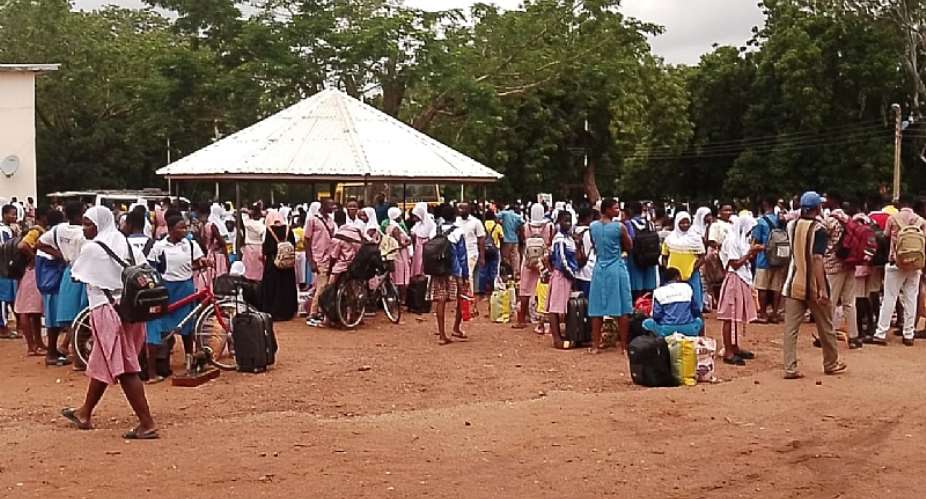
In the early hours of Sunday, 27 July 2025, the North East and Upper East Regions of Ghana were thrown into a state of shock and mourning after a series of violent incidents that claimed the lives of three senior high school students in two separate attacks. The tragic events took place on the night of Saturday, 26 July, when unidentified gunmen stormed the campuses of Nalerigu Senior High School and Bawku Senior High School, leaving a trail of devastation that has reignited concerns about the rising insecurity in northern Ghana, especially in areas affected by the longstanding Bawku conflict. The incidents, which happened within hours of each other, not only shattered the sense of safety within educational institutions but also highlighted the deep-rooted ethnic and chieftaincy disputes that continue to destabilise the region, prompting urgent calls for government intervention and a reassessment of security measures to protect vulnerable communities.
The first incident occurred at Nalerigu Senior High School in the North East Region, where two male students, identified only as Lukman and Gideon, were shot dead in their dormitory. According to reports, the assailants invaded the school premises late Saturday night, between 11:00 PM and midnight, and opened fire on the unsuspecting students. The attack, described as swift and brutal, left the school community in a state of panic, with students and staff grappling with fear and uncertainty. Headmaster Mohammed Tibila confirmed the tragedy, describing it as a “tragic development” that has sent ripples of anxiety through the student body and the wider Nalerigu community. Many students, traumatised by the violence, have either sought refuge off-campus or remained indoors, hesitant to venture out as the spectre of further attacks looms large. The bodies of the victims were promptly taken to the Nalerigu Baptist Medical Centre for autopsy and formal identification, while forensic teams descended on the scene to gather evidence. The North East Regional Police Command has launched an investigation, but details remain scarce, with authorities citing the sensitivity of the case as a reason for their reticence.
Just hours earlier, a similar tragedy struck Bawku Senior High School in the Upper East Region, where a final-year General Arts student, 18-year-old Hakim Kundima, was killed in what authorities suspect was a targeted attack. Around 8:30 PM on Saturday, gunmen reportedly scaled the school’s perimeter wall, entered the boys’ dormitory, and forcibly dragged Hakim outside before shooting him in full view of his peers. The attackers fled the scene immediately, leaving behind a community gripped by fear and outrage. Tahiru Kundima, the victim’s elder brother, confirmed the incident, noting that the Bawku Divisional Police Commander personally delivered Hakim’s body to the family. The Municipal Education Directorate responded swiftly, announcing the temporary closure of Bawku Senior High School to ensure the safety of students and staff. The decision reflects the gravity of the situation, as the school, once a place of learning and growth, has become a site of unimaginable violence.
While the motives behind both attacks remain uncertain, local sources and community leaders have attributed the likely cause to the ongoing Bawku conflict. This conflict, a longstanding chieftaincy dispute primarily between the Kusasi and Mamprusi ethnic groups, has been a persistent source of instability in the Upper East Region, occasionally spilling over into neighbouring areas such as Nalerigu. Rooted in competing claims to traditional leadership, the conflict has perpetuated cycles of violence, arms trafficking, and targeted killings, with recent years seeing a significant escalation. The recent killing of a Kusasi chief and his brother in the Ashanti Region, along with other violent incidents in Bolgatanga and Kumasi, indicates that the conflict is extending beyond its traditional centre, threatening regional stability increasingly. Regarding the Nalerigu shooting, some sources suggest it may have been a retaliatory attack connected to the earlier killing at Bawku Senior High School, although police have yet to confirm this link.
The Ghanaian government has responded with a series of measures aimed at reducing violence and restoring calm. On Sunday, July 27, the Ministry for the Interior, under the direction of Minister Muntaka Mohammed-Mubarak, imposed a curfew on Nalerigu and its surrounding areas, effective from 2:00 PM to 6:00 AM daily. A similar curfew was reviewed and tightened in Bawku Municipality, also running from 2:00 PM to 6:00 AM, following advice from the Upper East Regional Security Council. The government has also deployed the Ghana Armed Forces to both Bawku and other conflict-prone areas, shifting its strategy from peacekeeping to what the John Mahama administration has termed “peace enforcement.” This approach, outlined in a presidential statement, emphasises firmer intervention to protect lives and property, with a stern warning that individuals found with arms or ammunition during curfew hours will face arrest and prosecution. The presidency commended traditional leaders, including the Asantehene, Otumfuo Osei Tutu II, the Nayiri, and Zugraana, for their efforts in mediating peace talks, though these efforts have yet to yield a lasting resolution.
The closure of Bawku Senior High School and the curfew in Nalerigu have further heightened fears among residents, many of whom feel stranded and unsafe. The violence has also raised broader concerns about the safety of educational institutions in northern Ghana, where schools, once considered safe havens, are now vulnerable to the region’s simmering tensions.
The broader context of armed violence in northern Ghana adds another layer of complexity to these tragic events. The Bawku conflict, while primarily a chieftaincy dispute, has been exacerbated by factors such as poverty, arms proliferation, and the potential spillover of jihadist activities from neighboring Burkina Faso. Reports from 2023 highlighted concerns about extremists exploiting the region’s instability to target Ghana’s gold industry or recruit vulnerable youth amidst worsening economic conditions. The proliferation of advanced weaponry, fueled by arms trafficking, has made the conflict deadlier, with over 260 casualties reported in Bawku and its environs since 2021. The government’s apprehension about cross-border threats, combined with the socio-economic challenges facing the region, underscores the urgent need for a comprehensive strategy to address both the immediate violence and its underlying drivers.
As investigations into the shootings continue, the people of Nalerigu and Bawku are left to grapple with the aftermath of these senseless acts. Families mourn the loss of young lives cut short, while students and educators face an uncertain future in environments tainted by fear. The government’s deployment of military forces and imposition of curfews signal a commitment to restoring order. Still, the persistence of the Bawku conflict suggests that lasting peace will require more than security measures. Dialogue, reconciliation, and addressing the socio-economic grievances that fuel ethnic tensions are critical to breaking the cycle of violence. For now, the communities of Nalerigu and Bawku hold their breath, hoping that the sacrifices of Lukman, Gideon, and Hakim will not be in vain, and that the region can find a path toward healing and stability.
End!
 South Africa xenophobia: Business allegedly declines after ownership shift from ...
 Kpone Traditional Council announces death of paramount chief after 37 years of r...
 Middle East live: Iran says will target any vessel traffic in Strait of Hormuz
 Bill Gates calls Epstein meetings a ‘grave error’ while defending actions in hou...
 Infantino defends World Cup ticket prices, dismisses referee US entry dispute
 Rainstorms from Nigeria, Benin to trigger thunderstorms in Ghana — GMet warns
 Accra floods: 70 seized excavators to be deployed to NADMO for desilting — Munta...
 Kasseh Market executives stop sale of food near toilet facility
 Three arrested over theft of critical equipment at Komenda Sugar Factory
 Nearly half of Ghanaians say military rule can be justified if governments fail ...


