




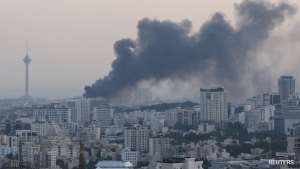
As the dust begins to settle after the short but intense Iran - Israel war, one question lingers loudly in diplomatic circles: Where were the neighbours, particularly the Arab states and African Union, when two of the region’s key players were locked in a destructive conflict?
Beyond press releases and ritual calls for restraint, much of the Arab world and Africa remained on the sidelines of a conflict that sent shockwaves across the Middle East. This silence, whether strategic or symbolic, reveals uncomfortable truths about fractures in regional solidarity, shifting allegiances, and the limitations of pan-Arab and pan-African diplomacy.
Arab Nations: A Deafening Silence
One might have expected a wave of vocal support for fellow Muslim-majority Iran. But the reality was starkly different. Major Arab powers such as Saudi Arabia, Egypt, and the UAE remained largely silent or cautiously neutral throughout the conflict. Why such a deafening silence?
- Geopolitical Realignment: many Arab states have, in recent years, normalized ties with Israel, through the Abraham Accords or under-the-table security arrangements. Iran, meanwhile, is seen by many Gulf nations as a destabilizing force, backing militias in Yemen, Iraq, Lebanon, and Syria.
- Sunni–Shia Divide: deep-rooted sectarian tensions played a role. Iran, a Shia powerhouse, often finds itself isolated in a Sunni-dominated Arab League, which views its influence with suspicion.
- Strategic Caution: with economies vulnerable and political systems fragile, Arab governments chose stability over solidarity, fearing that open support for either side could backfire.
The result? Even as Israeli missiles pounded Iranian nuclear sites and Iranian rockets struck Israeli cities, most Arab states chose silence over action. Even within the Organization of Islamic Cooperation (OIC), which includes several African countries, the collective response was muted and ineffective.
Africa’s Passive Posture
Africa, too, was missing in action. Apart from generic calls for peace by the African Union (AU), there was no bold diplomatic or humanitarian initiative. This passivity exposes a weakness in Africa’s global influence and internal coordination.
Why didn’t Africa step up?
The answer to this question is varied, and may include the following:
- Divided loyalties: African countries maintain complex ties with both Iran and Israel. While countries like South Africa have been critical of Israel’s occupation of Palestine, others, like Kenya, Nigeria, Ghana, and Ethiopia, enjoy strong Israeli and American military and technological partnerships.
- Fear of taking sides: the conflict was framed as part of a larger US–Iran power struggle. Taking a side risked economic or diplomatic repercussions.
- Focus on internal issues: many African governments remain overwhelmed by domestic challenges --- coups, inflation, and insecurity --- and are less inclined to intervene in Middle Eastern affairs.
What This Reveals
The Iran–Israel conflict laid bare several troubling realities:
- The decline of pan-Arab and pan-Islamic solidarity, particularly when political or economic interests are at stake.
- The limited diplomatic capacity of Africa to influence or mediate global crises, despite being the second-most populous continent.
- The erosion of multilateralism, where regional blocs like the AU and Arab League issue statements but fail to act decisively.
This silence raises difficult questions:
- Can these regional bodies be trusted to act during future conflicts on their soil?
- Should Africans reimagine their continental diplomacy to be more assertive and independent?
- Do Arab countries risk permanently alienating Iran and weakening broader Muslim cooperation?
A Call for Regional Courage
It is not enough to condemn war after the fact. The Iran–Israel crisis shows the urgent need for bold, principled diplomacy from Africa and the Arab world. If these regions are to shape the future, and not be shaped by it, they must:
- Develop rapid-response diplomatic teams,
- Take clear positions grounded in humanitarian principles, not politics,
- And stand up when global powers fail to de-escalate conflict.
SILENCE IN THE FACE OF SUFFERING IS COMPLICITY!
AND NEUTRALITY, WHEN GUIDED BY FEAR, IS NOT DIPLOMACY, BUT RETREAT!!
Unfortunately, the future looks so bleak for mankind.
FUSEINI ABDULAI BRAIMAH
+233550558008 / +233208282575
[email protected]


 GES meets teacher unions over concerns about 2025 promotion
 High Court to hear Wontumi's bail pending appeal today
 Former NPP officials must explain why they took monies for contracts they did no...
 Three-month-old baby girl found abandoned in bush near Ada
 Govt pays GH¢10.82bn DDEP coupon to bondholders
 Nigeria election campaign begins as voters grapple with inflation crisis
 Ukraine's sacked defence minister Fedorov calls for wartime presidential electio...
 “Your bail conditions will be scary” – Afenyo Markin warns GoldBod officials
 Tanoso youth grabbed Chief over alleged illegal mining activities near Tano Rive...
 2024 defeat: 'I could've asked for recount but I chose peace over everything' – ...

