




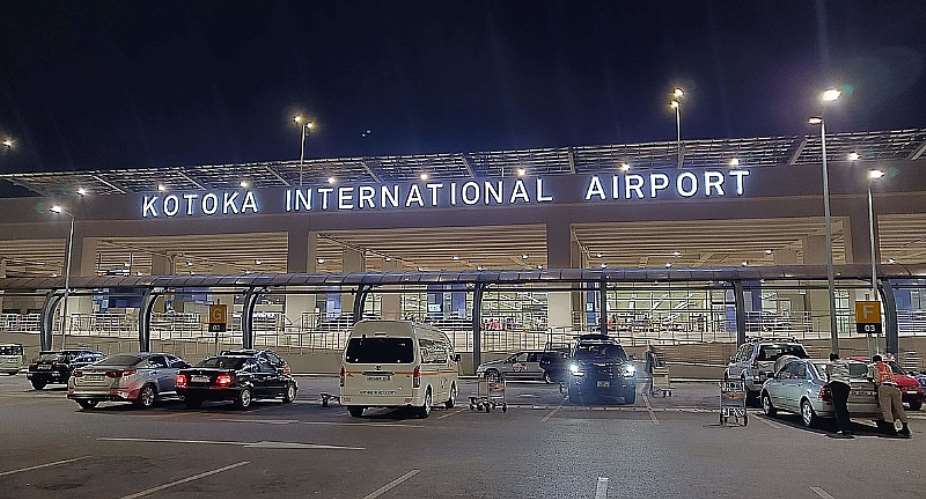
Ghana’s main international gateway, Kotoka International Airport (KIA), has long been a subject of historical and political debate. Named after Lieutenant General Emmanuel Kwasi Kotoka, one of the leaders of the 1966 coup that overthrew Kwame Nkrumah, the airport’s name carries deep historical significance. However, many Ghanaians believe it should be renamed to better reflect the country’s independence struggle and national identity.
Originally known as Accra International Airport, the facility was renamed after Lt. Gen. Kotoka following his role in the coup that ousted Ghana’s first President, Kwame Nkrumah. Kotoka played a key part in the military takeover, which was justified by accusations of dictatorship and economic mismanagement under Nkrumah’s government. However, the coup also had strong Western backing, particularly from the United States and Britain, who saw Nkrumah’s socialist and pan-African policies as a threat to their interests.
Arguments for renaming the airport include:
- Honoring Ghana’s true Founding Father --- Nkrumah led Ghana to independence on March 6, 1957, making him the architect of the nation’s sovereignty. Naming the airport after him would reflect this legacy.
- Reversing the symbolism of the 1966 Coup --- the coup that removed Nkrumah is widely seen as a setback to Ghana’s progress. Keeping Kotoka’s name on the airport is, to some, a reminder of a painful historical event.
- Aligning with other national monuments --- many of Ghana’s major institutions, such as the Kwame Nkrumah Mausoleum and Kwame Nkrumah University of Science and Technology (KNUST), already honor Nkrumah. Renaming the airport would be consistent with this trend.
The counter-arguments against renaming the airport include:
- Recognizing Kotoka’s role in Ghana’s history --- whether celebrated or criticized, Kotoka played a major role in Ghana’s political history. Removing his name might be seen as an attempt to erase history rather than learn from it.
- Political and public division --- renaming the airport could spark political controversy, as some factions in Ghana still support Kotoka’s legacy.
- Focus on Development, Not Name Changes --- some argue that rather than renaming the airport, efforts should be directed toward improving Ghana’s aviation infrastructure and economy. It will do us more good if Ghana Airways is revamped as a matter of utmost urgency.
If indeed the arguments for outweigh the counter-arguments, some steps for the name change could involve:
- Government approval through the Ministry of Transport and the Ghana Airports Company;
- Possible parliamentary debate and a vote;
- Public and political support to ensure national unity;
- Rebranding and logistical changes, including updating international flight codes, signage, and documents.
If not named after Nkrumah, the author suggests that the airport could be given a more neutral or symbolic name, such as:
- Ghana International Airport --- representing the entire nation.
- Black Star International Airport --- paying tribute to Ghana’s independence symbol.
- Accra International Airport --- restoring its original name.
- Gold Coast International Airport --- reminding the World of the country’s original name.
The debate over renaming Kotoka International Airport is about more than just a name; it is about how Ghana chooses to honor its past. While some believe the current name acknowledges a key figure in the country’s history, others argue that it glorifies a leader whose actions disrupted Ghana’s progress. Whether or not the name is changed, the conversation highlights Ghana’s ongoing struggle to balance its historical narratives with its national identity.
Would renaming the airport be a step toward historical justice, or is it an unnecessary controversy? The decision ultimately lies in the hands of Ghanaians and their leaders.
The renaming of Tamale International Airport has also sparked debate. In February 2024, President Akufo-Addo proposed renaming it after Tolon Naa Yakubu Tali, but this was met with opposition from Dagbon’s Overlord, Ya-Na Abukari II. He suggested naming it after Naa Gbewaa, the founder of the Mole-Dagbon kingdom, to reflect the region’s shared heritage. On March 22, 2025, the Ya-Na reiterated his request, emphasizing unity and urging the completion of Phase Three of the airport’s development. While no final decision has been made, discussions continue.
Finally, can we be unanimous in a decision that never will a coup maker, Ghanaian or non-Ghanaian be eulogized in this country, and can our leaders be guided by some legislation which requires broad consensus before naming national monuments and institutions, to avoid this frequent name changes? The cost of this forward and backward movements is too much for a country like ours, where some citizens do not know where the next meal is coming from. Let us ensure that “if it must be done, it is done well !!!”
FUSEINI ABDULAI BRAIMAH
[email protected] / [email protected]
0208282575 / 0550558008 / 0500252525
March 23, 2025


 GES meets teacher unions over concerns about 2025 promotion
 High Court to hear Wontumi's bail pending appeal today
 Former NPP officials must explain why they took monies for contracts they did no...
 Three-month-old baby girl found abandoned in bush near Ada
 Govt pays GH¢10.82bn DDEP coupon to bondholders
 Nigeria election campaign begins as voters grapple with inflation crisis
 Ukraine's sacked defence minister Fedorov calls for wartime presidential electio...
 “Your bail conditions will be scary” – Afenyo Markin warns GoldBod officials
 Tanoso youth grabbed Chief over alleged illegal mining activities near Tano Rive...
 2024 defeat: 'I could've asked for recount but I chose peace over everything' – ...

