




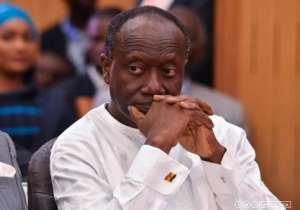
Ghana’s former Finance Minister, is a complex and controversial person that has sparked significant debate about the intersection of faith, morality, and governance. Ofori-Atta, a prominent figure in Ghana’s political and economic landscape, has often portrayed himself as a devout Christian, frequently seen with a Bible in hand and dressed in immaculate white attire, symbolizing purity and righteousness. However, his tenure as Finance Minister has been marred by numerous scandals and allegations of corruption, leading many to question the sincerity of his religious persona and the integrity of his leadership.
Ken Ofori-Atta’s public image is deeply intertwined with his Christian faith. He has often invoked religious rhetoric in his speeches, emphasizing principles of honesty, accountability, and service to God and country. His frequent references to scripture and his habit of carrying a Bible have led some to view him as a "man of God" in politics. However, this image stands in stark contrast to the allegations of corruption and mismanagement that have plagued his time in office.
Critics argue that Ofori-Atta’s use of religious symbolism is a calculated strategy to deflect scrutiny and gain public trust. By presenting himself as a pious and morally upright individual, he creates a psychological buffer against accusations of wrongdoing. This tactic, often referred to as religious psychology, exploits the deep-rooted faith of many Ghanaians, who may be more inclined to trust someone who outwardly aligns with their religious values. In this way, Ofori-Atta’s faith becomes a tool for swaying public opinion, even as allegations of corruption mount.
Despite his outward display of piety, Ofori-Atta’s tenure as Finance Minister has been marked by several high-profile scandals and controversies:
1. The Agyapa Royalties Deal One of the most contentious issues during Ofori-Atta’s time in office was the Agyapa Royalties Agreement. This deal, which aimed to monetize Ghana’s future mineral royalties through a special purpose vehicle (SPV) registered in the tax haven of Jersey, was widely criticized for its lack of transparency and potential for corruption. Civil society organizations and opposition parties accused the government of undervaluing Ghana’s mineral resources and sidelining public interest. The Special Prosecutor’s office flagged the deal for potential corruption risks, leading to its temporary suspension.
2. COVID-19 Expenditure Controversies During the COVID-19 pandemic, the government allocated significant funds for relief efforts. However, reports of mismanagement and lack of accountability emerged, with allegations that funds were misused or misappropriated. The Auditor-General’s report revealed numerous irregularities, including unapproved expenditures and procurement breaches, raising questions about the Finance Ministry’s oversight under Ofori-Atta’s leadership.
3. Eurobond Issuance and Debt Management Ofori-Atta’s management of Ghana’s debt, particularly through Eurobond issuances, has also come under scrutiny. Critics argue that the high-interest rates on these bonds were unsustainable and contributed to Ghana’s rising debt burden. Additionally, there were allegations of opacity in the selection of advisors and underwriters, with claims that firms with close ties to the government benefited disproportionately.
4. Nepotism and Cronyism Ofori-Atta has faced accusations of favoring companies and individuals with close ties to him or the ruling New Patriotic Party (NPP). For instance, the involvement of Databank, a financial firm he co-founded, in government transactions has been a point of contention. Critics argue that this creates a conflict of interest and undermines fair competition.
5. Economic Challenges and Public Dissatisfaction Under Ofori-Atta’s watch, Ghana faced significant economic challenges, including high inflation, a depreciating currency, and rising public debt. Austerity measures implemented by the government were criticized for disproportionately affecting the poor while failing to address systemic issues. These economic difficulties led to widespread public dissatisfaction and calls for Ofori-Atta’s resignation.
The Hypocrisy of the "Whiter Than White" Image
Ofori-Atta’s penchant for wearing white outfits and carrying a Bible has become symbolic of his public persona. White, often associated with purity and righteousness, serves as a visual representation of his claimed moral integrity. However, critics argue that this image is a facade, masking the alleged corruption and mismanagement that have characterized his tenure. The phrase "whiter than white" takes on an ironic meaning in this context, as it highlights the stark contrast between his outward appearance and the scandals that have emerged under his leadership.
Religious Psychology as a Tool for Deceit
Ofori-Atta’s use of religious symbolism can be seen as a form of religious psychology, a tactic that leverages faith to influence public perception and behavior. By aligning himself with Christian values, he taps into the deeply held beliefs of many Ghanaians, who may be more likely to trust and support someone who appears to share their faith. This strategy allows him to deflect criticism and maintain a veneer of credibility, even in the face of serious allegations.
However, this approach has also drawn criticism from religious leaders and civil society organizations, who argue that it undermines the true principles of faith and morality. They contend that using religion as a shield for corruption is not only hypocritical but also disrespectful to the values it represents.
A Legacy of Contradictions
Ken Ofori-Atta’s tenure as Finance Minister is a study in contradictions. On one hand, he presents himself as a devout Christian, using religious symbolism to project an image of integrity and moral uprightness. On the other hand, his time in office has been marked by numerous scandals and allegations of corruption, raising serious questions about his leadership and the sincerity of his faith. The case of Ken Ofori-Atta serves as a cautionary tale about the dangers of conflating religious imagery with genuine moral leadership. It underscores the importance of holding public officials accountable for their actions, regardless of their outward displays of piety. As Ghana continues to grapple with issues of governance and accountability, the legacy of Ken Ofori-Atta will remain a topic of debate and reflection.
Sulley Kone
+233244805619

 'Govt moves to confiscate, auction containers left at Ghana’s ports for over six...
 'We are not serious Christians; bunch of selfish, greedy people' – Duncan-Willia...
 30,000 classrooms without teachers is a crisis waiting to happen – Adutwum
 How honest station loading boy handed over missing €3,000, GH¢1,000 to Police
 Upgrade one SHS in each MMDAs to first class category A school to tackle placeme...
 How frustrated parents sleep at GNAT Hall as CSSPS placement challenges enter th...
 ‘Don’t pay any pesewa to EduPack’ — NCPTA warns SHS parents
 Two men accused of land guard activities weep in court for forgiveness
 TUC rejects five-year presidential term
 UTAG-UG accuses GTEC of threatening academic freedom with faculty recruitment dr...


Comments
Never in human history genuine and philanthropist philosophers are required as are required presently. All religions are corrupted to various degrees because all religions are divided in sects whereas sectarianism per se is corruption of religions. It is their job to rectify the religions of corruptions and rationalize the religions.