




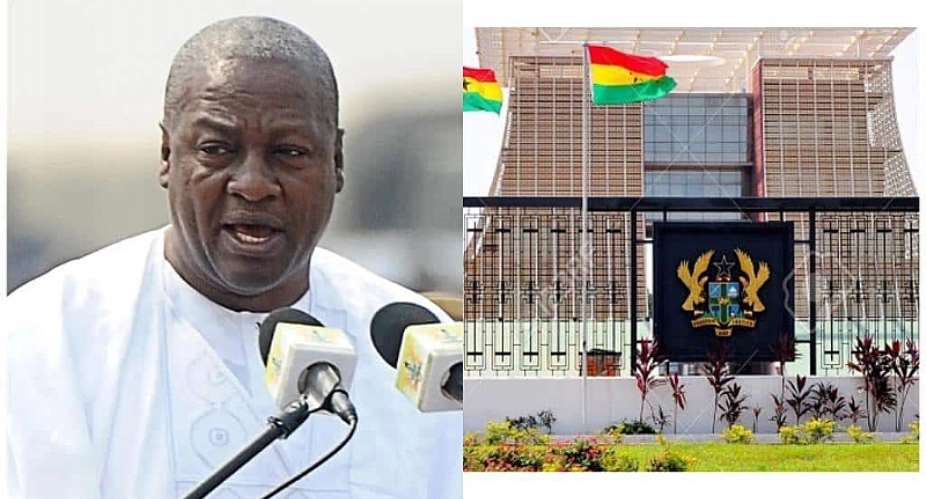
President John Dramani Mahama’s recent decision to relocate Ghana’s Independence Day celebrations to the Jubilee House is a bold and strategic step aimed at promoting fiscal responsibility. This move comes at a time when the country’s financial structure demands prudent expenditure and efficient use of public resources. The rotational hosting of the event, which was introduced under the erstwhile Nana Addo Dankwa Akufo-Addo government, placed a significant financial burden on the state, raising concerns about the justification for such costs in the face of pressing national needs. By centralizing the celebrations at the presidency, President Mahama seeks to eliminate wasteful spending while maintaining the dignity and significance of the occasion.
Looking at Ghana’s financial structure, it is evident that the country is grappling with a complex economic situation marked by a high debt burden, revenue shortfalls, and expenditure inefficiencies. Over the past decade, government spending has outpaced revenue generation, leading to an unsustainable fiscal deficit. The country has had to rely heavily on borrowing, both domestically and externally, to finance recurrent expenditures, including large-scale national events such as Independence Day celebrations. In an economy where funds are urgently needed for critical sectors such as education, healthcare, infrastructure, and job creation, it becomes necessary to reassess spending priorities and eliminate non-essential expenditures.
During President Akufo-Addo’s administration, Ghana’s Independence Day celebrations were characterized by elaborate events held across different regions. While the intention behind rotational hosting was to promote national inclusion, it came at a significant cost to the state. In 2017, for instance, Ghana’s 60th Independence anniversary reportedly cost the country approximately GH₵20 million (about $4.3 million). The government had expected corporate sponsorships to absorb part of the cost, but reports suggested difficulties in raising the full amount before the celebrations commenced. Similarly, in 2019, a leaked memo revealed that $3 million (equivalent to GH₵16.5 million) was allocated for the 62nd Independence Day celebrations. These expenditures were heavily criticized, particularly during periods of economic hardship when social services and public sector wages were under strain. The rotational nature of the event further meant that each host region had to undergo infrastructure upgrades, security enhancements, and logistical overhauls, leading to recurrent high costs.
The last national Independence Day celebration was held on March 6, 2023, at the Volta Regional Youth Resource Centre in Adaklu, near Ho in the Volta Region. This event marked the first time the Volta Region hosted the national parade. Under the theme “Our Unity, Our Strength, Our Purpose,” the celebration included a parade with 22 contingents from various security agencies and 12 from local schools. The event attracted over 5,000 participants, including members of the diplomatic corps, traditional rulers, and citizens from across the country. The influx of visitors provided a significant economic boost to the local area, with many hotels in Ho and surrounding districts reporting full bookings ahead of the event. The choice of Adaklu for the celebration was part of the rotational hosting strategy, which aimed to boost local economies and foster national cohesion. While this approach was designed to bring national events closer to the people, it came at a high financial cost to the state.
President Mahama’s decision to shift the celebrations to the Jubilee House is a direct response to these financial realities. Holding the event at the presidency eliminates the need for expensive venue preparations, temporary infrastructure improvements, and excessive logistical expenditures. This move ensures that funds previously allocated to these ceremonies can now be redirected toward critical national needs, such as economic recovery initiatives, debt reduction, and social intervention programs. Beyond the immediate cost savings, centralizing the celebrations at the presidency signals a commitment to prudent financial management and responsible governance.
From a broader perspective, this decision aligns with Ghana’s need to adopt a more sustainable approach to government spending. With the country undergoing debt restructuring and facing significant budgetary constraints, measures that reduce unnecessary expenditures are crucial to restoring economic stability. The call for fiscal discipline has been echoed by economists, civil society organizations, and international financial institutions, all of whom have stressed the importance of curbing wasteful government spending. By prioritizing cost-effective governance, President Mahama is demonstrating a leadership approach that places national interest above ceremonial extravagance.
While some may argue that rotational hosting fostered regional inclusivity, the reality is that Ghana’s economic challenges necessitate difficult but necessary decisions. The essence of Independence Day celebrations is not in the scale of the event but in the reflection on Ghana’s progress and the collective commitment to national development. President Mahama’s decision has been met with widespread support from citizens who recognize the importance of fiscal prudence. As the country navigates economic recovery, such cost-cutting measures will be essential in ensuring that public funds are used efficiently to improve the lives of Ghanaians.
The relocation of Ghana’s Independence Day celebrations to the Jubilee House is a commendable step toward financial prudence and effective governance. By eliminating unnecessary costs, the government can focus on policies and projects that yield long-term benefits for the nation. While national celebrations remain important, they should not come at the expense of economic stability and sustainable development. President Mahama’s decision, therefore, sets a precedent for responsible leadership and underscores the need for Ghana to adopt a more strategic approach to managing its financial resources.


 High Court clears NDC to enforce six-month resignation rule for appointees vying...
 CHRAJ debunks false social media claim linking Deputy Commissioner to Wontumi se...
 “Sanitation is not a municipal problem, it is a national security issue” —GAMA P...
 Prison is not a place I would wish for anyone" — Nana Agradaa on Chairman Wontum...
 'We won't praise you for this uninspiring, same old story' — Minority Leader on ...
 Mid-Year Review: 'Ghana's economy moved from emergency room to the wellness cent...
 Mid-Year Review: 'Economic recovery a result of superior economic management' — ...
 Mid-Year Budget Review: 'NDC inherited an economy on its knees' — Finance Minist...
 Mid-Year Budget Review: It has been excellent six months — Joe Jackson
 Wontumi's 20-year sentence is ridiculous, punishment for his criticism of NDC — ...

