




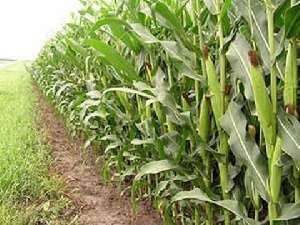
Ghana is an agricultural country endowed with various agroecological zones suitable for the production of a wide range of crops and livestock to feed our population and raw materials for our Agro-industries. There are several streams and rivers running throughout the country to the sea at the coast for a very viable fish industry.
One wonders why with all these abundant natural resources the nation is not producing enough food to feed our growing population and has to import food and meat. Until quite recently, Ghana was the leading producer of cocoa in the world. Sadly, we do not consume cocoa, as a major food and export the surplus.!! Now apart from cocoa the emphasis is on the export drive of non-traditional crops such as mango and cashew which we have not studied enough as cocoa, and they do not form a major component of our daily ration. Just consider the situations in which mango and cashew farmers are now but not cocoa farmers.
This mind-set (export drive) had its birth at Aburi and we can get out of this box if we trace our agricultural history from there. Dear reader, please kindly bear with me, because it is indeed a long journey to travel!! I am over 70 years old and I do not know the length of my extra time unlike in a football match and I feel the need to share my experience in agriculture and in farming with the present and future Ghanaians, and I pray that all those above 70 years now would do so since the grave would not be able to tell your story-like my view about trends in the agricultural development of our beloved nation. Here goes my story!
Agricultural Development Pre-Indepence Era
Once upon a time when our colonial masters came to our country, what they missed most was their fresh vegetables like the Israelites when they were crossing the desert to Canaan!!
They tried growing their vegetables at the beach but they were not successful. And so, they moved in land up to the Akwapim-ranges and found Aburi to be very suitable for the production of vegetables. While growing vegetables for their own consumption the idea of developing a model farm or Botanical Garden was thought of in 1842. However, before the establishment of the Botanical Garden in 1875 a Sanatorium was built at the site for convalescing Government officials. It was in 1890 that the Botanical Garden was established with the following main objectives.
1. The experimenting of both economic and decorative plants from other tropical and sub-tropical countries with the view to finding out which of these plants could thrive under local conditions.
2. The exhaustive exploration of agricultural resources of the country with the view of finding suitable economic plants for European markets and
3. The teaching of scientific methods of agriculture.
These were indeed good objectives for laying a solid foundation for formal agriculture in Ghana (then Gold Coast). However, from a critical look at the three objectives for establishing the Botanical Garden, the first two objectives, in particular gave the tone for present agricultural direction in our country.
The third objective even though sounds very useful was to help our colonial masters to achieve the goals of the first two objectives. Why did they not encourage the production of the exotic crops together with the local crops such as cocoyam and plantain but instead thought of introducing plants from other tropical and sub-tropical areas and developing them alone? Was it that they did not observe the crops the natives were living on? Or that the natives had no crops to survive on? Then what were they thriving on?
Aburi area is currently one of the major suppliers of vegetables and foodstuff to Accra. Could one imagine the volume of vegetables and foodstuff that would have been sent to Accra daily if our colonial masters had intentionally helped farmers with improved farming techniques from the time Aburi Botanical Garden was established? The desire of our colonial masters to develop foreign crops in the Aburi Botanical Garden is clear that they were not interested in developing agriculture to meet our needs. This view of mine is supported by the following extract from a report written by the first National Director of Agriculture in 1911. It reads: “The aim in establishing botanic or agricultural stations has been, therefore, to assist in the development of the agricultural resources of the country, chiefly with a few to increasing the production of economic products suitable for the European markets and incidentally to educate the natives in more scientific methods of agriculture. The time has not yet arrived when much attention need be given to native food crops of the colony at least so far as they are wanted for local food consumption, as in a thinly populated country highly blessed by nature the natives have no difficulty in raising all the food they require: but it is obvious that in the near future with an increasing population and owing to the wasteful system of farming practiced more attention should be given to this subject and particularly to the adoption of suitable rotations of crops”.
From this quotation it is quite clear that our colonial masters observed the need to develop the food situation for the future of our country, but their main interest was to develop crops for European markets and laid the foundation for the export market for our country, neglecting the development of our crops for home consumption and export.
In line with the thinking of colonial masters, walking through Aburi Botanical Garden one can see that several introduced plants, were not to serve as food for us, but were internationally developed for export. Cocoa was one of them even though by then it was not eaten by the natives, but cocoa farming caught the interest of the natives because our colonial masters had created market for it.
To sustain the production of cocoa by the natives, our colonial masters in line with the objectives of establishing the Aburi Botanical Garden, started to teach the natives scientific methods of producing cocoa but not our food crops as reported by the first Director of Agriculture in 1911 as follows:
“It was mainly with a view of teaching the natives to cultivate economic plants in a systematic manner for purposes of export that I have contemplated for some time the establishment of an agriculture and botanic farm and garden where valuable plants could be raised and distributed in large numbers to the people in the neighbourhood in the first instance and afterwards sent into the country by pupils whom I contemplate taken from the schools when willing to give their attention to industrial pursuit. By their labour and agency when sufficiently educated for the purpose, additional farms and gardens could be started and by these means the people generally would become acquainted with the fact that other products than those indigenous to the country have been introduced into it were thriving and would be remunerative and thus observing the advantage to be gained by their propagation would be disposed to cultivate them. By this mode of procedure, I trust that in time it will be possible to raise sufficient quantities of new products which may in the not-too-distant future add considerably to the value of export from the colony.”
From the above quotation it is clear that right from the time our colonial masters appreciated the agricultural potential of our beloved country they started planning to exploit it by diverting the minds of the natives, as they made them stop producing their own crops (plantain, cocoyam) to feed themselves to producing newly introduced plants of economic importance to colonial masters.
As expected by our colonial masters, the natives trained in the scientific methods of producing cocoa became interested in its production because of the availability of a ready market for their produce.
The initiative of Tetteh Quashie indeed accelerated cocoa production in our country in the interest of our colonial masters. However, our masters realized that all the natives they trained in cocoa agronomy were not willing to work for the colonial masters but rather went into their own cocoa farming. To attract the trained cocoa technicians to work for the colonial masters the salaries of technicians working in the cocoa sector were increased and the effect of the salary increase was reported in 1911 agricultural report as follows: “When educated natives in the past turned their attention more in the direction of clerical work as that seems to have been more to their taste, but there is now growing tendency on the part of the educated men to take up farming and the horticultural department is now looked on as a good medium for those who wish to become more acquainted with agricultural development of their country. The higher paid appointments in the Department had salaries attached per annum which is also an inducement to draw good men”.
Dear Reader, can you imagine where Ghana would have been by now if the educated had taken to farming since the establishment of Aburi Botanical Garden instead of being employed to work as expected of every educated Ghanaian? Having lectured in the University for 42 years, if I had been in farming under the conditions which prevailed for cocoa farmers 100 years ago, my retirement life would have been far better than I am experiencing now as a University lecturer on pension!!
But as the educated natives taking to farming was not in the interest of our colonial masters our would – have – been – ancestral farmers were lured with good salaries to serve our colonial masters instead of farming as it had continued to date. The educated Ghanaian expects the government to employ them instead of going into farming or any other business. Hence, the prevailing unemployment situation in the country now. But farming under conducive condition can mop up our current unemployment situation.
Our colonial masters pursuing their agenda to produce more economic plants for their cosmopolitan lifestyle after establishing the Aburi Botanical Garden, developed Bunso, Asuansi and Aiyinasi Agriculture stations for the introduction of export crops beyond Aburi, but not for the development of our native food crops.
In 1922, Cadbury Hall was established in Kumasi for the further extension of Cocoa production not our native crops. In 1938, as a result of the outbreak of the Cocoa swollen shoot disease the West Africa Cocoa Research Institute (WACRI), now Cocoa Research Institute of Ghana (CRIG) was established to find solutions to cocoa problems as if our local crops had no disease problems!!
Another crop which was developed in the interest of the colonial masters was oil palm. It is interesting to note that our colonial masters took the trouble to organize the marketing for cocoa. The cocoa farmer was just to produce the raw cocoa to be exported and processed in the country of our colonial masters. However, in the case of oil palm, farmers were taught how to process the palm fruit for oil and the oil exported. How wise! Even with the establishment of WACRI (CRIG) the emphasis was placed on the Agronomy, Physiology, Breeding and Protection of the cocoa plants but not on cocoa processing until quite recently.
Even though crops such as oranges, coconut and mangoes were planted at various agricultural stations they were not much of interest to our masters like cocoa and palm oil. Can you imagine where Ghana would have been by now if these were developed in order of cocoa or oil palm?
Not only in the field was the emphasis in our agriculture laid on mainly cocoa but also in agricultural literature too!! The major book on agriculture, which is more or less on “our agricultural bible, entitled “Agriculture and Land use in Ghana” is mainly on cocoa with a very small sections on other crops. Since our independence because of the solid infrastructure laid by our colonial masters for the developing and sustaining the cocoa and oil palm not much attempt has been made to develop some of our staple crops such as plantain, cocoyam, yam, millet, and sorghum to the level of cocoa and oil palm. Hence our dependency on cocoa as our major export crop for foreign exchange.
As regards the animal industry not much attempt was made to improve our livestock and poultry, apart from establishing the veterinary service to control animal diseases and Medical Field Unit (MFU) to monitor and control the population of Tsetse fly. We were made to believe that tsetsefly was a major factor making the livestock industry uneconomical to develop.
Agricultural Development Post-Independence Era
The establishment of University of Ghana in 1948 did not bring much changes in the direction of the development of agriculture. Our agricultural intellectuals seeking international recognition have been working on foreign crops such as winged bean, soya bean, cabbage, cauliflower and sunflower and foreign techniques such as the use of biochar for soil moisture retention.
For my M.Sc. in Crop Science, I decided to work on Bambara beans. But a lecturer of mine tried to convince me to work on soya bean so he could get me foreign scholarship to study abroad. We were not in agreement and so I chose to worked on Bambara beans for my second degree. Since 1975, I wonder how many post-graduate students have worked on Bambara Beans to continue with the work done by Prof Doku (University of Ghana) who had done an extensive work on Bambara, yam and cassava? However, cassava which had some foreign funding has of late been worked on extensively by the International Institute of Tropical Agriculture (IITA) Yam and Bambara are virtually at the stage Prof Doku left them. Yam has to some extent benefited from the application of rapid multiplication techniques developed for the production of seed yam for farmers. Bambara beans a very delicious and filling food is virtually dying out!! Because it does not appeal to developing partners.
Prof Karikari (University of Ghana) initiated work on plantain and cocoyam. Who has continued from where he ended? Plantain development and production is still not formal and still directed by the Ghanaian farmer. As for cocoyam, a food security crop, is virtually disappearing. I am from Kwabre in Ashanti where the first weed to appear after the forest has been cleared for farming, is cocoyam which foreign donors are not interested in its development.
Prof Clerk (University of Ghana) was studying diseases of crops other than cocoa. He wrote a book on how far he had studied our crop diseases: entitled “Diseases of crops other than cocoa”. Who will continue with his work? Dr Olympio (Kwame Nkrumah University of Science and Technology) and his team were working on producing parentals for the poultry industry. Who is continuing with that beautiful work they started? We are still bringing in parentals to sustain our poultry industry.
Definitely with locally developed parentals to suit the Ghanaian situation our poultry farmers would not have to spend so much on imported drugs.
In the early 1970’s during my undergraduate days Prof Sinnadurai (University of Ghana) was working extensively on both foreign and local vegetables. He came out with various varieties of tomatoes (Owusu – Bio, Wosowoso) and peppers (Legon 18). Zuarungo Agriculture station also developed tomato varieties. Now where are these tomato varieties.? If these developments in tomato had been continued, with our various irrigated areas in Ghana (Tono, Vea, Weija and Bolgatanga) we would not have been eating imported tomatoes. Pawulugu and Wenchi tomato factories would have been in full operation and we would have been eating pure homemade tomato puree.
After independence a major booster was given to Ghana’s agriculture. Kwadaso Agricultural Training Institute was established to produce middle level technicians to help with agriculture programmes in the country. Then two Universities, were established: University of Science and Technology was to produce agriculture specialists to manage the Ministry of Agriculture and those from University of Ghana to manage the agricultural research institutes which were established under the seven-year development plan of Ghana (1963-70) during the first Republic. Crop plantations and animal ranges were developed to feed the various factories which were to produce goods to meet the needs of Ghanaian. The seven-year development plan covered programme which combined agricultural production with technology and marketing. But Ghanaians did not have the opportunity to realize its full benefits. However, at the time of the 1966 Coup d’etat, Bonsaso Rubber plantation was ready to supply the Bonsaso Rubber factory with the needed raw material for processing and Firestone took over the Rubber Plantation and factory. They left when they had exhausted the Rubber Plantation. However, in the first Republic we were made to believe it was wrong that Technology was placed before Agriculture, because the agro factories were built before the production of the needed agricultural raw materials.
In 1970’s the Operation Feed Yourself programme was launched and during that period of that programme Ghana was able to feed itself while being among the top leading producers of cocoa in the world. The northern part of Ghana indeed became the Granary of Ghana. Once again Ghanaians did not have the benefit of seeing the successful end of that programme!!
Then came international bodies who took over the development of agriculture of our country under various externally funded projects and programmes with various acronyms such as (Managed Inputs Delivery and Agricultural Services (MIDAS), Upper Region Agricultural Development Programme (URADEP), Volta Region Agricultural Development Programme (VORADEP) Food Crop Development Project (FCDP) and The Sustainable Agricultural and Rural Development (SARD), Afful (2016).
These projects and programmes came with very juicy service conditions and incentives which took a higher portions of project funds and sadly when the Ghanaian staff tasted it their nationalism for the development of agriculture dwindled. This I termed as “PerDiem agriculture”. The introduction of the projects and programmes subtlely changed the agricultural landscape of Ghana regarding agricultural financing. Agricultural consultants emerged, both at local and foreign levels, with the payment of per diems to participants at workshops they organized to help solve problems they as consultants had identified in the agriculture sector of our dear country. These conditionalities of foreign projects and programmes made it very difficult for our government to continue financing them when foreign funding came to an end. Even if continued, the moral of the Ghanaian experts and technicians went low because original perequisites could not be provided for under normal government budget. In most cases they project died a natural death.
Experiences With Developing Partners
Our current agricultural situation is indeed an advantage for our developing partners. Even though these projects and programmes appear as assistance for our nation, they tend to be employment avenues for the experts of our donor countries and agents for the marketing of their inputs such as cars, computers, air-conditioners and agro-chemicals. Whenever a Trojan Horse is donated to us, we should take the trouble look at it critically. My observation is based on the following experiences: At a review of a disease situation of one of our major crops the consultants who financed it, presented their solution and when I pointed out that their suggestion would not solve our problem, I was refused the per diem as a participant and was made to understand that they did not invite me to the review programme. On another occasion, before the project began, the consultant who wrote the project had taken his fee and taken a part of the project money to buy inputs from the donor country. In addition, he was insisting that his technician should be employed from the donor country. On this occasion we pleaded that a Ghanaian graduate could be employed to assist him and they agreed before the project was approved. Is that not interesting!! My other experience was that I was invited to participate in a review of a vegetable project. In the project document it was indicated that four-wheel sports utility vehicles would be needed for the project. When I pointed out only two of them were enough for the project, I was not given per diem and was not invited to the subsequent meetings!! No wonder their acronyms have disappeared from our everyday language and leaving us with an incoherent set of agricultural policies which have put us in our present deplorable food situation.
National Agricultural Policy
As an independent country endowed with abundant natural resources, we need to set up a national focus for our agriculture, as our colonial masters did for cocoa and backed it with a national policy to stand the test of time. The more we depend on our developing partners the more they will direct our agricultural development to suit their own interest as we gather from our historical experience. Even though agriculture is said to a priority area in national development, this is not reflected in the national budget. From our gold, oil and bauxite deposits, Ghana is not a poor country in anyway. From, the geological data if the gold deposits are mined every day, it would last for 200 years. It interesting to note that Obuasi Gold mines have been mined for about 100 years now but the gold resources are not exhausted. Otherwise, AngloGold would not have gone in for it. They are now at the level with a very high percentage of gold deposit!
I suggest that we set aside a good portion of the revenue the country receives from our minerals’ deposits for agricultural development in our country. We need to make provision for the future generation. Our colonial masters started to develop the cocoa industry about 100 years ago and Ghana is among the leading cocoa producers in the world. If we start to develop our staple crops from our era now, if not shorter, Ghana would not only have enough food to eat but also surplus export in 100 years’ time, when all of us would be gone including, some of those born today.
In line with this suggestion an agricultural fund should be created from the revenues we receive from, our mineral resources and also contributions from agro-industries should be used to support agricultural research, production, processing and marketing. Such a fund should help us broaden the base of agricultural research in Ghana. The Agricultural Research institutions under the Council for Scientific and Industrial Research (CSIR) which was established since we had our independence should be splited as follows:
From Crop Research Institute which has overburdened with research mandates, we should establish the following research institutions:
1. Cereals and Legume Research Institute (CLRI).
2. Root and Tuber Crops and Plantain Research Institute (RTCPRI).
3. Cotton and Bast Fiber Research Institute (CBFRI).
4. Horticulture and Prekese Research Instuitute (HPRI).
5. Plant Protection Research Institute (PPRI).
6. Shea and Dawadawa a Research Institute (SDRI).
The Animal Research Institute should be splited into two as:
1. Livestock Research Institute
2. Poultry Research Institutes.
Out of Institute of Aquatic Biology should be created a Fisheries Research Institute (FRI). These research institutes should be well funded like Cocoa Research Institute of Ghana so that in about 100 years’ time Ghana will not only be exporting cocoa but also most of our staple crops after we have had enough food and meat to eat at home.
Generally, the Roots and Tuber Crops and Plantain Research Institute should be mandated to improve upon protein contents of these important staple foods of ours. The institute should find out whether gari and cocoyam actually causes blindness and piles respectively as we have been made to believe in the past.
The Horticulture and Prekese Research Institute should be mandated to work extensively on Prekese (a spice with considerable medicinal values) and make collection of all orphan fruit crops in Ghana, especially in the northern part of Ghana.
The Livestock and Poultry Research Institutes should study the best ways meat should be prepared to minimize its role as a precursor of high blood pressure. The consumption of meat and meat products is low because it had been linked to the high incidence of high blood pressure in our populations. We need to have the right information so that livestock and poultry industries do not eventually collapse.
The Horticulture Research Institute should be mandated to study the development and production of perekese a useful medicinal plant and a spice. Also, the School and Faculties of Agriculture in Ghana should be mandated to play a role as the National Agriculture Research and Development. All projects from the B.Sc. to PhD level should be fully funded to study specific agricultural problems in area where the School or Faculty is located in Ghana with the suggested National Research Institute working hand in hand with our universities.
Management Boards
The suggested research institutions should be under the management of boards. The Boards should create extension, processing and marketing units for each of the commodities crops under their care. Agricultural marketing policies have been emphasizing on export drive like our colonial masters neglecting the marketing of agricultural produce within the country which is mainly in the hands of middlemen, who are generally unsympathetic to farmers and really see their state as an advantage. There are no large scale or commercial cocoa farms in Ghana. The bulk of the cocoa produced in Ghana is by small scale farmers who have been sustained by an elaborate marketing system of Cocoa Board.
From this brief historical review, dear reader, you would understand why even though we are an independent country we are bent on exporting our agricultural produce to the developed world for worldly fame, and foreign exchange to buy the food we can produce in Ghana; the truth of cocoa exported is produced mainly by small cocoa farmers.
With our high-level agricultural experts and our abundant mineral resources, we can get out of the box when agricultural research, processing and marketing are very well resourced. It has taken us about 100 years, dating back to 1911 to continue to be among the leading producers of cocoa in the world. I believe it will take Ghana less than 100 years, to be among the world leading producers of agricultural produces and products leaving surplus to feed the over growing population, if the right agricultural policies are put in place.
First, the success of any agricultural development programme will depend on how well we know the changing situations in our climate. There is therefore the need for a weather commission to be set up to constantly update us on our weather situation. We need Farm Institutes to produce future farmers to take up farming as a profession.
Without import substitution policies the developed world will continue to produce for us food we can very well grow in our country naturally endowed with agricultural resources. It is high time we consider stopping to use our best land to produce cocoa for chocolate for a child in the developed world and put calabash in our hand to get rice and tomato from there.
Why should we have imported fruit juices while our oranges, lemons and limes are rotting in the field? Until we put aside diplomatic trade relationship attaining national food security would be a mirage!! Our national policy for the next 100 years should be food for all and the export of the surplus for national development.
My dear reader I indeed appreciate your taking the trouble to get to the end of this article. As you can clearly see from the historical perspective of the agriculture of our beloved nation, the deception was intentionally and strategically planned by our colonial masters but sadly subtly continued by our own agricultural intellectuals and our current developing partners. We now have enough agricultural experts. Our government now and in future should create the enabling conditions for today and tomorrow Ghana to get out of this tight box of producing for export only to get the needed foreign exchange to import food to eat!! We need to be aware of the advises of our developing partners. Our disadvantages are their advantages! Creating such a conducive environment will help our future national best farmers to survive. Now we have 37 national best farmers but who feel their impact on the agricultural landscape of Ghana. Only management boards can cater for the needs of the small-scale farmers the backbone of the agriculture of our beloved country – Ghana.
God Bless our Homeland. Land of unlimited resource and mighty talents!
 South Africa xenophobia: Business allegedly declines after ownership shift from ...
 Kpone Traditional Council announces death of paramount chief after 37 years of r...
 Middle East live: Iran says will target any vessel traffic in Strait of Hormuz
 Bill Gates calls Epstein meetings a ‘grave error’ while defending actions in hou...
 Infantino defends World Cup ticket prices, dismisses referee US entry dispute
 Rainstorms from Nigeria, Benin to trigger thunderstorms in Ghana — GMet warns
 Accra floods: 70 seized excavators to be deployed to NADMO for desilting — Munta...
 Kasseh Market executives stop sale of food near toilet facility
 Three arrested over theft of critical equipment at Komenda Sugar Factory
 Nearly half of Ghanaians say military rule can be justified if governments fail ...


