




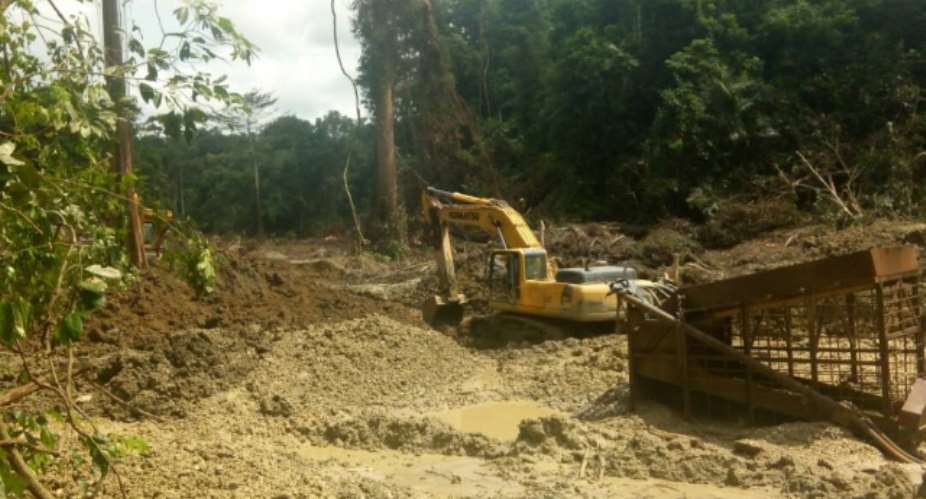
In recent years, Ghana has grappled with the challenge of abandoned mining sites dotting its landscape, remnants of past exploitation that now stand idle and underutilized. However, amidst these challenges lies an unprecedented opportunity - to transform these sites into vibrant energy hubs that could not only power Ghana but also serve as a beacon of sustainable development for all of Western Africa. This ambitious project aims not just to harness renewable energy but to catalyze economic growth, create thousands of jobs, and position Ghana as a leader in the global energy transition.
Background and Rationale:
The mining sector in Ghana has historically been a cornerstone of its economy, contributing significantly to its GDP and employment. However, as mines are exhausted or abandoned due to economic shifts or environmental concerns, they often become liabilities, both ecologically and economically. The concept of repurposing these sites into renewable energy hubs arises from the need to mitigate environmental impacts, utilize existing infrastructure, and foster sustainable development.
Vision and Goals:
The primary goal of this initiative is twofold: firstly, to establish Ghana as a hub for renewable energy production in Africa, and secondly, to drive socio-economic development through job creation and infrastructure investment. By leveraging international partnerships and expertise, Ghana aims to pioneer innovative solutions in energy generation while revitalizing local economies.
Mechanisms for Achievement:
1.Partnership with Global Leaders
Collaborating with leading energy producers and experts from regions such as the Middle East, Europe, and Asia is crucial. These partnerships will bring in technical know-how, investment capital, and market access, essential for scaling up renewable energy projects and ensuring their sustainability.
2.Comprehensive Feasibility Studies:
Conducting detailed feasibility studies is imperative before commencing any large-scale projects. These studies should assess environmental impacts, resource availability (solar, wind, etc.), infrastructure requirements, and economic viability. Engaging local and international experts will ensure that projects are both feasible and beneficial.
3.Government Incentives and Support:
To attract investors and funding partners, the Ghanaian government should consider offering incentives such as tax exemptions on imported equipment, streamlined regulatory processes, and financial guarantees. These incentives not only reduce the financial burden on investors but also signal Ghana's commitment to supporting sustainable energy initiatives.
4.Job Creation and Economic Impact:
The energy hub project has the potential to generate thousands of direct and indirect jobs across various sectors, from construction and manufacturing to maintenance and operations. This influx of employment opportunities will stimulate local economies and improve livelihoods, particularly in regions previously reliant on mining.
5.Infrastructure Development:
Repurposing mining sites into energy hubs requires substantial infrastructure development, including grid connections, storage facilities, and transportation networks. Collaborating with international partners can accelerate the construction of necessary infrastructure while ensuring adherence to global standards of safety and sustainability.
Potential Benefits for Ghana and West Africa:
Beyond Ghana, the establishment of energy hubs has far-reaching implications for the entire West African region. By enhancing energy security, reducing dependency on fossil fuels, and promoting sustainable development practices, Ghana can serve as a model for neighboring countries. The project's success would encourage regional cooperation and economic integration, fostering stability and prosperity across West Africa.
Conclusion:
In conclusion, repurposing abandoned mining sites into energy hubs represents a transformative opportunity for Ghana to lead the charge towards a sustainable energy future. By leveraging international partnerships, conducting thorough feasibility studies, and offering attractive incentives, the Ghanaian government can lay the foundation for a robust renewable energy sector that drives economic growth and benefits the entire region. With careful planning and strategic implementation, this ambitious vision can indeed become a reality, positioning Ghana as a beacon of innovation and sustainability in Africa.


 Abronye loses again as Court of Appeal dismisses bid to halt Samson Anyenini’s d...
 Over 30 women feared trapped in prostitution in Savannah as GIS arrests traffick...
 Govt pays GH¢24.8bn to statutory funds since January — Ato Forson
 Seven missing Axim fishing canoe crew located in Togo’s waters — Western Regiona...
 Health Ministry assures Ghanaians of readiness to manage Ebola cases
 FDA shuts down Arcan Bitters factory again over illegal production in Ashanti Re...
 PAC chair praises NPA CEO Edudzi Tameklo’s performance at committee hearing
 Ghanaian jailed nine months in US for using relative’s social security number to...
 Ukraine war: I'm going to Russia to convince President Putin to ceasefire — Maha...
 'Prof. Jane Naana is Vice President of Ghana; not for women and girls' — Victori...


