




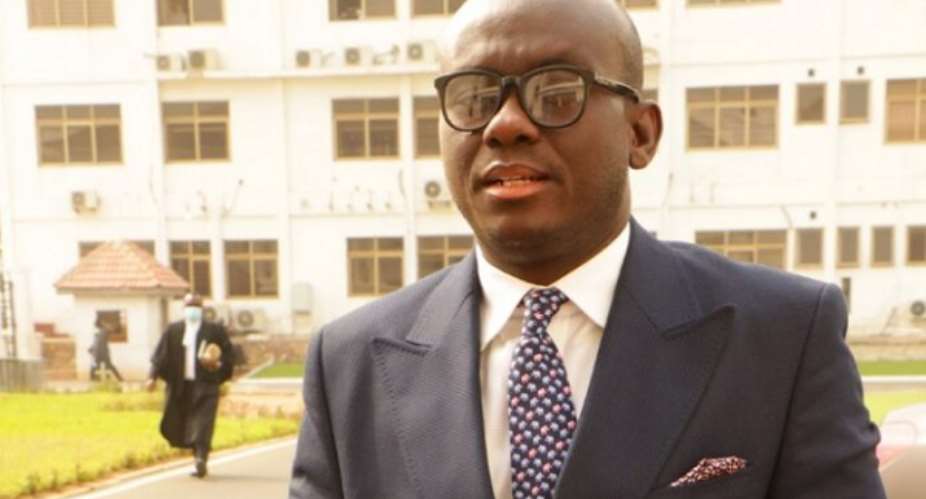
It is not the least surprising that the NPP-appointed Attorney General and Minister of Justice, Godfred Yeboah Dame, was caught on a recorded telephone conversation attempting to coerce a witness, Richard Jakpa, into providing false testimony in the ambulance case against the minority leader in parliament, Hon. Cassiel Ato Baah Forson. The politically inspired trial involves allegations that he caused financial loss to the country. The Minister's actions have deepened the contamination of Ghana's Judicial System under Akufo Addo’s misgovernance.
The judicial crisis we witness under Akufo Addo's administration has significant political, ethical, moral and juridical implications. As the nation grapples with this new scandal, the corrupt NPP government faces an important decision: to uphold the remnants of justice and restore a modicum of integrity in our judicial system by sacking the compromised and disgraced Minister. Failure to do so will further erode public trust in our judicial system and the rule of law. Whatever decision the ruling NPP government makes will undoubtedly shape the future of our nation's democracy and its judicial system.
Ethical and Moral Implications
The Minister's attempt to coerce a witness to tell a lie has profound ethical ramifications. As Ghana's top legal officer, the Attorney General, also the Minister of Justice, is charged with upholding the Rule of Law and ensuring that justice is administered in courts in the country impartially. By attempting to suborn perjury, the dishonourable Minister violates legal and ethical standards and sets a dangerous precedent that could encourage similar behaviours among others in positions of power. The breach of trust that the Minister has demonstrated in the recorded telephone conversation undermines the moral fabric of governance and raises further concerns about the moral and ethical compass of Akufo Addo's inept administration.
Judicial Consequences
Furthermore, the scandal exacerbates the threat to the administration of justice in Ghana that we witness under NPP rule. All judicial systems rely on the integrity and impartiality of their officers to function effectively. When those in the highest realms of the judicial system engage in misconduct, it jeopardizes the credibility of legal proceedings and the outcomes of trials. Unfortunately, Ghanaians have witnessed the erosion of justice in the country under the maladministration of President Akufo Addo. The NPP government has transformed Ghana's judicial system into a machinery of corruption and political influence, rendering the rule of law a casualty of political expediency. Any wonder, therefore, that the Attorney General and Minister of Justice stooped so low?
Defending the Indefensible
In the wake of the scandal involving the Attorney General and Minister of Justice, the ruling party hastily held a press conference and attempted to mount a defence, claiming that NDC is orchestrating a smear campaign to tarnish the Minister's image. NPP's defensive stance raises important issues and further deepens the controversy.
By attempting to defend the Minister, NPP has demonstrated its reluctance to hold its members and appointed government officials accountable for their actions and inactions. By representing or framing the scandal involving the Minister as a politically motivated attack, NPP diverts attention from the core issue at stake: the Minister's concerted attempt to suborn perjury and subvert justice.
NPP's defence attempt undermines NDC's efforts to ensure transparency and accountability within the government. A robust opposition party in any functioning democracy holds the ruling party accountable by scrutinising its policies and decisions, as well as the actions and inactions of government officials, to ensure transparency and prevent misuse of power. Such a role promotes a healthy democratic process.
By defending the Minister's violation of legal and ethical standards, the NPP is just doing what it knows best: fostering a culture of impunity and arrogance in which powerful individuals can evade the consequences of their unethical and illegal behaviours. This culture has been a consistent feature of the Akufo Addo administration.
Moreover, the NPP's accusation that the NDC is waging a smear campaign further politicises Ghana's judicial system. Implicit in this accusation is the notion that the ongoing legal proceedings and the scandal itself are mere tools in a political battle rather than serious issues pertaining to legal and ethical misconduct. Such politicisation on the part of the NPP further erodes public confidence in the judiciary.
On another level, NPP's defence of the Minister fails to problematise the ethical violations committed by the Minister of Justice. The recorded telephone conversation between the Minister and the witness demonstrates apparent misconduct: a concerted attempt to influence a witness to lie under oath. This misconduct is a serious breach of ethical standards, regardless of political inclinations.
NPP's failure to acknowledge the moral dimensions of this scandal underscores the party's indifference to the principles of justice and fairness. These principles are foundational to a functioning democracy. Public trust in the judiciary and the government is crucial for the stability and legitimacy of democratic institutions. NPP has consistently undermined this public trust by defending the indefensible since assuming power.
The Minister Must Go!
The Akufo Addo administration has tarnished the image of the judiciary in Ghana. Amidst the mounting clamour from both the public and NDC, it has the chance now to redeem the image of the judiciary by sacking the Attorney General and Minister of Justice. Dismissing the Minister will help reignite faith in our legal system.
Failure to sack the Minister will signal NPP's tolerance for corruption and further undermine public confidence in the judiciary. Such a failure will also bolster the public's belief that the nation's justice system is compromised, and that political expediency overrides legal integrity.
The general perception in Ghana today is that the ruling NPP party is more interested in protecting its members in crucial government positions than in upholding the law of the land. Will NPP heed the public outcry this time, or will it continue to contaminate our institutions? The advisers of President Akufo Addo who have ears must listen!
Moses Deyegbe Kuvoame, PhD Jacob Isaka
Secretary, NDC Norway Chairman, NDC Norway.


 “Our ancestors didn’t survive Notsie for us to divide ourselves” – Awadada
 Court jails mine worker 14 years for defiling 8-year-old girl at Manso Kumpese
 President Mahama orders review of Ghana’s disaster preparedness systems
 Galamsey: Ghana’s rivers now run chocolate and milk colour — Sam Jonah
 A nation of job-seekers will always be poor — Sir Sam Jonah
 CAGD pays promotion arrears to 56,003 GES teachers ahead of deadline
 “If you attack us with pepper spray, we’ll fight back” — NDC Yakubu Tony Aidoo w...
 We must support artisans to unlock job creation potential – Bawumia
 Ms. Emelia Affi Agbenyo must honourably resign as new EC Deputy Chairperson to p...
 Osahen Afenyo-Markin reflects on loneliness of public service, says survival is ...


