




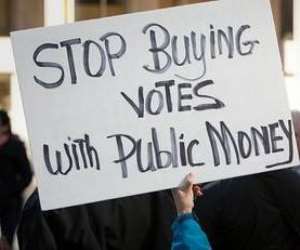
Vote buying has been a recurring feature of Ghanaian elections, particularly in rural and marginalized communities where poverty and socioeconomic vulnerabilities are prevalent. Candidates, political parties, and their agents often exploit these vulnerabilities by offering cash, food, clothing, or other material goods to sway voters' decisions. While direct vote buying is more prevalent in parliamentary elections, where constituency-level contests are fiercely contested, it also occurs in presidential races, albeit to a lesser extent. Vote buying remains a prevalent issue in Ghanaian politics, affecting both presidential and parliamentary elections. This article aims to explore the effects of vote buying on the democratic process and societal dynamics in Ghana.
Vote Buying in Ghanaian Elections
In recent years, vote buying has become increasingly common in Ghanaian elections. Political candidates and parties engage in various tactics, including distributing cash, food, and other goods, to sway voters' decisions. Despite being illegal, the enforcement of laws against vote buying has been insufficient, allowing the practice to persist.
Effects on Electoral Integrity
The prevalence of vote buying undermines the integrity of Ghanaian elections. When voters are influenced by material incentives rather than informed decision-making based on policies and principles, the legitimacy of electoral outcomes is called into question. This erosion of electoral integrity undermines public trust in the electoral system and elected officials.
Impact on Political Participation
Vote buying can have detrimental effects on political participation and civic engagement. By commodifying the electoral process, it discourages meaningful political discourse and civic involvement. Instead of engaging in informed debates about policy issues, voters may become passive recipients of material incentives, further marginalizing their voices in the political sphere.
Perpetuation of Clientelism and Corruption
The prevalence of vote buying perpetuates clientelism and corruption within Ghanaian politics. Candidates and parties rely on patronage networks to secure votes, creating a system of dependency and favouritism. This clientelist approach reinforces existing power dynamics and fosters corruption, as politicians prioritize the interests of select groups over the broader public good.
Undermining Democratic Governance
Vote buying undermines the foundations of democratic governance in Ghana. By distorting electoral outcomes and perpetuating corruption, it undermines accountability, transparency, and representation. Efforts to build strong democratic institutions and promote inclusive governance are hampered by the prevalence of vote buying.
Addressing vote buying requires a comprehensive approach involving legal reforms, enforcement measures, and civic education initiatives. Strengthening anti-corruption laws and electoral regulations is essential to deter vote buying and hold perpetrators accountable. Additionally, promoting transparency in campaign financing and voter education can empower citizens to make informed choices based on principles rather than material incentives.
The impact of vote buying on Ghanaian elections is significant, undermining electoral integrity, political participation, and democratic governance. To safeguard the democratic process and promote inclusive governance, concerted efforts are needed to combat vote buying through legal reforms, enforcement measures, and civic education initiatives. Only by addressing this pervasive challenge can Ghana realize its full democratic potential and advance the interests of all its citizens.
By Godwin Kwame Mileba DPF,BEd,MEd

 Allow the law to deal with defilement perpetrators - Director tells families
 Gov’t to develop policy for Ghanaian sign language in education
 Two Ada SHS students plead guilty to assault, slapped with 12-month bond
 Enlistment: GAF begins documentation, body selection from September 28
 Violent rainstorm rips off roofs, displaces residents in Krachi Nchumuru
 Ghana risks EU gas market access over methane emissions
 Tumu landlord gives road encroachers 2-week ultimatum to relocate for road const...
 Serbian President Aleksandar Vucic resigns
 Tigray TV station hit by drone, rebels advance in north Ethiopia
 Swiss reject plan to toughen neutrality


