




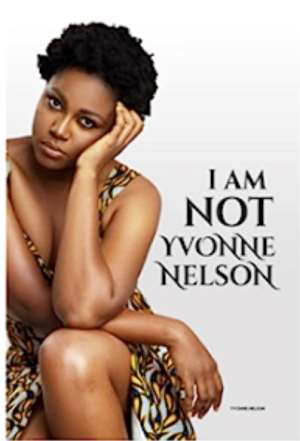
With the recent publication of Yvonne Nelson's book, I found myself largely separated from the minutiae of the drama. My reluctance originated from my perception of this as a private matter that had become an unnecessary public spectacle. However, as I dug deeper into the subject, I discovered certain underlying themes involving betrayal and abortion.
The substance of Nelson's book, however, is not about these commonplace relationship concerns; rather, it embodies the search for a missing father and the disheartened journey of a woman on trial. Nelson brilliantly put her disappointments, worries, and sorrows into the narrative of her book to share her anguish with the world, denying her identity by asserting, "I'm not Yvonne Nelson." This, however, fails to ignite the spark of novelty, as others have experienced equally, if not more, enthralling life situations that impart significant truths.
I took this approach because, while life has been difficult for Yvonne, it appears she has not responded in kind to the essence of women. Nelson's story portrays a disturbing picture of women as malicious and burdensome entities.
Nelson wants us to identify with her story about her biological mother being the source of her previous regrets and sorrow. This story is accented by her sombre theme, "If only I had known my father." She accuses her mother of deception, casting her as a pariah to the rest of the world. And what about her mother's transgression? Her inability to reveal the identity of Yvonne's father for unknown reasons. Is this weakness, however, significant enough to deserve public disclosure and a book-length discussion? Is Nelson implying that all women are evil, untrustworthy, and immoral by nature? If so, where does she fit in this story as a lady who admittedly had a relationship with the wrong people, resulting in an abortion? Is she arguing that in desperate situations, abortion is the only option?
The fervour with which Ghanaians have reacted to this dispute is baffling, creating hype from seemingly nothing. Due to the erroneous perceptions, it has revealed to the public, Nelson's book sadly presents a picture of women, including herself, as undeserving of respect.
Despite its current popularity, Nelson's book's future is bleak, as it fosters a negative attitude toward women and a reckless celebrity lifestyle that leads to a past soaked in grief, anger, and self-pity.
Isaac Ofori
(Demographer, Social Activist, Human Rights Advocate, Educationist)

 Police place GH¢100,000 bounty on man for killing two people in Tema
 Ultraviolet sterilisation mandatory for safe water production — FDA warns sachet...
 Cocoa smuggling: Fiapre Circuit Court grants GHC10,000 bail each to four suspect...
 Tensions rise in Bogoso as youth block mine workers over employment dispute
 Police declare military officer wanted over alleged murder of couple, announce G...
 University of Ghana distances itself from unauthorised ‘UG Partner’ app, warns p...
 Ghana's inflation rises marginally to 3.4% in April, up from 3.2% in March — GSS
 Inflation rises to 3.4% in April
 Court remands three suspects over jewelry shop robberies at Airport Residential ...
 Release ex-Buffer Stock CEO and wife immediately — Afenyo-Markin to EOCO, AG


