




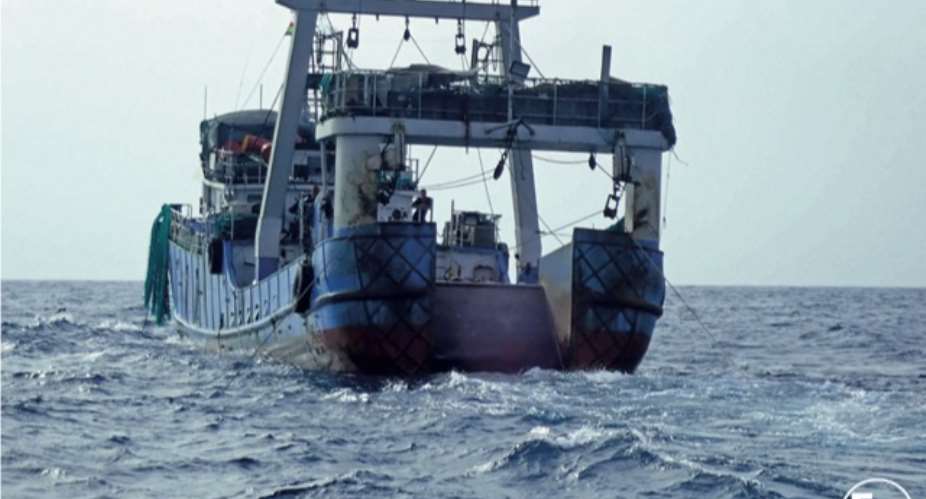
The fundamental human rights of Ghanaian fishing communities, such as the right to adequate food and decent work, are being threatened by illegal fishing activities, a new report by the Environmental Justice Foundation (EJF) has revealed.
According to the report, “Human Right Lens on the Impact of Industrial Illegal Fishing and over Fishing on the Soico-Economic Rights of Small-Scale Fishing Communities” the situation is a result of the government's failure to adequately address the issue of illegal fishing.
“In failing to prevent trawling companies from violating the right to work of small-scale fishers and workers, it is unclear whether Ghana is meeting its minimum obligation under international law to protect the human rights that would enable this marginalised group to live a life of dignity,” it said.
The report stated that over 70% of respondents reported a deterioration in their living conditions over the past five years, with incomes falling below the level necessary for a decent living, leaving them unable to cover basic needs.
“Around 70% of the fishers surveyed had suffered damage to their fishing gear by industrial trawlers. Over half the 215 small-scale fishers, processors and traders EJF spoke to reported going without sufficient food over the past year. This was especially severe among the processors and traders, the vast majority of whom are women,” it said.
The report called for urgent measures to be taken by the government to ensure their basic human rights are upheld, as required under international law.
CEO and founder of EJF, Steve Trent, said the government must account for and remedy any infringements of these rights.”
He said alongside action to ensure sustainability and environmental security, the government must adopt a rights-based approach to fisheries management, which prioritises the needs of vulnerable small-scale fishing communities who make up the majority of fish workers in the country yet are often marginalised in decisions concerning their livelihoods.
“Improving governance of the sector through enhanced transparency; ending illegal fishing; reducing fleet capacity; reforming subsidies; and the development of realistic alternative livelihoods for fishing communities are all key steps that must be taken immediately,” he said.
By Jamila Akweley Okertchiri


 Obuasi SHTS alleged sexual abuse: Kwasi Kwarteng criticises Education Minister o...
 ECOWAS’ $250,000 flood relief donation arrives in Ghana – Ablakwa
 Kennedy Agyapong has not resigned from NPP – Kwasi Kwarteng
 State failure, not GoldBod, driving galamsey – Daryl Bosu
 A Rocha Ghana raises alarm over human rights abuses in mining communities
 ECOWAS, AfDB discuss ways to advance West Africa’s development priorities
 October 16: Cedi gains against dollar, sells at GHS12.25 on forex market, GHS11....
 Galamsey: Ghana’s rivers now run chocolate and milk colour — Sam Jonah
 A nation of job-seekers will always be poor — Sir Sam Jonah
 “If you attack us with pepper spray, we’ll fight back” — NDC Yakubu Tony Aidoo w...


