




Most a times, the conversation is about the sale of state enterprises and her assets at really cheap rates to the private sector for non-performance and redundancy. I agree the private sector holds the promise to absorb the teeming numbers of youth our schools churn out year by year. However, state enterprises with assets dotted all over the country also possess the same potential to thrive, make a profit, and offer employment.
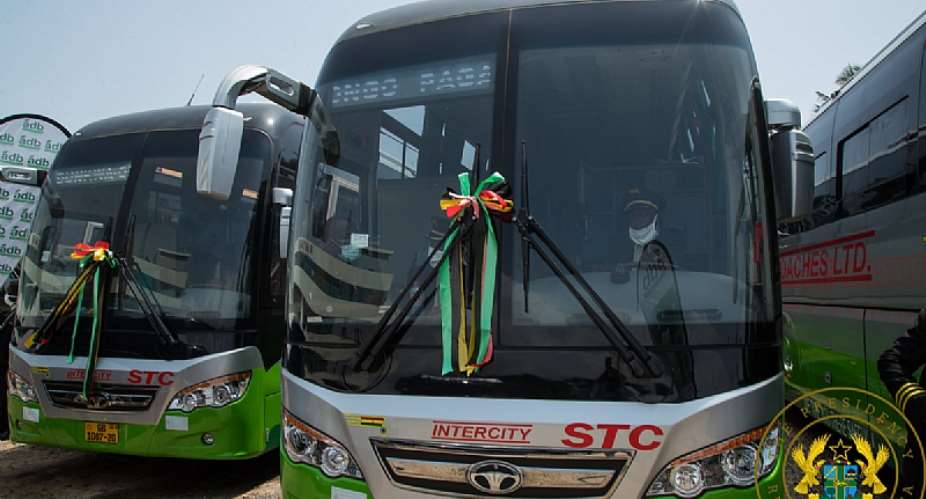
One of such state enterprises is the State Transport Company (S.T.C). The transformation happening there is worth tapping into by other state agencies. The principles at play should be tried at other state transport enterprises like the Metro Mass and Ayalolo.
It is instructive to note that, when these enterprises thrive, the state profits. But when these enterprises are run down, the state has to spend more taxpayer’s money to revamp the enterprise. Unlike the private sector where the private person enjoys or suffers the plus and minuses that come with the business, in the instance of the state, it's the collective, taxpayers that suffer.
This beautiful story started in 2016. The erstwhile Mahama regime decided to give STC 50 buses. Most of these buses were idling at the terminals of the company. Regimes changed and Nana Akomea opted to go to STC. He decided to run STC with the private sector principles and mindset.
Currently, STC has most of its buses close to the main local transport terminal in Accra and Kumasi, which is the busiest Inter-City route in the country. They have 2 terminals at Kasoa, Circle, and Kumasi-Asafo. STC no longer sits at its terminals at the Ring Road and Adum, waiting for travelers to come to them, they've moved closer to customers.
The company currently has 150 buses, an addition of 100 buses from 2017. Records from the STC and Ministry of Finance show that the company in May 2018 paid an amount of US$1 million to Government. The amount is the second installment for the payment of a loan from the Government of Ghana.
In October 2016, the government bought 50 buses for STC at a cost of US$13 million, to aid in their operations. A first installment of the loan, to the tune of US$700,000, was paid late last year. This brings to US$1.7 million, which has so far been repaid by the STC. Records available shows this is the first time the company is so profitable to pay its debt to the state and other companies who offer their services to the STC.
Mr. Nuomah Donkor started in 2016, Nana Akomea inherited the reigns in 2017, and today, the state has a vibrant and profitable enterprise. It's all about leadership. When the leadership is right, the effects will be felt.
When the leadership is right, competent minds and hands will be engaged to run such enterprises. And when we decide to join forces, devoid of the usual political football, it's Ghana that wins. Ayekoo STC! May you keep being fruitful!

 Gamal Gorkeh Nkrumah son of Ghana’s first President dies in Egypt
 Ukraine’s Starlink disruptions expose US reliance as Europe has no ready alterna...
 World's top cocoa producer aims for a climate-tough bean
 ‘We have turned the tide’ – Ato Forson says Ghana is ready to take off
 Sammy Gyamfi refuses to file defence, hides behind technicalities — Lawyers
 Osahen Afenyo-Markin vows to pursue case against Sammy Gyamfi despite high court...
 GRA denies imposing new 20% tax on Netflix, Google and Amazon subscriptions
 Police arrest 16 suspects, seize 209 rounds of ammunition at Gbane mining site
 ‘Mahama has lost his moral high ground’ – Dr Zaato on Affi Agbenyo’s EC appointm...
 Cassava, hemp could offer alternatives to plastics – Zanetor challenges scientis...



Comments
Yeah. You are right. State owned enterprises can be very profitable. Norwegians prefer state owned enterprises, and the interesting thing is that their state owned enterprises create more jobs each year by providing venture capital to entrepreneurs. Whoever said state owned enterprises can't work got it wrong? Visit ghanamask dot wordpress dot com for more interesting stories.