




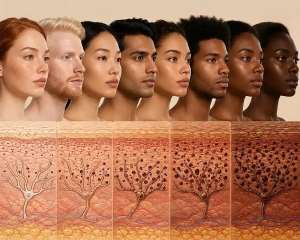
Accra’s midday sun feels like an open flame. Under rising global temperatures, solar ultraviolet radiation strikes our rich dark skin harder than ever.
Yet, millions of Ghanaians step outside unprotected, unaware that their skin silently battles an invisible, escalating enemy every day.
As a final-year Biochemistry and Molecular Biology student at the University of Health and Allied Sciences (UHAS), I’ve come to appreciate how research unveils hidden factors influencing our biological systems and environment, and one pressing concern is how ultraviolet radiation and climate change challenge the skin’s natural defences, emphasising the importance of SPF protection.
Ghana's climate is warming steadily, with rising temperatures intensifying ultraviolet radiation exposure across the country, from Accra's coast to Ho's forested northern hills each year.
Melanin, the pigment giving many Ghanaians deeper skin tones, offers natural defence against ultraviolet damage, but this protection still remains far from absolute or complete.
Increased sun exposure accelerates photoaging, causing wrinkles, hyperpigmentation, and dark spots, while significantly raising risks of skin cancers, including melanoma, among many unsuspecting vulnerable populations.
Rising heat also disrupts the skin's natural barrier function, causing excessive sweating, dehydration, and constant irritation, particularly among farmers, traders, and outdoor workers nationwide daily.
Traditional remedies like shea butter, long used across northern Ghana, provide moisturising benefits and mild sun protection, reflecting valuable indigenous wisdom about proper skin care.
However, shea butter alone cannot fully block harmful ultraviolet rays effectively, meaning modern sunscreen remains essential for comprehensive protection against Ghana's intensifying tropical sun.
Dermatologists strongly recommend using broad-spectrum sunscreen with SPF (Sun Protecting Factor) thirty or higher, applied generously every single morning, especially on exposed areas like the face, neck, and hands.
Wide-brimmed hats, dark sunglasses, and lightweight long-sleeved clothing all offer additional physical protection, reducing direct sun exposure during Ghana's peak hot daytime hours very effectively.
Hydration matters too; drinking sufficient water daily helps maintain healthy skin elasticity and supports the body's natural cooling mechanisms during increasingly hot, humid tropical conditions.
Diets rich in antioxidants, including local fruits like mangoes, oranges, and juicy pawpaw, can help repair and protect sun-damaged skin cells effectively from within naturally.
Children, outdoor workers, and persons living with albinism face heightened vulnerability, requiring extra vigilance, strong community support, and readily accessible protective resources across Ghanaian society.
Public health education remains absolutely critical today, empowering local Ghanaian communities with accurate scientific knowledge about sun safety, climate change, and proper skin protection habits.
Ultimately, protecting Ghanaian skin demands combining traditional wisdom with modern science by wearing sunscreen daily, seeking shade wisely and always prioritising your skin's lasting health today.

 Senior nurse remanded over alleged link to ‘Ghana Jollof’ TikTok account
 ‘NDC rewriting 1992 Constitution’ – NPP rejects review approach
 $300m World Bank financing package secured to permanently end double-track by 20...
 'No piece of land is worth single human life' – Afenyo-Markin calls for peace af...
 Police declare ‘Ghana Jollof’ wanted for allegedly inciting violence
 How community watchdog group helped Police 'cobra team' arrest seven suspects fo...
 Ghana Jollof probe: “She is safe, unharmed” — Police assure GRNMA over detained ...
 36 suspects arrested over lynching of police officer at Gindabour
 Ghana Card to become e-wallet for electronic transactions soon – NIA Boss
 Constitutional amendment: Five-year presidential, parliamentary terms will weake...



Comments
Thanks for sharing 👏