




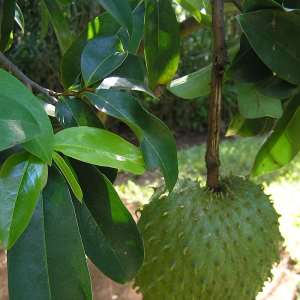
Every day Ghanaians pick soursop from trees in their backyards, eat the sweet fruit, and sweep away the leaves without a second thought. However, a new study from the University of Health and Allied Sciences (UHAS), Ho, indicates that those leaves discarded this way may hold promising compounds in the fight against prostate cancer.
Prostate cancer remains a major health concern among men, placing a significant financial and emotional burden on families. For many patients, the cost and accessibility of treatment can also present serious challenges.
In response to this growing concern, laboratory research by Metor Lucky, a final year Biochemistry and Molecular biology student at the University of Health and Allied Sciences (UHAS), investigated whether soursop leaves, a plant commonly found around Ghanaian homes, could help fight prostate cancer.
To assess its potential, an extract prepared from dried soursop leaves was tested in the laboratory against prostate cancer cells and normal, non-cancerous cells.
The results were striking. As the concentration of the soursop leaf extract increased, the prostate cancer cells showed clear signs of deterioration. The cells became smaller, lost their normal shape and increasingly detached from the surfaces on which they were growing, indicating reduced cell survival.
The extract also greatly inhibited prostate tumor cell migration. This is especially significant because cancer cell mobility and invasion into other tissues has been shown to closely reflect cancer progression and metastasis.
The research also yielded an optimistic finding after the extract was put to the test with normal cells. The normal cells were much less affected when tested in the laboratory under the conditions used as the prostate cancer cells.
This suggests that compounds present in the soursop leaves may have some degree of selectivity towards prostate cancer cells. But more work must be done to determine if such an effect can be achieved in other living cells and ultimately in humans.
The excitement surrounding the finding goes beyond the laboratory. Soursop is readily available in Ghana and is cultivated in many communities, while its leaves are often swept away.
If the preliminary findings are confirmed through further research, compounds from soursop leaves could potentially contribute to the development of new anti-cancer drugs or therapeutic agents.
The encouraging findings provide a strong basis for future research into the potential of soursop leaves in fight against prostate cancer. Continued studies could help determine how the extract works, it’s safety and effectiveness, and whether its active compounds could eventually be developed into useful cancer fighting agents.
The findings highlight the need for greater investment in research into Ghana's plants and other locally available natural resources as potential sources of affordable medicines.
For now, men are encouraged to take their prostate health seriously by seeking regular medical advice and discussing appropriate screening options with healthcare professionals. Early detection remains important in improving treatment outcomes, while ongoing research continues to explore new possibilities in the fight against prostate cancer.

 'Your visit is perfect' — Defeated Kokofu pledges support to newly elected Ashan...
 Upper East Regional Minister pushes for revival of abandoned Bolgatanga Sports S...
 Two killed, seven injured in Sienta-MMT bus crash at Assin Fosu
 Dome-Kwabenya-Kitase residents hit streets over 20-year abandoned road project
 14 arrested over alleged cultivation and distribution of ‘wee’ in Nabdam
 FDA cautions against use of chemicals to ripen plantain
 August 17: Cedi appreciates, sells at GHS12.30 on forex market, GHS10.96 on BoG ...
 Ghana's missing billions: What 16 years of Auditor-General reports show
 Fire breaks out at Gushegu Nursing and Midwifery Training College dormitory
 'Go ahead and imprison me because of my friendship with Bawumia, I will come bac...

