




When a market redevelopment project becomes an ethnic question, what exactly is Ghana fighting about?
There is something profoundly uncomfortable about the latest controversy surrounding the Konkomba Yam Market at Agbogbloshie.
At the centre of the dispute is a proposed 24-hour economy market. But instead of the national conversation focusing primarily on the design of the new market, compensation, relocation, consultation, livelihoods, food security and whether affected traders will receive better facilities, the debate has increasingly acquired an ethnic dimension.
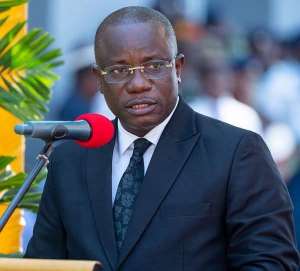
That is what makes the comments attributed to former Defence Minister and Bimbilla MP Dominic Nitiwul particularly important to examine.
On September 16, 2026, Nitiwul led the NPP Minority caucus to inspect the area and questioned why the section predominantly occupied by Konkomba traders appeared to have been marked for demolition while other parts remained unaffected. He asked, among other things, what the Konkombas had done to the government and why the area where they operate had been selected.
Those are legitimate questions if structures have indeed been selectively marked.
But there is another equally important question:
When does legitimate political advocacy become dangerous ethnic framing?
That question must be asked not because the concerns of Konkomba traders should be ignored, but precisely because they deserve to be addressed without turning a development dispute into an ethnic confrontation.
WHAT ACTUALLY HAPPENED?
The Konkomba Yam Market leadership itself raised concerns months before Nitiwul's intervention.
In August 2026, market leaders appealed to the Accra Metropolitan Assembly to reconsider plans to construct a 24-hour economy market at the site. They argued that the market was an important food-distribution hub serving Accra and other parts of Ghana and warned that demolition could affect thousands of traders and workers.
That means the grievances did not begin with Nitiwul.
There are genuine questions about livelihoods, relocation, consultation and the future of the traders.
But the Accra Mayor, Michael Kpakpo Allotey, has offered a substantially different account.
He has denied that the Konkomba community is being deliberately targeted. He says he has visited the market more than 15 times and that the AMA engaged leaders of both the Konkomba and Nzema communities before the redevelopment project. He maintains that the intention is to improve the trading environment rather than remove Konkombas from Accra.
So Ghana is currently dealing with two competing narratives.
One says: Why are the areas occupied by Konkombas being targeted?
The other says: The redevelopment is not targeting Konkombas; consultations have taken place and the objective is to provide a better market.
That disagreement should be investigated through evidence not ethnicity.
BUT WHY DID NITIWUL MAKE IT AN ETHNIC QUESTION?
This is perhaps the most important question facing the former Defence Minister.
There is nothing inherently wrong with a Member of Parliament defending constituents or citizens who believe they are being treated unfairly.
Indeed, that is part of representative democracy.
But there is a major difference between saying:
"Why are these particular structures being demolished? What relocation arrangements have been made? Were the affected traders consulted? What compensation or alternative facilities will be provided?"
and framing the issue primarily around:
"What have the Konkombas done?"
The first demands accountability from government.
The second risks making a municipal development dispute appear to be a confrontation between an ethnic community and the state.
That distinction matters enormously in a country as ethnically diverse as Ghana.
The National Peace Council has repeatedly warned political actors and public commentators about inflammatory language capable of increasing political, ethnic and religious tensions. In May 2026, the Council specifically urged political actors to refrain from unsubstantiated inflammatory statements that could incite violence.
The Council has also previously warned that intemperate language targeting groups along ethnic, religious or political lines can contribute to polarization and division.
Therefore, the question is not whether Nitiwul has the right to criticise the government.
He does.
The question is whether the language used to criticise government policy is appropriate for a former Defence Minister in a country where communal tensions can have consequences far beyond Parliament, radio and social media.
DOES A MODERN MARKET HAVE TO BECOME AN ETHNIC BATTLE?
This is where Ghana needs to look beyond party politics.
Suppose the government genuinely wants to construct a modern market.
Should the existence of Konkomba traders make modernisation impossible?
No.
But equally, should modernisation mean that traders are simply displaced without proper consultation, relocation, compensation or guarantees concerning their livelihoods?
Also no.
Development should not be a choice between modern infrastructure and human dignity.
It should provide both.
The real questions should therefore be:
Where will the traders go during construction?
Will they receive equivalent or better trading spaces?
Will existing traders have priority in the new facility?
How will rents, licences and allocations be determined?
What happens to traders who cannot afford the new facilities?
What happens to the workers whose livelihoods depend on the existing market?
Was an independent impact assessment conducted?
Were market leaders genuinely consulted, or merely informed after decisions had already been made?
And perhaps the biggest question:
Why can Ghana not modernise a market without making the people who built their livelihoods there feel that development is being done to them rather than with them?
These are questions worth answering.
BENIN HAS ALREADY SHOWN THAT MODERNISATION DOES NOT HAVE TO MEAN ETHNIC DISPLACEMENT
Ghana does not need to reinvent the wheel.
Look across the border to Benin.
The government of Benin has been undertaking a major reorganisation of the famous Dantokpa market in Cotonou, one of West Africa's major commercial centres.
The programme involves relocating traders from the existing market into modern commercial facilities.
But the process has not simply been presented as: "We are demolishing the old market; move."
The Beninese authorities established new facilities and engaged market actors about relocation arrangements.
In September 2025, Benin's National Agency for Market Management explained that consultations were being held with traders ahead of the relocation from Dantokpa. The government said new sites were being developed to accommodate different categories of traders and that the strategy involved direct engagement with market actors.
By March 2026, the Beninese government was describing the Dantokpa reorganisation as part of a broader programme intended to improve security, sanitation, accessibility and commercial infrastructure. New facilities including Tokpa Yôyô and the Grand Nokoué wholesale market were being prepared to accommodate different categories of traders.
That experience raises an uncomfortable question for Ghana:
If Benin can relocate traders while building modern commercial infrastructure, why should Ghanaian development automatically become a battle between government and communities?
There will always be resistance to major redevelopment projects.
People fear losing customers.
They fear higher rents.
They fear losing established networks.
They fear that promises made today will disappear tomorrow.
Those fears are legitimate.
The answer should therefore be consultation, transparency, relocation plans and enforceable commitments not ethnic mobilisation.
WHAT WOULD NITIWUL HAVE SAID IF HE WERE STILL DEFENCE MINISTER?
This question deserves serious reflection.
Imagine that Nitiwul were still sitting in the Defence Ministry today and another senior politician publicly said:
"The government is targeting this particular ethnic community."
Would he consider such language harmless?
Would he not ask for evidence?
Would he not worry about its potential security consequences?
Would he not insist that the police, intelligence agencies and other institutions monitor developments carefully?
Would he not demand that politicians avoid statements capable of creating communal tension?
And if he would have demanded restraint from another politician, should former holders of sensitive national-security portfolios not impose an even higher standard of restraint upon themselves?
This is not an argument that former ministers should become silent.
It is an argument that experience with national security should make one's words more measured, not less.
A former Defence Minister understands better than most people that words can become security problems long before guns appear.
IS NITIWUL ASKING THE KONKOMBAS TO RESIST GOVERNMENT?
There is no evidence in the sources reviewed that Nitiwul explicitly called on Konkombas to take up arms or engage in violence.
That distinction is important.
It would be irresponsible to attribute such an intention to him without evidence.
His publicly reported remarks focused on the alleged targeting of Konkomba traders and appealed to President John Mahama to stop what he described as targeting.
But the question can still legitimately be asked:
What happens when political language creates the perception that an entire ethnic community is under attack by the state?
Does such language calm the community?
Or can it make people believe that ordinary administrative action is actually an attack on their identity?
And if tensions subsequently rise, who takes responsibility for the consequences?
This is precisely why responsible political communication matters.
WHAT ARE PEOPLE SAYING?
The controversy has already generated competing reactions.
Some commentators have criticised Nitiwul's framing, arguing that introducing ethnicity into the redevelopment dispute could increase tension. One published commentary described the ethnic framing as potentially harmful to national cohesion.
There have also been calls for the matter to receive police attention.
On September 16, two citizens petitioned the Criminal Investigation Department to investigate Nitiwul's comments, alleging that they could provoke ethnic tensions and disturb public peace.
That does not mean that Nitiwul has been found guilty of any offence.
A petition is an allegation and a request for investigation not a judicial finding.
And this distinction is crucial.
SO WHY HASN'T THE POLICE INVITED HIM?
As of the latest reports reviewed for this article, the petition had been submitted to the CID requesting that Nitiwul be invited for questioning.
It would therefore be premature to state that authorities have deliberately ignored the matter.
The more useful question is:
If the authorities receive a complaint concerning potentially inflammatory political speech, what transparent process should determine whether an investigation is warranted?
That process should apply equally to politicians across the political divide.
If there is no offence, the public deserves to know that.
If there is a legitimate security concern, the appropriate institutions should assess it.
But neither political party should be allowed to turn law enforcement into a weapon against its opponents.
GHANA HAS SEEN HOW QUICKLY ETHNIC TENSIONS CAN BECOME SECURITY PROBLEMS
The National Peace Council's own work recognises that Ghana's ethnic diversity requires careful management.
The Council's statutory mandate includes conflict prevention, management and resolution and the building of sustainable peace.
It has also identified rumours, hate speech, threats, growing hostility and provocative statements as warning signs that should be reported through appropriate channels before they escalate.
This is why political leaders must understand the extraordinary power of their words.
An ordinary citizen may make an irresponsible statement and reach 200 people.
A former Defence Minister, Member of Parliament and nationally recognised political figure can say the same thing and have it reproduced across television, radio, newspapers, Facebook, TikTok, X and WhatsApp.
The audience is different.
The consequences can be different.
The responsibility must therefore be different.
THE BIGGER PROBLEM: WHY DO WE LOVE POLITICAL PARTIES MORE THAN GHANA?
Perhaps the most disturbing lesson from this controversy is not about Nitiwul alone.
It is about Ghanaian politics.
Why do we sometimes defend everything our party says and condemn everything the opposing party says?
Why does a government project become "development" when our party is in power but "destruction" when another party is in power?
Why do politicians discover the suffering of ordinary citizens only when those citizens provide political ammunition?
Why can we not defend Konkomba traders without turning the matter into an NPP-versus-NDC battlefield?
Why can we not support a modern market while simultaneously demanding justice for the existing traders?
Why must every government project become a referendum on which political party should control Ghana?
And perhaps the hardest question of all:
If political power is temporary but Ghana is permanent, why are we prepared to damage national cohesion simply to win today's political argument?
DEVELOPMENT MUST NOT BE AN EXCUSE FOR INJUSTICE
There is another side to this debate that must not be lost.
A government cannot simply hide behind the word "development" whenever citizens raise legitimate concerns.
Modern markets can improve sanitation.
They can improve safety.
They can increase commercial efficiency.
They can create jobs.
They can improve food distribution.
They can generate revenue.
But development that destroys livelihoods without adequate alternatives is not automatically good development.
Therefore, government must publish the redevelopment plan.
It must explain exactly what structures are affected.
It must explain why those structures are affected.
It must publish the relocation arrangements.
It must explain whether existing traders will be given priority in the new market.
It must address compensation and affordability.
And it must maintain continuous dialogue with affected communities.
That is how government can defeat suspicion not by demanding blind trust, but by providing evidence.
AND NITIWUL ALSO HAS QUESTIONS TO ANSWER
The former Defence Minister should equally welcome scrutiny.
If he believes the Konkomba community is being deliberately targeted, what specific evidence supports that conclusion?
Were all marked structures independently mapped?
Has he compared the demolition boundaries with the actual redevelopment plans?
Has he established that the selection was based on ethnicity rather than location, engineering requirements, land ownership, road access or the proposed design?
If the Mayor says Konkomba and Nzema leaders were consulted, what is Nitiwul's evidence that those consultations did not occur or were inadequate?
If the project can be modified to protect traders, what alternative plan is he proposing?
And most importantly:
Is the objective to stop modernisation or to ensure that modernisation does not dispossess the people whose livelihoods depend on the existing market?
Those are questions the public deserves answers to.
GHANA NEEDS POLITICIANS WHO CAN FIGHT FOR PEOPLE WITHOUT FIGHTING PEOPLE AGAINST EACH OTHER
The Konkomba traders deserve protection if their rights are being violated.
They deserve consultation if their businesses are being relocated.
They deserve fair treatment if their livelihoods are affected.
And they deserve modern infrastructure if that is what the government is promising.
But the rest of Ghana also deserves something:
peace.
A market redevelopment should never become an ethnic fault line.
A disagreement over land should not become a confrontation between ethnic groups.
A political argument should not become a security crisis.
And the construction of a modern market should never be presented as evidence that one tribe has committed some offence against another.
Ghana has enough political disagreements.
We do not need to manufacture ethnic enemies.
THE QUESTIONS GHANA MUST NOT RUN AWAY FROM
Before the bulldozers move, government must answer the traders.
Before politicians speak, they must answer Ghana.
Before social media turns the controversy into another tribal battlefield, citizens must ask for evidence.
And before we cheer because someone from our political party has attacked the other side, perhaps we should ask:
What if the statement eventually harms the very people the politician claims to defend?
What if tomorrow another politician uses the same ethnic language against our own community?
Would we still call it political advocacy?
Would we still applaud?
Or would we suddenly discover the dangers of tribal politics?
The real test of Ghanaian democracy is not whether politicians can mobilise their ethnic or political supporters.
It is whether they can defend citizens without dividing citizens.
The real test of development is not whether government can demolish an old structure and build a new one.
It is whether it can build something better without treating the people affected as obstacles.
And the real test of patriotism is not whether we defend the NPP, NDC or any other political party.
It is whether, when party loyalty collides with Ghana's national interest, we remember that Ghana must come first.
The Konkomba Yam Market should therefore become a lesson not another conflict.
Let government provide the facts.
Let Nitiwul provide the evidence behind his allegations.
Let the traders explain their fears.
Let independent institutions examine the redevelopment process.
Let the police act according to law if a legitimate complaint warrants investigation.
Let the National Peace Council help prevent the dispute from acquiring a dangerous communal dimension.
And let Ghanaians ask the question that matters most:
Can we build a modern Ghana without destroying the trust that holds Ghanaians together?
That is the debate worth having.
Not NPP versus NDC.
Not Konkomba versus government.
Not tribe versus tribe.
Ghana versus the politics that keeps preventing Ghana from becoming what it has the potential to be.
By:
Patrick Belebang Yagsori
+233240292413
[email protected]

 Senior nurse remanded over alleged link to ‘Ghana Jollof’ TikTok account
 ‘NDC rewriting 1992 Constitution’ – NPP rejects review approach
 $300m World Bank financing package secured to permanently end double-track by 20...
 'No piece of land is worth single human life' – Afenyo-Markin calls for peace af...
 Police declare ‘Ghana Jollof’ wanted for allegedly inciting violence
 How community watchdog group helped Police 'cobra team' arrest seven suspects fo...
 Ghana Jollof probe: “She is safe, unharmed” — Police assure GRNMA over detained ...
 36 suspects arrested over lynching of police officer at Gindabour
 Ghana Card to become e-wallet for electronic transactions soon – NIA Boss
 Constitutional amendment: Five-year presidential, parliamentary terms will weake...


