




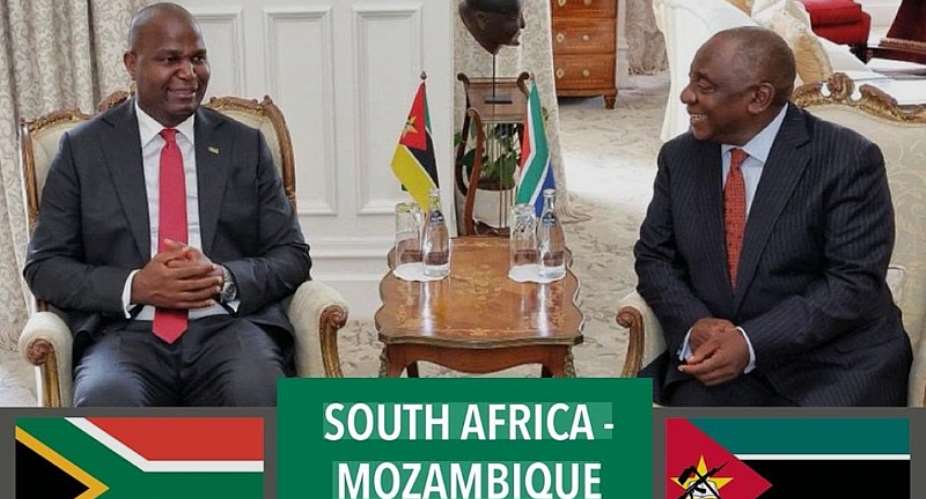
The killing of five Mozambican nationals in South Africa is not just another tragic headline in the long catalogue of xenophobic violence it is another uncomfortable reminder that something fundamental is breaking down in the social fabric of Africa’s most industrialized nation.
What makes this moment especially disturbing is not only the violence itself, but the familiar pattern that follows: outrage, condemnation, promises of investigation… and then silence until the next eruption.
This cycle has become so predictable that it risks normalizing the unacceptable.
A Crisis Older Than the Current Government
To understand what is happening today, one must look beyond the immediate incident. South Africa’s struggle with xenophobic violence is not new. Since the post-apartheid era began in 1994, waves of migration from Mozambique, Zimbabwe, Malawi, Nigeria, and other African states have collided with deep structural inequality inside South Africa itself.
The result has been a recurring pressure cooker: high unemployment, overcrowded informal settlements, weak service delivery, and a political environment where frustration is too often redirected away from systems and toward individuals.
Foreign nationals particularly African migrants working in low-income sectors become easy targets. Not because they are the cause of South Africa’s economic challenges, but because they are the most visible and least protected.
The Hard Question No One Wants to Answer
Why does violence so often erupt against fellow Africans, while other forms of confrontation remain politically sensitive or heavily policed?
The answer is uncomfortable but necessary: xenophobic violence is not only about foreignness it is about vulnerability. It is easier to attack the powerless in informal settlements than to confront entrenched structural inequality, corruption, unemployment, or elite economic concentration.
In this sense, the tragedy is not simply that migrants are attacked it is that they are used as substitutes for deeper frustrations that remain unresolved.
Government Response: Strong Words, Weak Consistency
The South African government has repeatedly condemned such attacks and deployed police units in affected areas. Yet condemnation without consistent prevention has done little to break the cycle.
Law enforcement often arrives after the damage is done. Investigations are launched, but convictions rarely restore confidence. Meanwhile, migrant communities continue to live in fear, unsure of when the next wave of violence will erupt.
This raises a difficult question: is the problem a lack of capacity, or a lack of sustained political urgency?
Because when a crisis repeats itself over nearly two decades, it stops being an emergency and becomes a governance failure.
Mozambique’s Quiet Burden
For Mozambique, the pain is both human and diplomatic. Each body returned home represents not only a lost citizen but also a reminder of regional inequality and economic displacement.
Mozambican authorities have moved to repatriate citizens and coordinate with South Africa, but repatriation is not a solution it is a retreat from danger.
And behind the official statements lies a quieter truth: many Mozambicans cross into South Africa not by choice, but by necessity, driven by economic conditions that offer few alternatives.
A Region Caught in a Cycle It Refuses to Break
Southern Africa’s migration system is deeply interconnected. South Africa remains a magnet economy, while neighboring states supply labor. This arrangement is not inherently unstable but it becomes volatile when economic planning, migration policy, and social integration fail to evolve.
What we are witnessing is not simply xenophobia. It is the collision of inequality and migration in an environment where neither is properly managed.
The Dangerous Comfort of Misdiagnosis
It is tempting for some to frame these events as simple hatred of foreigners. Others argue it is purely criminal opportunism. Both explanations are incomplete.
The truth is more uncomfortable: when communities are left in persistent poverty, with limited trust in institutions and high competition for survival, violence becomes a language of frustration. And in that language, outsiders are often the first to suffer.
But acknowledging this does not excuse it it explains why it must be urgently addressed.
The Real Test for South Africa
South Africa’s global moral authority was built on its transition from apartheid a triumph of justice over oppression. But moral authority is not a permanent inheritance; it must be continuously earned.
Protecting foreign nationals within its borders is not optional. It is a constitutional obligation and a regional responsibility.
If South Africa cannot guarantee safety for those who live and work within its communities, then the promise of post-apartheid equality remains incomplete.
Conclusion: A Warning Written in Blood
The deaths of five Mozambican nationals should not be reduced to another passing statistic in the archive of African tragedies. They should be treated as a warning one that speaks to a region struggling with inequality, migration pressure, and political fatigue.
If governments in the region continue to respond only after violence erupts, then they are not preventing crises they are managing repetition.
And repetition, in this case, is not just failure of policy. It is failure of humanity
By:
Patrick Belebang Yagsori
+233240292413
[email protected]
 Ghanaians rate President Mahama higher on handling of economy, infrastructure — ...
 Unlicensed persons can no longer practice HR in Ghana – CIHRM
 'We become obsessed with keeping power while our country go down' — Fifi Kwetey ...
 June 11: Cedi sells at GHS12.55 on forex market, GHS11.51 on BoG interbank
 Taiwan says Chinese vessels entered disputed waters in South China Sea
 Constituency election nominations to open June 22, forms to be purchased online ...
 Ghana Card registration for children aged 6-14 begins in Northern Region - NIA
 'Your nation is waiting to embrace you' — Nigeria to welcome evacuees from South...
 South Africa xenophobia: Business allegedly declines after ownership shift from ...
 Kpone Traditional Council announces death of paramount chief after 37 years of r...


