




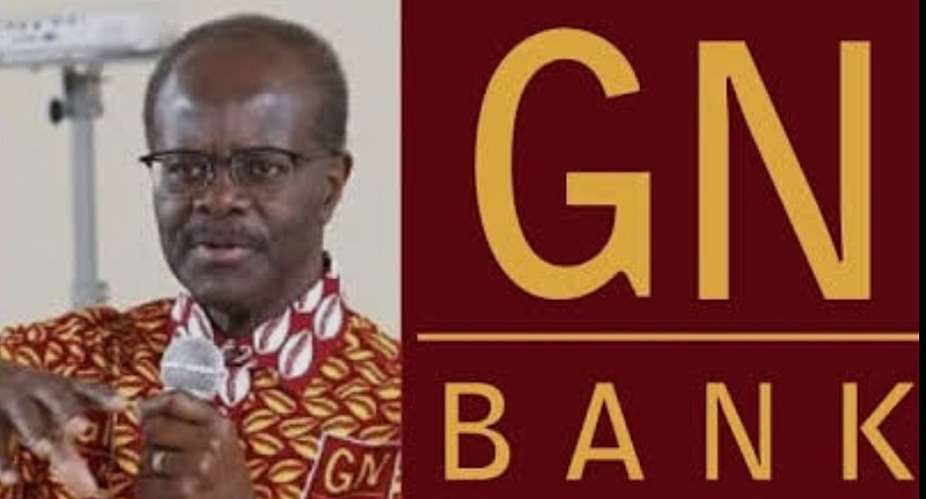
The debate over the possible restoration of Papa Kwesi Nduom and his once-ambitious financial institution, GN Bank, continues to echo within Ghana’s financial and political discourse. Years after regulatory action by the Bank of Ghana effectively collapsed GN Bank’s universal banking aspirations, the question remains: was it a necessary correction or a costly disruption of indigenous financial ambition?
The Rise of GN Bank: A Bold Financial Experiment
GN Bank emerged from GN Savings & Loans with a bold vision: to democratize banking, especially in underserved and rural communities. At its peak, it was celebrated for its extensive branch network reportedly one of the widest in Ghana often reaching areas where major commercial banks had little or no presence.
Supporters argue that GN Bank represented an indigenous financial revolution: a locally driven attempt to deepen financial inclusion beyond urban elites.
But beneath the expansion was a fragile foundation—one heavily dependent on regulatory transition, capitalization demands, and evolving banking sector reforms.
The Collapse: Regulation or Overreach?
In 2019, the Bank of Ghana revoked the universal banking license of GN Bank, citing capital inadequacy and failure to meet recapitalization requirements under the new banking sector reforms.
This action came amid a broader financial sector clean-up that saw several banks and financial institutions consolidated or collapsed.
Critics of the decision argue that:
GN Bank was unfairly treated compared to larger, politically connected institutions.
The regulatory environment favored foreign and elite-owned banks.
The closure disrupted thousands of jobs and rural financial access.
Supporters of the central bank’s action counter that:
Banking is a trust-based system that cannot operate on sentiment.
GN Bank failed to meet prudential requirements essential for depositor protection.
Allowing weak institutions to persist would have endangered the entire financial system.
The Nduom Question: Symbolism vs. Substance
The figure of Papa Kwesi Nduom adds a political and emotional dimension to the debate. To some, he represents entrepreneurial courage and indigenous capitalism under pressure. To others, he symbolizes the risks of rapid expansion without sufficient regulatory alignment.
This raises deeper questions:
Should leadership ambition excuse regulatory non-compliance?
Or should regulatory compliance be flexible enough to accommodate local innovation?
Should GN Bank Be Restored?
Calls for restoration often come from communities that benefited from GN Bank’s presence, especially in rural areas where banking access has since declined.
However, restoration is not a simple administrative decision it raises structural questions:
Would restoration mean reinstating the same business model that previously failed regulatory tests?
Has the financial ecosystem changed enough to absorb such an institution safely?
Or should efforts focus instead on rebuilding rural financial access through new-generation fintech solutions?
Critical Questions Ghana Must Confront
The GN Bank debate forces Ghana to confront uncomfortable but necessary questions:
Is financial inclusion being sacrificed for strict regulatory compliance?
Do local financial institutions face stricter scrutiny than multinational banks?
Should regulatory frameworks evolve to support indigenous banking innovation rather than eliminate it?
And most importantly: can trust be rebuilt once a banking license has been revoked at scale?
The Bigger Picture: Lessons Beyond GN Bank
The GN Bank story is not just about one institution it reflects Ghana’s broader struggle between regulation and innovation, stability and inclusion, ambition and compliance.
Across Africa, similar tensions exist: governments want strong, stable financial systems, while entrepreneurs push for rapid inclusion and expansion into underserved markets.
The real lesson may be that neither side can win alone.
Conclusion: Restoration or Reinvention?
Whether GN Bank should be restored is less important than what Ghana learns from its collapse. Restoration in its original form may be unlikely without addressing the structural issues that led to its downfall.
But the vision it carried financial inclusion, rural banking access, and indigenous financial empowerment remains valid.
The real question is not just “Should GN Bank return?” but rather:
How does Ghana build a financial system that allows bold local ideas to survive without compromising stability?
Until that balance is found, the GN Bank debate will remain unresolved caught between nostalgia, regulation, and the unfinished business of financial reform.
By:
Patrick Belebang Yagsori
+233240292413
[email protected]

 Alleged robber mistakenly shot by colleague arraigned before court
 A/R: 59 SHSs transition to single-track system as GES gradually phase out double...
 Ghana’s youngest parliamentary aspirant to wrestle with ‘elders’ for Manhyia Sou...
 'Is this how to decide bail conditions?' — NPP's Akosua Manu blasts EOCO over Mi...
 'Probe beneficiaries who consumed Nkoko Nkitinkiti birds, it also amounts to loo...
 Trump administration orders ICE to halt traffic stops after Maine shooting, US m...
 'We can't enstool chief during our mourning period' – Ahantaman Kingmakers
 Cabinet concludes deliberations on constitution review committee report
 Chief Justice Baffoe-Bonnie urged to stay away from Yilo Krobo chieftaincy dispu...
 Ghana needs national sanitation policy; two-day clean-up won't end flooding cris...

