




MTN Business excited about the opportunity such an enabler has for the Namibian market
16 February, Namibia – The recent landing of the West Africa Cable System (WACS) in Namibia has provided the first direct connection for the country to the global submarine cable network. MTN Business, a subsidiary of the MTN Group, which is a major investor in WACS, looks forward to the completion of the cable which will result in the acceleration of affordable broadband capacity.
Says Manfred Engling, General Manager of MTN Business Namibia; “The acceleration of affordable broadband capacity and the convergence of information and communication technologies is starting to take root in the Namibian business arena and is rapidly signalling new ways of conducting business. With this historic landing, the playing field has been levelled with the rest of the world, and we hope to see some of the future 'next big' applications come out the local Namibian ICT community.”
The landing of WACS in Namibia is a massive milestone towards broadband cost cutting becoming a reality and a key enabler to critical telecoms industry development.
Says Engling; “While it may seem obvious that corporate Namibia wants affordable, reliable services that provide a competitive edge, the only way this will become a reality is when the associated cost savings of bandwidth usage are redistributed into enabling organisations to take advantage of emerging trends such as Software-as-a-Service, Cloud Computing and Virtualisation – and the time is now.”
Following a long design, build and laying process and supplier-owner collaborative tests, MTN Business is confident that as they begin to migrate customers over to the cable later in 2011, they will be able to provide a truly reliable, redundant service, one that is hosted and managed by MTN and not outsourced or co-managed through any alternate service provider.
Says Johnny Aucamp, General Manager: Strategic Relations and Business Development Africa at MTN Business; “MTN Business has invested over $130 million in alternative undersea cables as part of its vision to ensure that by 2011 operations across the African continent and Middle East escape the stranglehold of procuring unreliable and often expensive international bandwidth.”
Not only is the commoditisation of access inevitable, but the growing demand for convergence, network services and cloud computing means local businesses will require more and more bandwidth. Not to mention businesses growth strategies for across the continent. “This will require ISPs to focus their attention on the broader business offering which will fundamentally require a different way of thinking - one that takes into account the continuous changes and demands that are set for this market,” concludes Aucamp.

 NDC not worried about NPP’s Kojo Bamba, he is small boy – Azorka
 Obuasi SHTS: 'Children are not buffet' – NPP’s Fatimatu confronts Zuba
 'I didn’t know I was supposed to chop and not work' – Blakofe on her time at GTD...
 Resource exploitation fuelling Africa’s conflicts – Mahama
 Our ports' growth always depended on collaboration across maritime, logistics va...
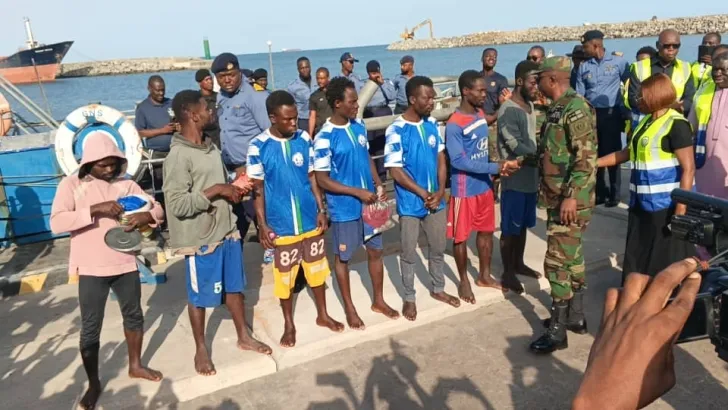 Stranded Ghanaian fishermen narrate how they ate fresh fish, drunk sea water to ...
 How notorious armed robber died on the way whiles leading police to arrest accom...
 'We must continuously improve cargo handling, coordination among port operators'...
 Nii Lante Vanderpuye confident of winning NDC national chairmanship despite Gold...
 Agalga dismisses critics, assures Builsa North of progress on Sandema–Wiaga Road


