




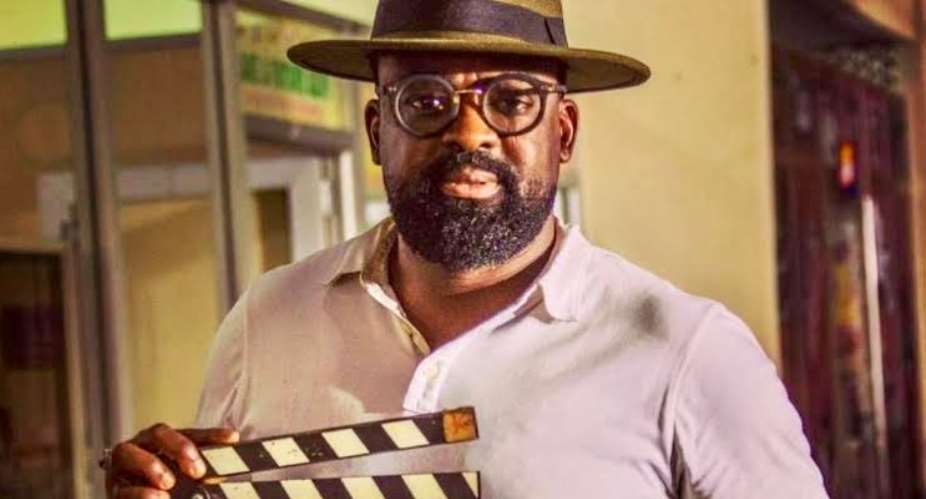
Nigerian filmmaker Kunle Afolayan has called on the government to provide support for his N8 billion private investment in KAP Film Village and Resort, citing rising operational costs and the lack of public electricity.
Speaking on the Nidacity podcast with former Finance Minister Kemi Adeosun, he revealed that the facility has relied solely on diesel generators since its establishment, making operations increasingly unsustainable.
Afolayan disclosed that the resort nearly shut down earlier this year due to the high cost of diesel, and while a friend offered to supply fuel on credit, he admitted that such an arrangement was still not viable. He noted that they had invested N200 million in a green energy system last year, but it remains insufficient to power the entire facility.
He further argued that government agencies should step in, especially since smaller projects have received grants.
The filmmaker also addressed the shift of Nigerian filmmakers to YouTube, attributing it to the dollar exchange rate. He explained that while YouTube offers lower revenue compared to Netflix and Prime Video, it remains the most accessible platform.
He explained that one million views can generate about $10,000, but if the dollar weakens, many filmmakers would leave the platform.
He said:
"I believe so much in this country. We haven't had electricity in KAP Village since the beginning. So we've been running on diesel. I did a post a few months ago that I cannot be like, we can't sustain this diesel thing. We're going to close the resort, but then there is another friend who said I will sell diesel to you on credit and I'm like It's still not sustainable."
"So right now we're talking to a lot of people to try and see how to do green energy. We did one last year, which cost about N200m, but it's not enough to power the entire resort."
"And if we've managed to do that, I think there should be some sort of support, like from government agencies. I know people are not even doing one quarter of what we're doing, and they get a lot of grants from government."
"When we shot Anikulapo, we didn't have accommodation. We were squatting in people's houses. Sola Sobowale and Bimbo Ademoye even brought their cottons and freezers from home. So I had to build 100 rooms in the film village to make everyone comfortable."
"YouTube can never give what Netflix and Prime would give you, but it is the most flexible. It is for everyone. It is like a starting point. If one doesn't have the strength to negotiate or access to the big players, then you fall back to YouTube."
"The reason filmmakers are rushing to YouTube is because of the dollar exchange rate. They celebrate 1 million views because it can bring in about $10,000. But if the dollar falls to N200, everyone will run away from YouTube."

 NCA clears MTN, Telecel and Goal Telecom for next stage of 5G spectrum licensing
 ICT accounts for 41.5% of Ghana’s 6% Q2 2026 economic growth – GSS
 Ghana Highway Authority to correct defects on portions of Eastern Corridor Road
 ECG private sector participation to be determined after transaction advisor's re...
 Over 70% of Ghanaians walking with hypertension unaware – Cardiothoracic Centre ...
 Weija Dam spillage: $350million flood control project to begin by December
 Ghanaians should be grateful for voting Mahama back to power for saving Ghana’s ...
 I remain committed to NPP despite withdrawal from National Organiser race — Sala...
 John Boadu, Sammy Crabbe, Paul Afoko, Boakye Agyarko secure 1st to 4th spots in ...
 Auditor-General report exposes financial rot at 18 assemblies in Volta Region; C...

